
Wed Apr 01 17:28:36 UTC 2026: # NASA Gears Up for Historic Artemis II Launch, Aiming to Send Humans Near the Moon After Half a Century
The Story:
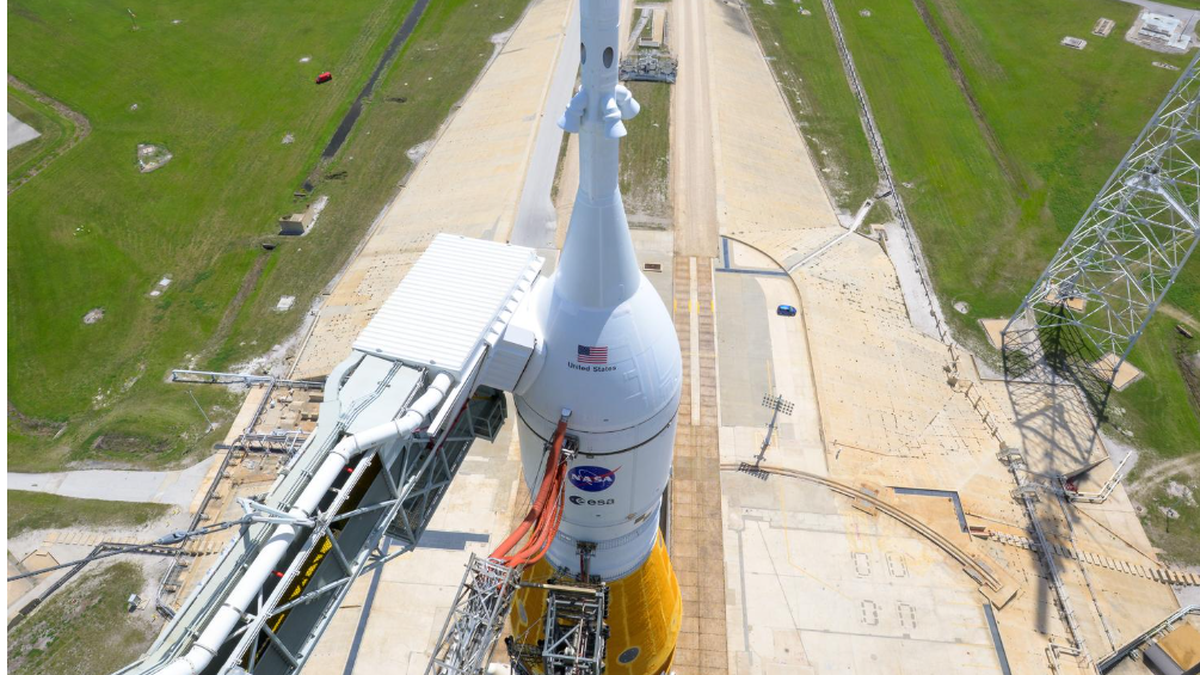
NASA is poised to launch the Artemis II mission on April 2, 2026, at 6:24 p.m. EDT (3:54 a.m. IST), a pivotal step in the U.S. space program’s ambition to return humans to the vicinity of the Moon. The mission will utilize the Space Launch System (SLS) rocket and the Orion spacecraft to send a crew of four astronauts on a free-return trajectory around the far side of the Moon, reaching approximately 7,500 km from the lunar surface. This mission is not intended for a lunar landing; instead, it serves as a comprehensive test of the entire system, from ground teams to the rocket and crew, ensuring readiness for future lunar landing attempts.
Key Points:
- The Artemis II mission is scheduled for liftoff on April 2, 2026.
- The mission will use the Space Launch System (SLS) rocket and Orion spacecraft.
- The mission will send four astronauts on a free-return trajectory around the Moon, but will not land.
- The primary goal is to test the entire system for future lunar landing missions.
- New, custom-fit spacesuits feature improved safety, range of motion, thermal management, and touch-screen compatible gloves.
- Teams are currently in the process of fast-filling liquid oxygen (LOX) and liquid hydrogen (LH2) into the SLS rocket.
Key Takeaways:
- Artemis II marks a significant milestone in the U.S. space program, representing the first crewed lunar flight since 1972.
- The mission’s success is crucial for validating the SLS rocket and Orion spacecraft, paving the way for future lunar landings.
- The focus on testing the entire system highlights NASA’s commitment to ensuring the safety and reliability of its lunar program.
- The mission is occurring amidst international competition, particularly with China’s own lunar ambitions.
- Improved spacesuit technology demonstrates advancements in astronaut safety and performance capabilities.
 First Piper