
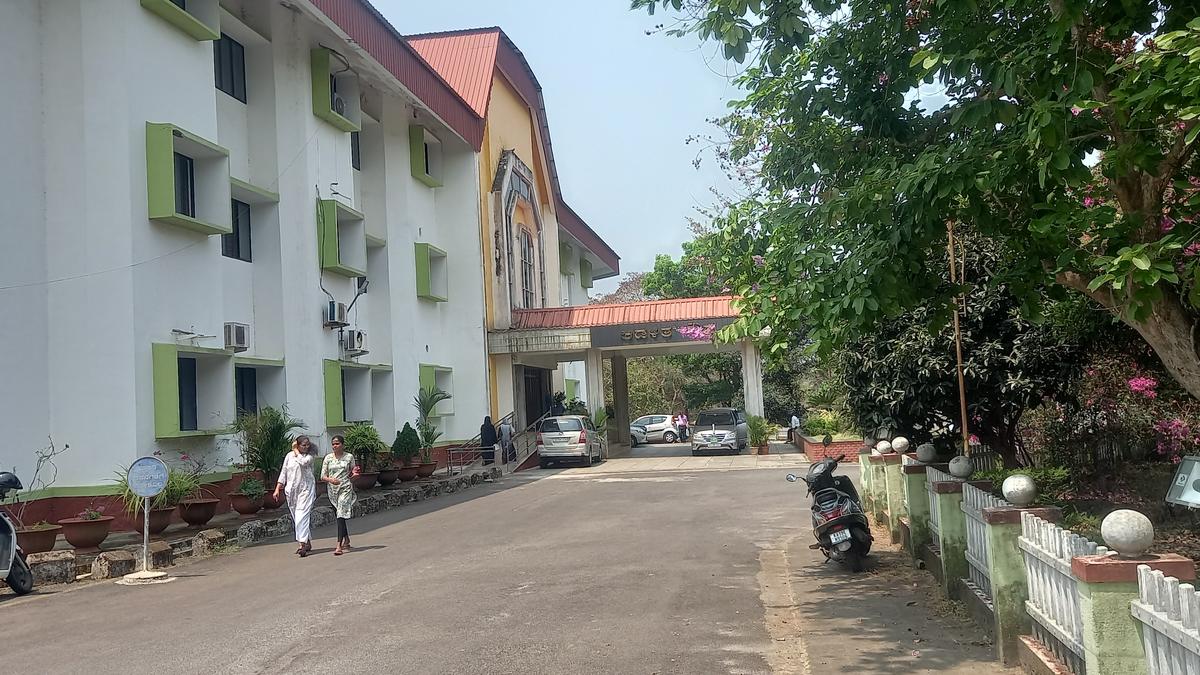
Tue Mar 31 18:42:43 UTC 2026: # Mangalore University Faces Mounting Financial Challenges with Deficit Budget
The Story:
Mangalore University is grappling with significant financial strain, presenting a ₹68.33 crore deficit budget for the year 2026-27. This marks the third consecutive year the university has operated at a deficit. The budget was presented at the university’s Academic Council Meeting on Tuesday, March 31, 2026, by Deputy Registrar K.R. Lalitha.
Key Points:
- The deficit budget for 2026-27 is ₹68.33 crore.
- Total estimated receipts for 2026-27 are ₹194.09 crore.
- Total estimated expenditure for 2026-27 is ₹262.43 crore.
- The university has faced a deficit for the past three years.
- The decrease in the number of admissions to courses and a larger number of colleges getting autonomous status were the causes of the deficit.
Critical Analysis:
The context provided reveals a broader trend of challenges within Indian universities. The CAG report flagging lapses at Osmania University and Mangalore University’s deficit budget, coupled with the farewell of a veteran professor at Mysuru University, paints a picture of potential systemic issues affecting higher education institutions. The decreasing number of admissions and increasing autonomy of colleges directly impact Mangalore University’s income, leading to its current financial difficulties.
Key Takeaways:
- Mangalore University’s financial situation is precarious, requiring immediate and strategic intervention.
- The trend of universities facing deficits suggests potential systemic issues within the Indian higher education system.
- Increased college autonomy, while potentially beneficial for individual institutions, can negatively impact the financial stability of parent universities.
- Declining admissions are a serious concern that needs to be addressed with effective recruitment strategies and course relevance.
Impact Analysis:
The continued deficit at Mangalore University could lead to several long-term consequences. These include potential cuts in academic programs, reduced investment in research and infrastructure, and a possible decline in the quality of education. The financial instability may also affect the university’s ability to attract and retain qualified faculty. If left unaddressed, this situation could ultimately damage the university’s reputation and its contribution to the region’s intellectual and economic development. The revival of Nalanda University highlights a contrasting approach – a concerted effort to bolster and restore academic prestige, suggesting a possible pathway for other institutions facing similar challenges.
 First Piper