
Wed Apr 01 14:45:54 UTC 2026: ### Headline: Indian Army Reshuffles Top Leadership, Lt. Gen. Dhiraj Seth Assumes Role as Vice Chief
The Story:
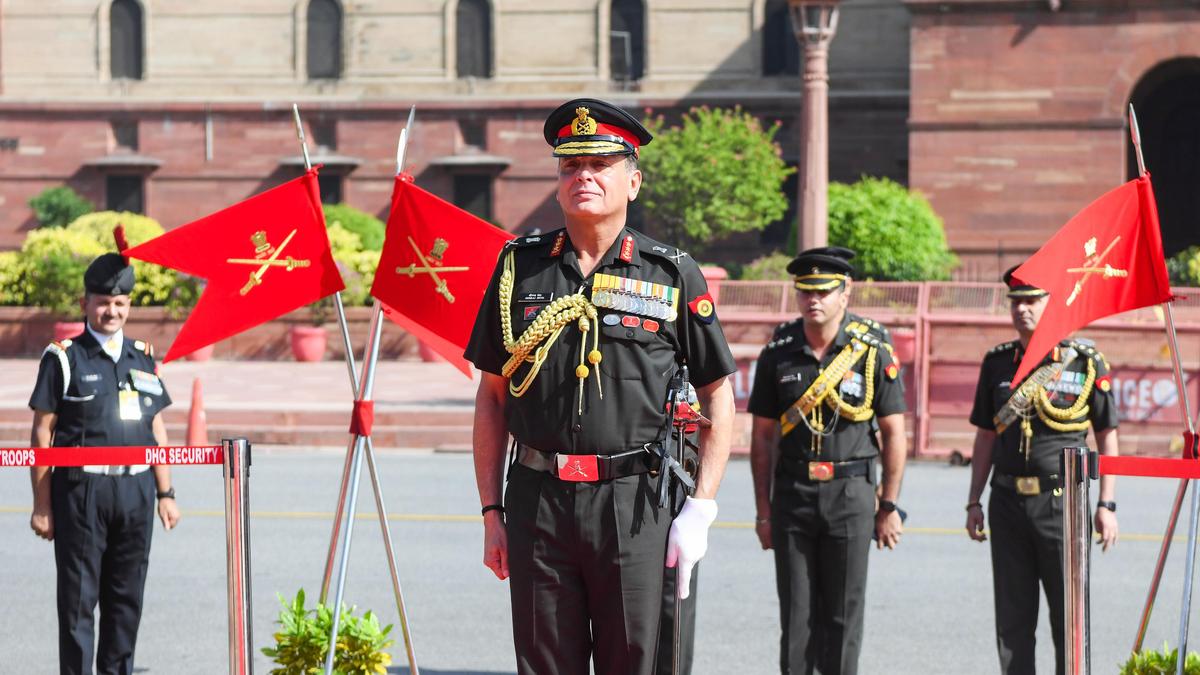
On April 1, 2026, the Indian Army underwent a significant reshuffle of its top leadership. Lieutenant General Dhiraj Seth officially assumed the position of Vice Chief of the Army Staff (VCOAS), receiving a Guard of Honour at South Block Lawns in New Delhi. This change follows a series of other high-level appointments, including Lieutenant General Sandeep Jain taking over as the General Officer Commanding-in-Chief (GOC-in-C), Southern Command, succeeding Lt. Gen. Seth. Lieutenant General V.M.B. Krishnan assumed charge as the GOC-in-C, Eastern Command. Lieutenant General Pushpendra Pal Singh, the previous VCOAS, is now the GOC-in-C, Western Command.
Key Points:
- Lieutenant General Dhiraj Seth is the new Vice Chief of the Army Staff, effective April 1, 2026.
- Lt. Gen. Seth was commissioned to the Armoured Corps in December 1986 and has nearly four decades of experience.
- Lieutenant General Sandeep Jain is now the GOC-in-C, Southern Command.
- Lieutenant General V.M.B. Krishnan assumed charge as the GOC-in-C, Eastern Command, taking over from Lieutenant General R. C. Tiwari, who superannuated on March 31, 2026.
- Lieutenant General Pushpendra Pal Singh is now the GOC-in-C, Western Command, succeeding Lieutenant General Manoj Kumar Katiyar, who also retired on March 31, 2026.
Key Takeaways:
- The Indian Army is undergoing a planned transition in leadership, with experienced officers filling key operational command roles.
- Lt. Gen. Dhiraj Seth’s extensive experience across various terrains and conflict environments positions him well for the role of VCOAS.
- The appointments reflect a strategic distribution of leadership across the country’s crucial operational commands (Western, Southern, and Eastern).
Impact Analysis:
The reshuffle indicates a commitment to maintaining a strong and adaptable military leadership structure. The appointments of experienced officers to key commands ensure continuity and stability, which is particularly crucial given the evolving geopolitical landscape and security challenges facing India. The transition is likely to have a positive impact on the Army’s operational readiness and strategic capabilities in the long term.
 First Piper