
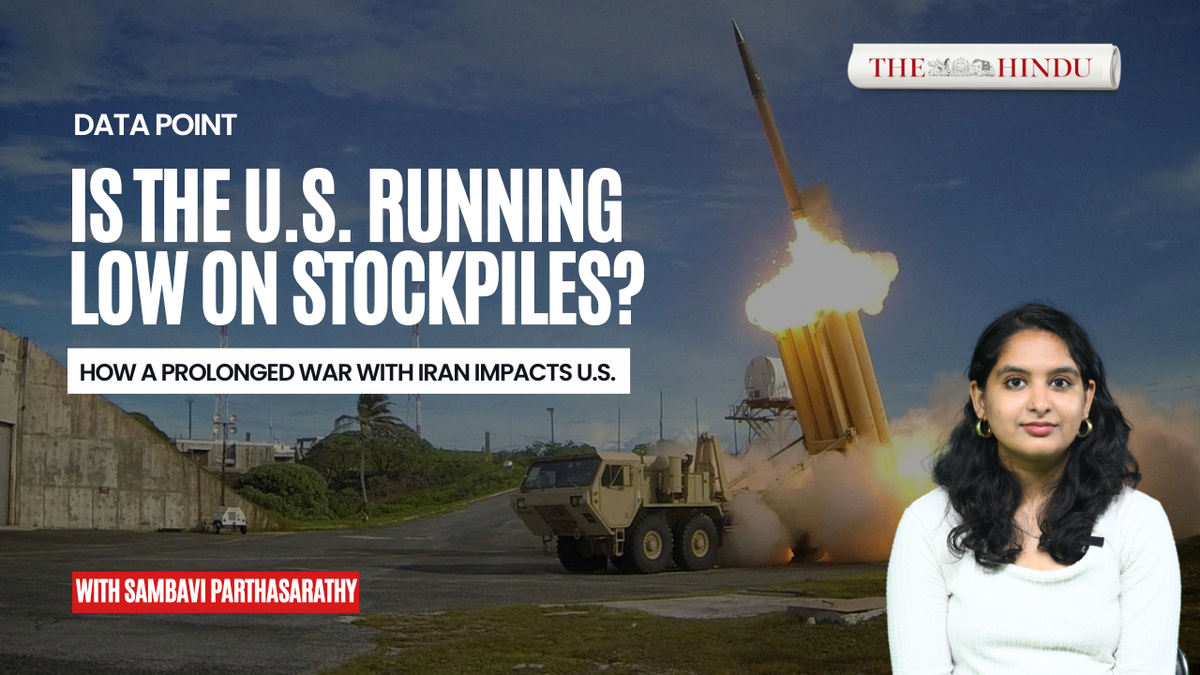
Tue Mar 31 13:25:14 UTC 2026: # U.S. Strain in West Asia Conflict Raises Questions About War’s Sustainability
The Story:
A conflict in West Asia, triggered by a joint U.S.-Israeli attack on Iran on February 28, 2026, has escalated into a regional war. Initial assessments suggested the war’s duration would be limited by Iran’s missile reserves or the Gulf nations’ interceptor capacity. However, a new report suggests that the U.S. is facing constraints in sustaining the war effort due to escalating monetary costs, strained supply chains, and “emergency” military sales.
Key Points:
- The conflict began with a U.S.-Israeli attack on Iran on February 28, 2026.
- The war has evolved into a regional conflict.
- Early predictions linked the war’s end to Iran’s missile supply or the Gulf nations’ interceptor capabilities.
- The U.S. is reportedly facing challenges in maintaining the war due to financial burdens, supply chain issues, and emergency military sales.
- The article was published and updated on March 31, 2026.
Critical Analysis:
The timing of this report, appearing just over a month after the initial attack, suggests a rapid deterioration of the U.S.’s strategic position. The UNRWA and EU condemnation of Israel’s death penalty law, as evidenced by one of the context articles, could be indicative of increasing international pressure on Israel, indirectly impacting the U.S.’s ability to maintain support for the conflict.
Key Takeaways:
- The U.S.’s capacity to sustain prolonged military engagements is being questioned.
- Economic and logistical factors can significantly influence the duration and outcome of modern conflicts.
- International political pressure can indirectly impact a nation’s ability to wage war.
- Initial predictions about conflict duration can be unreliable.
- The conflict has broader regional and international implications.
Impact Analysis:
The potential constraints on U.S. involvement in the West Asia conflict could lead to several significant outcomes:
- Shift in Regional Power Dynamics: A reduced U.S. presence could empower other regional actors, leading to a rebalancing of power in the Middle East.
- Increased Instability: If the U.S. withdraws support prematurely, it could create a power vacuum, potentially exacerbating existing conflicts and leading to further instability.
- Re-evaluation of U.S. Foreign Policy: The challenges faced by the U.S. in this conflict could prompt a reassessment of its foreign policy strategies, particularly regarding military intervention and resource allocation.
- Impact on Global Economy: Prolonged conflict and potential disruptions to oil supplies could have significant repercussions for the global economy.
 First Piper