
Tue Mar 31 02:32:21 UTC 2026: ### Headline: Caste Politics Resurface in Uttar Pradesh Ahead of Assembly Elections
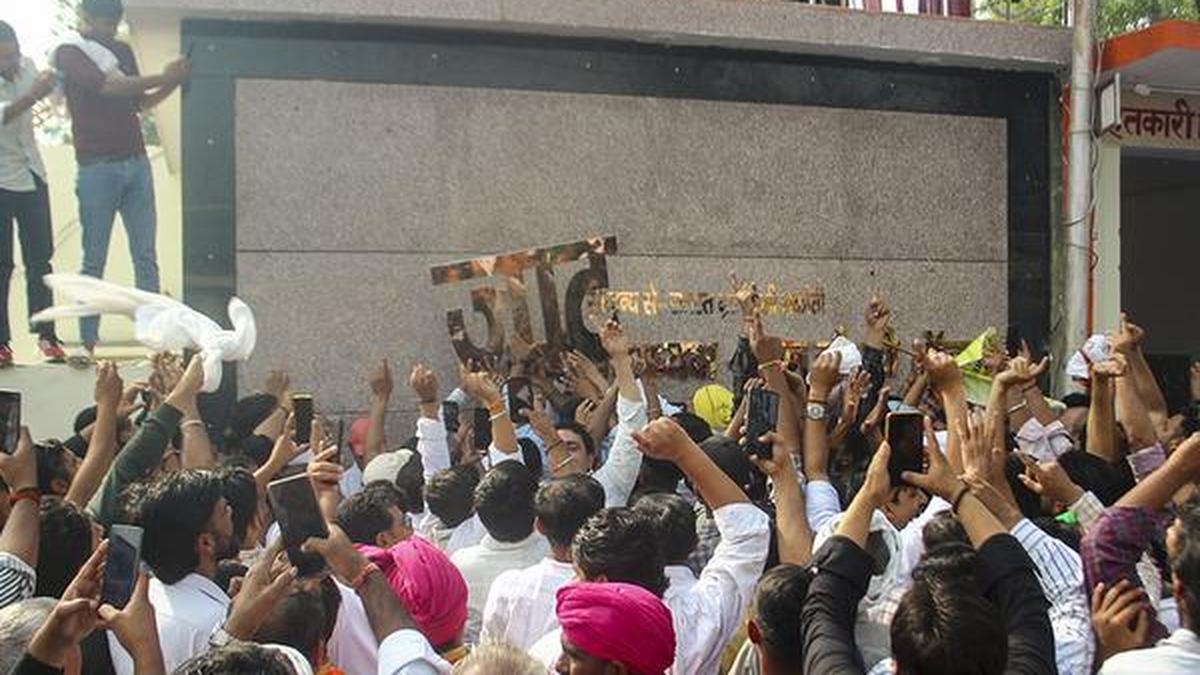
The Story: In Uttar Pradesh, the upcoming assembly elections are fueling political mobilization along caste lines, as evidenced by recent events surrounding statues of historical figures. In Meerut district’s Sikauti village, tension arose after the local administration removed the “Jat” tag from a statue of Maharaja Suraj Mal, a revered figure among the Jat community. This action, perceived as an affront by the International Jat Sansad, triggered protests and demands for the reinstatement of the tag. Simultaneously, in Dadri, Samajwadi Party chief Akhilesh Yadav “purified” a statue of emperor Gurjar Mihir Bhoj, escalating a dispute over the king’s caste affiliation between the Gurjar and Rajput communities.
Key Points:
- The removal of the “Jat” tag from Maharaja Suraj Mal’s statue in Meerut sparked protests led by the International Jat Sansad on March 30, 2026.
- Former Union Minister Sanjeev Balyan led the protest, demanding the administration reinstate the tag within 15 days.
- Punjab Chief Minister Bhagwant Mann and Rashtriya Loktantrik Party chief Hanuman Beniwal attended the event organized by the International Jat Sansad.
- The U.P. government approved the celebration of ‘Agra Vijay Diwas’ at Agra Fort, commemorating Suraj Mal’s capture of the fort on June 12, 1761.
- In September 2025, the U.P. government banned caste-based rallies and public caste markers following a High Court directive, but opposition parties noted that the orders do not directly address religious or Hindutva symbols.
- Akhilesh Yadav “purified” the statue of Gurjar Mihir Bhoj with Ganga water during a rally in Dadri in response to a caste dispute.
Critical Analysis:
The events are happening because of the upcoming elections. The parties are trying to mobilize voters along caste lines. The BJP is trying to present Suraj Mal as a Hindu king. The opposition parties are trying to counter this by appealing to other caste groups. The ban on caste-based rallies and public caste markers is not being enforced effectively, as evidenced by the events surrounding the statues of Maharaja Suraj Mal and Gurjar Mihir Bhoj.
Key Takeaways:
- Statues of historical figures are increasingly becoming focal points for caste-based political mobilization in Uttar Pradesh.
- The Bharatiya Janata Party (BJP) is accused of attempting to redefine historical figures along Hindu nationalist lines.
- Opposition parties are responding by engaging in similar caste-based appeals, potentially exacerbating social divisions.
- The effectiveness of the government’s ban on caste-based rallies is questionable.
- These events indicate a resurgence of caste politics as the assembly elections approach in less than a year.
Impact Analysis:
The resurgence of caste politics in Uttar Pradesh has significant implications for the upcoming assembly elections and beyond. The focus on caste identities could further divide the electorate, potentially leading to social unrest and instability. The BJP’s attempt to consolidate Hindu votes may alienate other caste groups, while the opposition’s engagement in caste-based appeals could reinforce existing social hierarchies. The long-term impact could be a deepening of caste divisions within Uttar Pradesh society, making it more difficult to achieve social harmony and equitable development.
 First Piper