
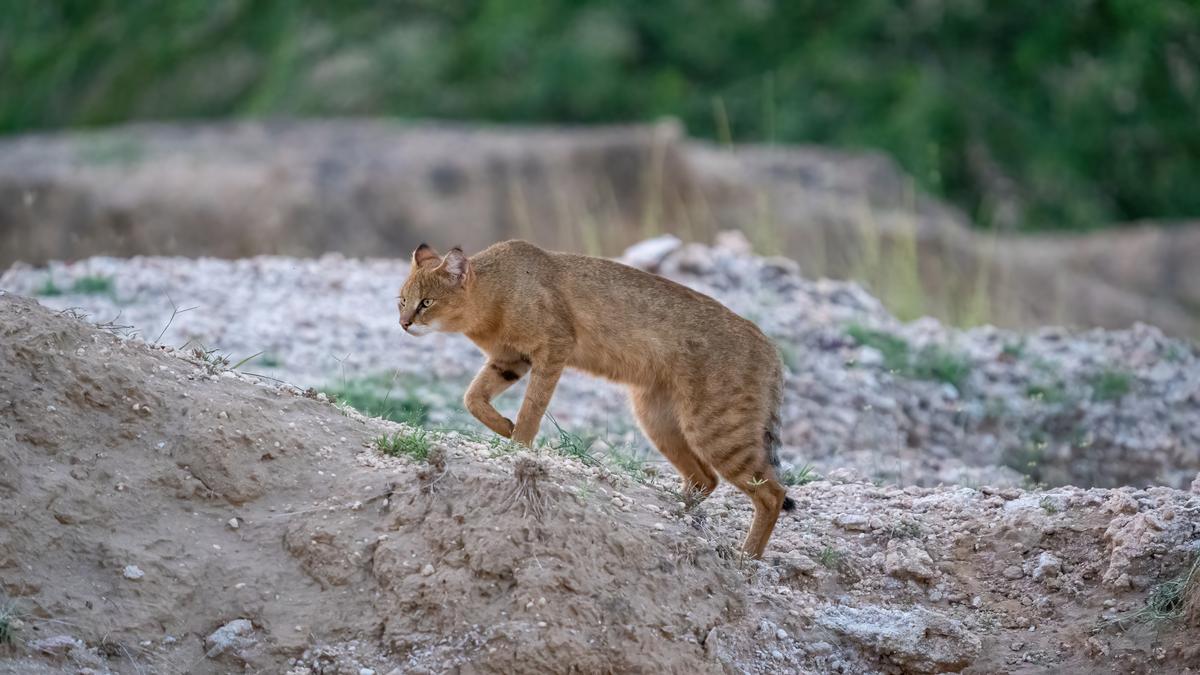
Mon Mar 30 13:01:33 UTC 2026: # Jungle Cat Population in India Estimated at Over 3 Lakh, Highlighting Need for Conservation in Agro-Pastoral Landscapes
The Story:
A new study published in Scientific Reports estimates that India has a population of over 3 lakh jungle cats (Felis chaus). Despite being listed as ‘least concern’ by the IUCN, the research highlights that jungle cat populations are shrinking and require focused conservation efforts. The study, based on camera-trap data from over 26,000 locations across India, emphasizes the importance of agro-pastoral landscapes for the species’ survival, as they avoid dense forests and heavily-modified areas.
Researchers found that human pressure significantly influences jungle cat habitats, and while they can tolerate moderate disturbance, they avoid densely populated areas. The study underscores the need for land policies that recognize the ecological value of open ecosystems and address threats such as habitat fragmentation, road mortality, and potential hybridisation with domestic cats.
Key Points:
- India’s jungle cat population is estimated to be between 1.57 lakh and 4.59 lakh.
- Madhya Pradesh, Rajasthan, and Odisha are estimated to have the largest populations across 21 States with suitable habitats.
- Jungle cats prefer warm, semi-arid regions with moderate rainfall and canopy cover.
- The study highlights the importance of agro-pastoral landscapes for jungle cat conservation, as these cats help control rodent populations in farms.
- Threats to jungle cats include habitat fragmentation, road mortality, poaching, potential hybridisation with domestic cats, and competition with stray dogs.
- The study uses camera-trap records, radio-collar data, and machine learning to model suitable habitats.
- Jungle cats are protected under Schedule II of the Indian Wildlife (Protection) Act 1972.
Key Takeaways:
- The study provides a crucial baseline for future conservation planning for jungle cats in India.
- Conservation efforts need to extend beyond protected areas to include agro-pastoral landscapes.
- Land policies should recognize the ecological value of open ecosystems.
- Addressing the threats posed by habitat fragmentation, road mortality, and stray dogs is essential for jungle cat conservation.
- Further research is needed to understand various aspects of jungle cat ecology, including denning sites, litter sizes, and diets.
 First Piper