
Tue Mar 31 14:47:07 UTC 2026: # India Positions Sanand as Key Node in Global Semiconductor Network
The Story:
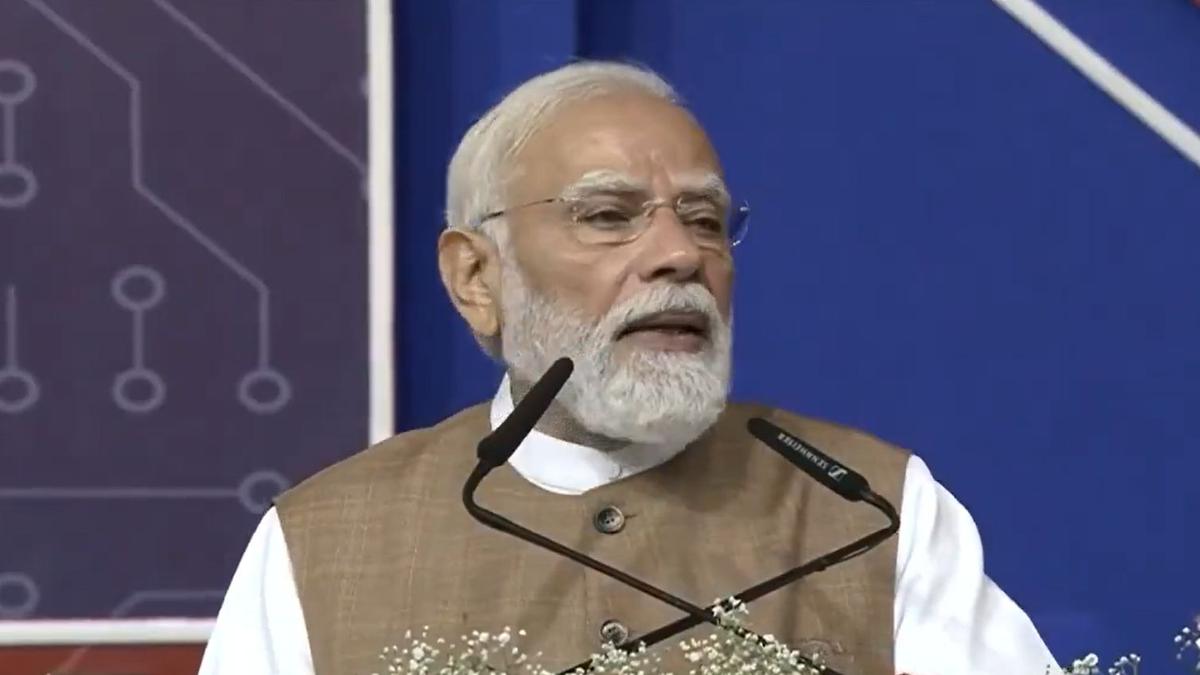
Prime Minister Narendra Modi inaugurated a semiconductor assembly and test facility of Kaynes Semicon in Sanand, Gujarat, on March 31, 2026, declaring the town a crucial link in the global semiconductor supply chain, effectively bridging it with Silicon Valley. He emphasized India’s ambition to become a reliable semiconductor supplier, projecting the domestic market to exceed $100 billion by the end of the decade. The event underscored India’s commitment to the ‘Make in India’ and ‘Make for the World’ initiatives, with the facility built at an estimated cost of ₹3,300 crore.
Key Points:
- Inauguration: Prime Minister Modi inaugurated a semiconductor assembly and test facility in Sanand, Gujarat, on March 31, 2026.
- Investment: The Kaynes Semicon facility was built at a cost of ₹3,300 crore.
- Market Projection: India’s semiconductor market is projected to exceed $100 billion by the end of the decade.
- Semiconductor Mission: The India Semiconductor Mission was launched in 2021, with projects worth ₹1.60 lakh crore underway.
- International Collaboration: India is participating in the Pax Silica initiative and collaborating with international partners to secure semiconductor supply chains.
- Domestic Initiatives: The National Critical Minerals Mission and a ₹1,500 crore scheme to promote mineral recycling are in place.
- Workforce Development: Plans are underway to train over 85,000 design professionals.
Critical Analysis:
The news article highlights India’s strategic move to establish itself as a significant player in the global semiconductor industry. The Prime Minister’s emphasis on securing supply chains, participation in initiatives like Pax Silica, and domestic investments in critical minerals indicate a proactive approach to mitigate vulnerabilities exposed during the COVID-19 pandemic and geopolitical conflicts. The focus on workforce development suggests a long-term vision to build a sustainable semiconductor ecosystem.
Key Takeaways:
- India is actively pursuing a strategy to become a major semiconductor manufacturing hub.
- The government is investing heavily in infrastructure, workforce development, and international collaborations to achieve this goal.
- Geopolitical instability and supply chain vulnerabilities are driving India’s push for self-reliance in semiconductors.
- Gujarat, particularly Sanand, is emerging as a key location for semiconductor manufacturing in India.
- The ‘Make in India, Make for the World’ initiative is central to India’s semiconductor ambitions.
Impact Analysis:
The development of a robust semiconductor industry in India could have significant long-term implications:
- Economic Growth: It can lead to job creation, increased exports, and overall economic growth.
- Technological Advancement: A strong semiconductor industry can foster innovation and technological advancement across various sectors.
- Geopolitical Influence: It can enhance India’s geopolitical influence by reducing its dependence on other countries for critical technologies.
- Supply Chain Security: It can improve supply chain security and resilience, making India less vulnerable to disruptions.
- Global Competitiveness: It can enhance India’s global competitiveness in the electronics and technology sectors.
 First Piper