
Tue Mar 31 17:28:49 UTC 2026: ### India Faces Macroeconomic Strains Amidst West Asia Geopolitical Instability
The Story:
Geopolitical instability in West Asia is putting a strain on India’s macroeconomic stability as of March 2026. The Indian Rupee has depreciated to a record low of ₹95 per dollar, and the Indian crude oil basket has surged to $156.29 per barrel. The Reserve Bank of India (RBI) has been deploying foreign exchange reserves to manage the volatility. While headline GDP indicators remain robust, vulnerabilities linked to energy imports, shipping routes, and fiscal buffers are becoming increasingly apparent. The situation exposes structural weaknesses in India’s fiscal system, particularly its reliance on transaction-linked taxation and vulnerability to oil price volatility.
Key Points:
- The Indian Rupee has depreciated to ₹95 per dollar due to geopolitical instability in West Asia.
- Crude oil prices have spiked to $156.29 per barrel, impacting India’s import costs.
- India’s foreign exchange reserves have declined to about $709.76 billion due to RBI intervention.
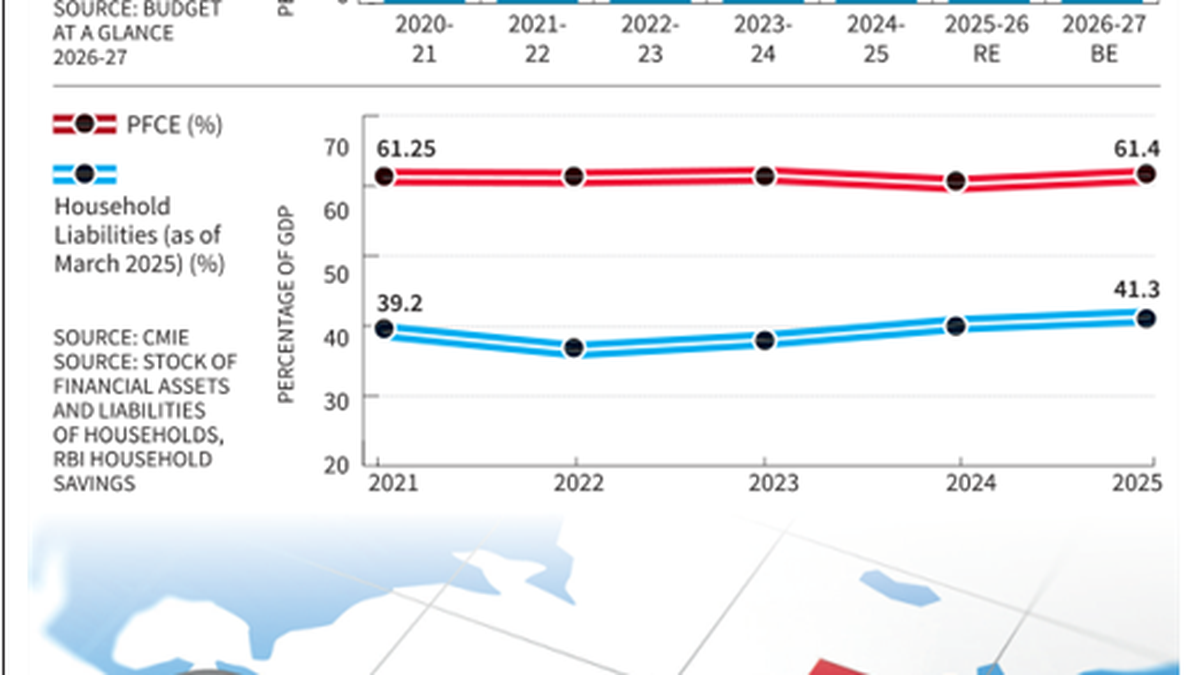
- Real wages remain subdued, and household liabilities have risen to roughly 41 percent of GDP.
- India imports around 85–87 percent of its crude oil, making it highly vulnerable to energy shocks.
- The Union Budget 2026–27 estimates gross tax revenue at ₹44.04 lakh crore, with GST collections reaching ₹22.8 lakh crore in FY25.
- Private consumption accounts for roughly 61.4 percent of India’s GDP.
Critical Analysis:
The historical context provides insight into specific disruptions caused by the geopolitical tensions. The cancellation of the “Welcome To The Jungle” movie shoot in Dubai directly reflects the immediate impact of regional instability on economic activities. The RBI‘s extension of export realization timelines indicates an attempt to mitigate the impact of global disruptions on trade. The oracle layoffs in India also reveal global restructuring.
Key Takeaways:
- India’s macroeconomic strength is being challenged by external geopolitical events, particularly in West Asia.
- The country’s reliance on imported oil and transaction-linked taxation makes it vulnerable to external shocks.
- Rising household debt and subdued wage growth amplify the impact of energy price spikes on the domestic economy.
- Fiscal policy needs to rebalance toward income-led demand, resilient revenue bases, and energy diversification.
- The RBI is actively intervening to manage currency volatility, but structural reforms are necessary for long-term stability.
Impact Analysis:
The current situation could have significant long-term implications for India’s economic growth and fiscal stability. Continued geopolitical instability and high oil prices could lead to:
- Increased inflationary pressures, eroding household purchasing power.
- A widening current account deficit, putting further pressure on the Rupee.
- Reduced fiscal space for government spending on social programs and infrastructure.
- Slower economic growth, as private investment remains cautious and consumption weakens.
- Increased risk of fiscal stress, requiring difficult policy choices between fiscal consolidation and counter-cyclical intervention.
 First Piper