
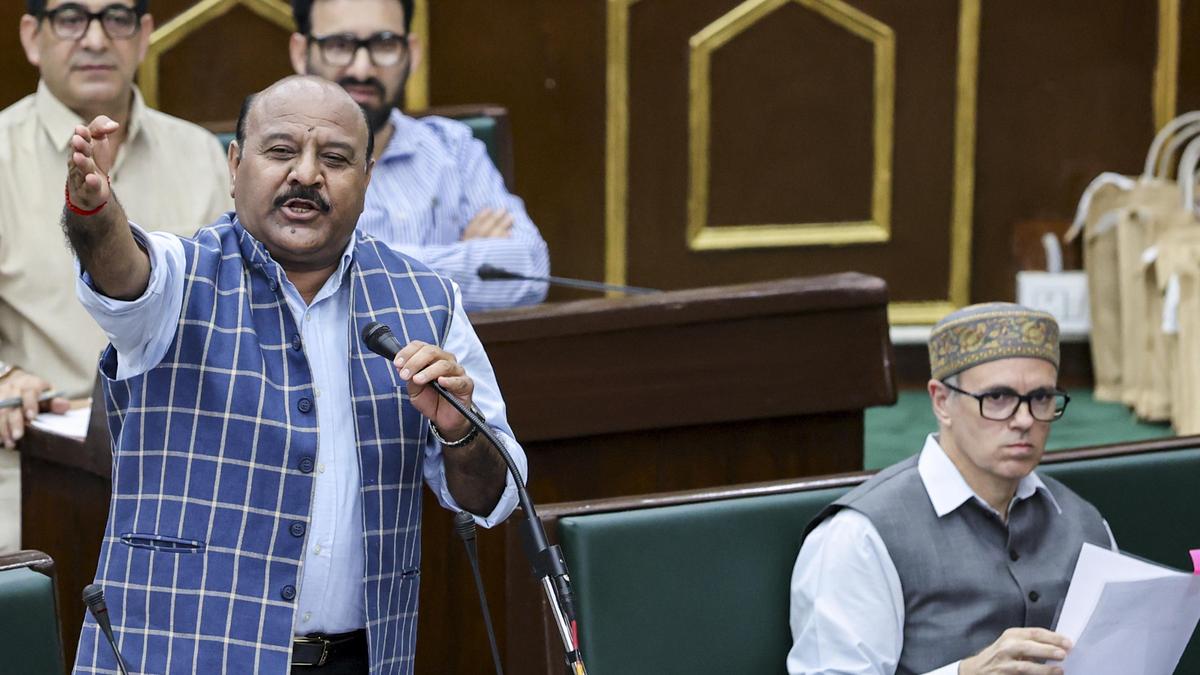
Tue Mar 31 00:11:54 UTC 2026: Headline: J&K Assembly Debates Private Bills Amid Statehood Uncertainty
The Story:
On March 30, 2026, the Jammu and Kashmir (J&K) Assembly commenced voting on approximately 33 private members’ Bills, addressing issues such as land protection, job regularization, and the return of Kashmiri Pandits. This legislative activity occurs amidst ongoing uncertainty regarding the restoration of statehood to J&K, which was downgraded to a Union Territory in 2019. Several Bills proposed by opposition parties, including those concerning a university in Pulwama, protection of temples, and equitable employment opportunities, failed to pass the floor test.
The ruling National Conference (NC), led by Chief Minister Omar Abdullah, opposed some of the Bills, while opposition parties, including the PDP, emphasized the importance of these Bills in restoring the Assembly’s effectiveness. NC legislator Tanvir Sadiq’s Bill on land grants is of particular interest, as it seeks to reverse amendments made in 2022 to the Land Grants Act of 1960.
Key Points:
* The J&K Assembly is voting on 33 private members’ Bills.
* Statehood for J&K remains uncertain.
* Bills on protection of land, job regularization, and return of Pandits are under consideration.
* Opposition Bills regarding a university, temple protection, and equitable employment failed to pass.
* The ruling NC opposed some of the Bills.
* PDP views the Bills as an effort to rebuild the Assembly after the 2019 downgrading.
* NC legislator Tanvir Sadiq’s Land Grants Bill aims to undo 2022 amendments to the 1960 Act.
* Bills on banning liquor sales and regularization of daily wage workers are also under consideration.
Critical Analysis:
The timing of this legislative push, coupled with the opposition’s emphasis on restoring the Assembly’s effectiveness after the 2019 downgrading, suggests a concerted effort to reclaim legislative power and address local grievances within the existing framework of the Union Territory. The failure of some opposition bills indicates a partisan divide, with the ruling NC likely prioritizing its own agenda while navigating the complex political landscape of J&K.
Key Takeaways:
* The J&K Assembly is actively engaging in legislative efforts despite the absence of statehood.
* Private members’ Bills are being used to address critical local issues.
* Political divisions within the Assembly are evident in the failure of opposition Bills.
* The debate over the Land Grants Bill highlights the ongoing tension between land rights and development.
* The Assembly is attempting to assert its relevance in the governance of J&K.
Impact Analysis:
The success or failure of these Bills will significantly impact the lives of residents in J&K, particularly concerning land rights, employment opportunities, and cultural preservation. If the Land Grants Bill passes, it could set a precedent for reversing other central government decisions made after 2019, potentially leading to further legal and political challenges. The ongoing legislative activity underscores the evolving political dynamics in J&K and the persistent demand for greater autonomy and self-governance. The outcome of these debates will likely shape the future relationship between the region and the central government.
 First Piper