
Sun Mar 29 15:12:53 UTC 2026: # Divisional Status Bill Introduced in Jammu and Kashmir Assembly, Exposing Political Faultlines
The Story:
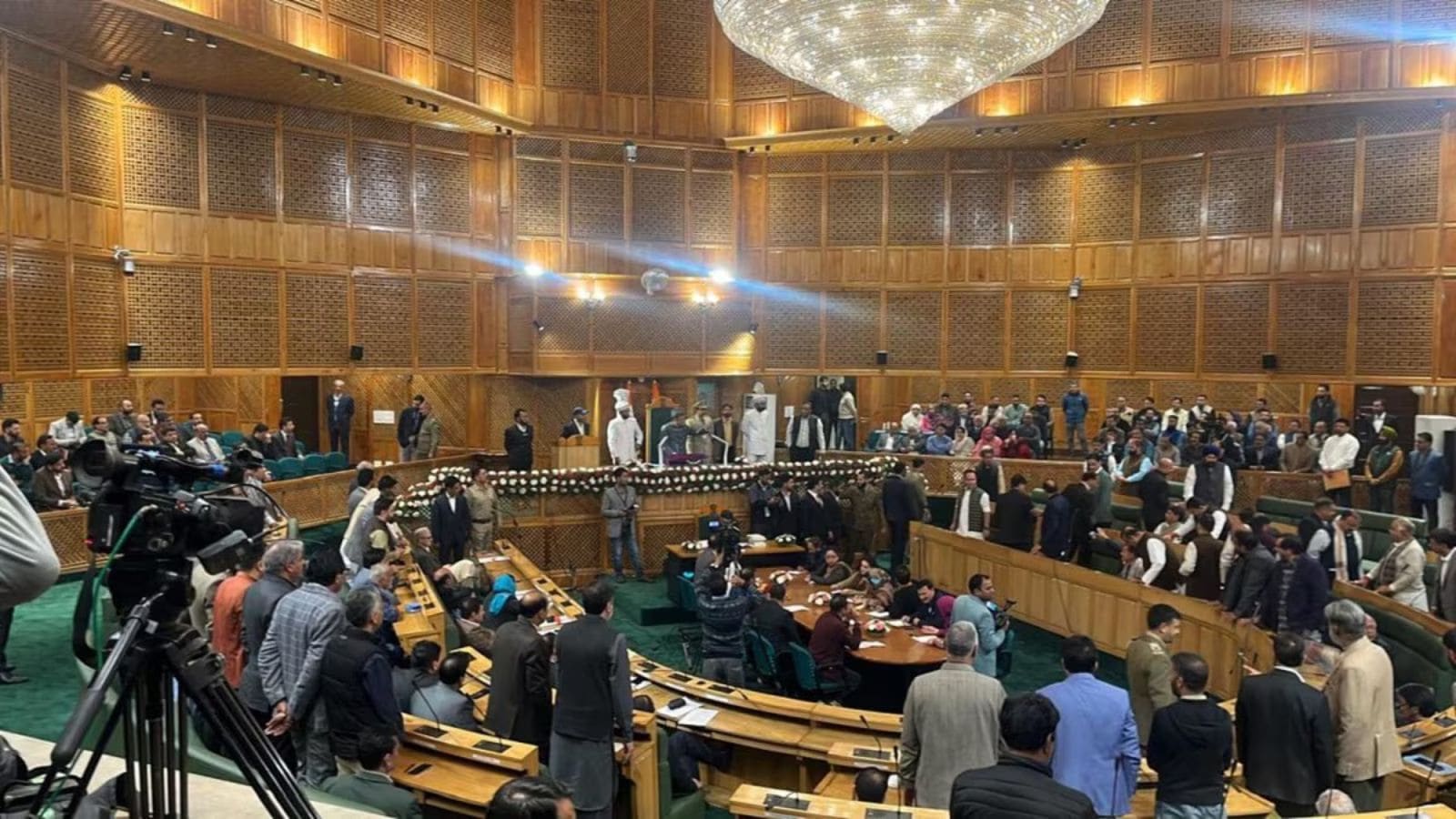
A private member’s Bill seeking divisional status for the Chenab and Pir Panjal regions of Jammu division has been introduced in the Jammu and Kashmir Assembly by PDP MLA Waheed Para. The Bill, approved by Lieutenant Governor Manoj Sinha, aims to address the distinct political and cultural aspirations of these mountainous regions, which identify more closely with the Kashmir Valley. While the Bill’s passage is unlikely due to opposition from the ruling National Conference (NC) and BJP, it highlights the existing regional tensions and exposes contradictions within the NC’s stance on regional autonomy.
Key Points:
- Waheed Para, a PDP MLA, introduced the Bill seeking divisional status for Chenab and Pir Panjal regions.
- The Bill proposes redrawing boundaries to create 16 additional districts across J&K (8 each in Kashmir and Jammu regions).
- PDP President Mehbooba Mufti publicly called for divisional status prior to the bill’s introduction.
- BJP MLA Sham Lal Sharma had previously demanded a separate state for Jammu.
- The NC, led by Farooq Abdullah, opposes the Bill, contradicting its 2019 promise to grant divisional status to the regions if elected.
- Farooq Abdullah compared the demand for divisional status to the “Dixon plan.”
- The Bill has been sent to the LG for clearance due to financial implications.
Critical Analysis:
The introduction of this bill is indicative of the continued regional tensions within Jammu and Kashmir, even after the abrogation of Article 370 and the reorganization of the state into a Union Territory in 2019. The PDP, struggling to regain political ground, is strategically using this bill to appeal to the Chenab and Pir Panjal regions, hoping to capitalize on perceived neglect and discrimination from mainland Jammu. The NC’s shifting stance, from promising divisional status in 2019 to opposing it now, reveals the complexities of balancing regional aspirations with broader political considerations. The BJP’s opposition aligns with its narrative of preventing any move that could be interpreted as favoring a “Greater Kashmir” concept.
Key Takeaways:
- Regional aspirations remain a significant factor in Jammu and Kashmir politics.
- Political parties are strategically using regional demands to gain support.
- The NC’s stance on regional autonomy is inconsistent and potentially damaging to its credibility.
- The Bill highlights the need for administrative decentralization in remote and hilly areas.
- The census and delimitation process presents an opportunity for addressing administrative boundaries.
Impact Analysis:
Although unlikely to pass in its current form, Waheed Para’s Bill could have several long-term impacts. Firstly, it keeps the issue of regional autonomy alive in the political discourse of Jammu and Kashmir. Secondly, it forces political parties to clarify their positions on regional aspirations, potentially leading to realignments and shifts in voter support. Thirdly, it could pressure the administration to consider alternative mechanisms for addressing the grievances of the Chenab and Pir Panjal regions, such as enhanced development packages or greater local representation. Finally, the debate surrounding the Bill could influence the delimitation process, potentially leading to changes in electoral boundaries that reflect the distinct needs and concerns of these regions.
 First Piper