
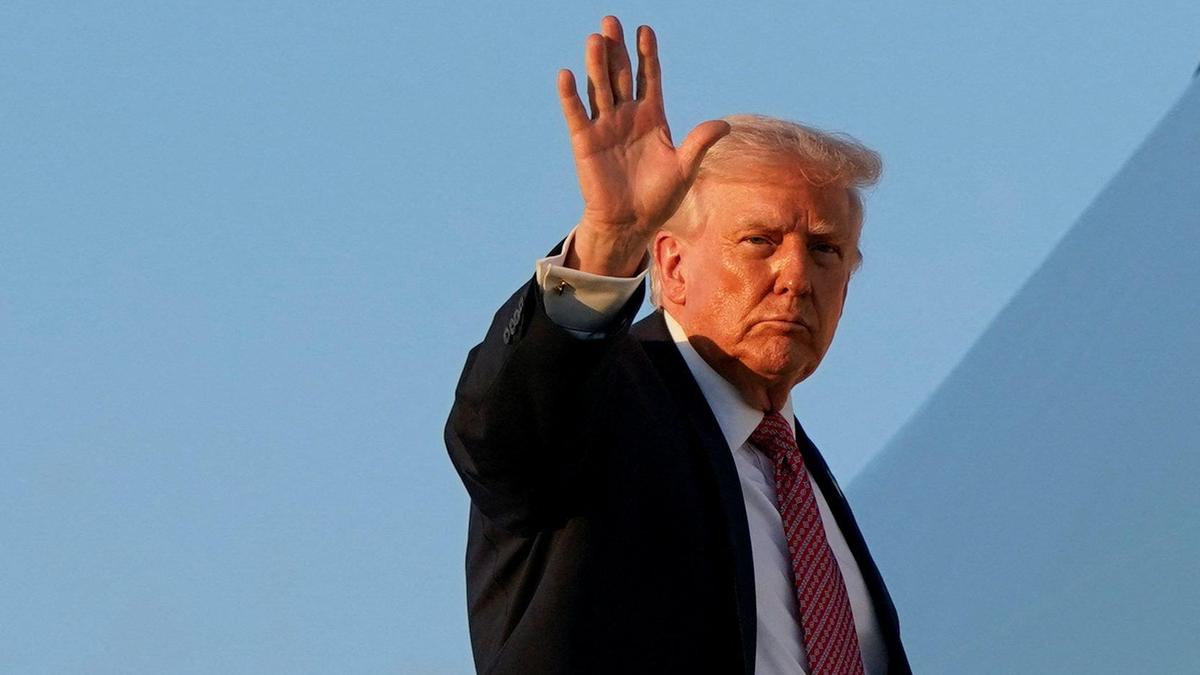
Mon Mar 30 17:47:54 UTC 2026: ### U.S. and Iran Trade Threats Amidst Ongoing Conflict
The Story:
On March 30, 2026, tensions between the U.S. and Iran remain high as President Donald Trump asserts that his administration is in talks with Iran to end the ongoing military operations, while simultaneously threatening to obliterate Iranian infrastructure if Tehran does not comply with U.S. demands to reopen the Strait of Hormuz. Iran denies these claims of direct talks, stating it received a proposal through intermediaries with unacceptable demands. Meanwhile, Iran and Israel continue to exchange fire, with Israel claiming to have struck weapons production sites within Iran, and the Islamic Revolutionary Guard Corps (IRGC) reporting multiple attacks on U.S. bases and Israeli territories.
Key Points:
- President Trump claims the U.S. is in discussions with Iran to end military operations.
- Trump threatens to destroy Iranian infrastructure, including power plants, oil wells, and desalination plants, if the Strait of Hormuz is not reopened.
- Iran denies direct talks with the U.S. but acknowledges receiving a proposal through intermediaries.
- Iran and Israel are actively exchanging fire, with Israel targeting weapons production sites in Iran.
- The IRGC claims responsibility for multiple attacks on U.S. bases in the region and locations within Israel.
Critical Analysis
The news article, coupled with the provided historical context, reveals a pattern of escalating rhetoric and actions. President Trump‘s public statements oscillate between claims of diplomatic progress and aggressive threats, a strategy that could be interpreted as an attempt to pressure Iran into accepting U.S. terms. The involvement of figures like Lindsey Graham, described as “Trump’s biggest Iran war booster,” suggests internal divisions within the U.S. administration regarding the approach to Iran. Iran’s accusations that Trump is “gaming the markets” further highlights the economic dimensions of the conflict and suggests a lack of trust in U.S. intentions. The ongoing military exchanges between Iran and Israel underscore the regional instability and the potential for a wider conflict.
Key Takeaways:
- The situation between the U.S. and Iran remains volatile, with conflicting narratives surrounding diplomatic efforts and military threats.
- The Strait of Hormuz is a key point of contention, with the U.S. demanding its immediate reopening.
- The conflict between Iran and Israel is intensifying, adding another layer of complexity to the regional dynamics.
- There are indications of internal divisions within the U.S. government regarding the approach to Iran.
- Economic factors and perceived manipulation of markets play a significant role in the conflict.
Impact Analysis:
The continuous exchange of threats and military actions carries significant long-term implications. The destruction of Iranian infrastructure, as threatened by President Trump, would have devastating humanitarian and economic consequences. Continued conflict between Iran and Israel could destabilize the entire Middle East, potentially drawing in other regional and global powers. The lack of trust in U.S. diplomacy could damage international relations and undermine future efforts to resolve conflicts peacefully. The economic ramifications, including potential disruptions to oil supplies, could have a global impact.
 First Piper