
Mon Mar 30 13:43:34 UTC 2026: # Andhra Pradesh Partners to Provide Energy-Efficient Appliances Under PMAY
The Story: The Andhra Pradesh State Housing Corporation Limited (APSHCL) has joined forces with Energy Efficiency Services Limited (EESL) and AP State Energy Efficiency Development Corporation (APSEEDCO) to equip five lakh beneficiaries with energy-efficient appliances under the Pradhan Mantri Awas Yojana (PMAY) scheme. The initiative, formalized through a tripartite Memorandum of Understanding (MoU), aims to create a model for sustainable housing across the country.
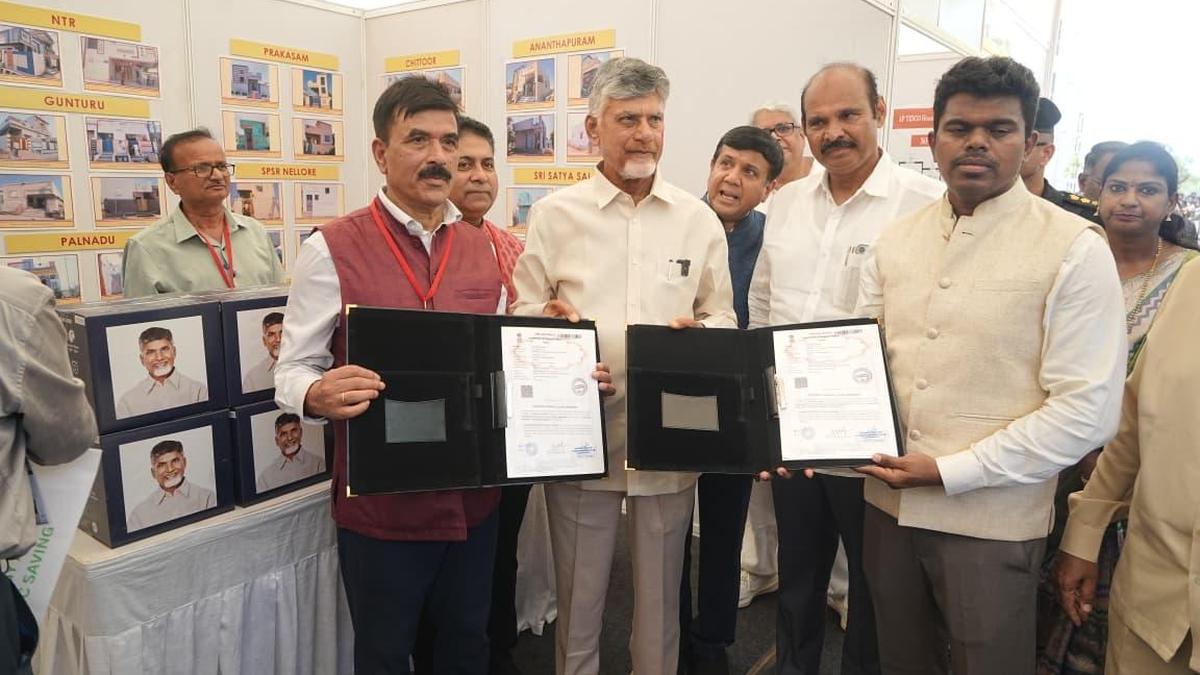
The MoU, initially signed at the India Energy Week (IEW) 2026 in Goa, was officially exchanged in the presence of Chief Minister N. Chandrababu Naidu in Tirupati district. The program involves replacing conventional electrical fixtures in PMAY houses with energy-efficient alternatives, including LED bulbs, LED tubelights, and BLDC fans, offered to households on a voluntary basis.
Key Points:
- The APSHCL is partnering with EESL and APSEEDCO for the initiative.
- Five lakh beneficiaries will receive energy-efficient appliances in the first phase.
- The initiative falls under the Pradhan Mantri Awas Yojana (PMAY) scheme.
- The MoU was exchanged in the presence of Chief Minister N. Chandrababu Naidu.
- Each household will receive four 6-watt LED bulbs, two 20-watt LED tubelights, and two 30-watt BLDC fans.
- The initiative is projected to reduce household electricity consumption by 556.84 kWh annually, saving each household approximately ₹3,341 per year.
- CO2 emissions are expected to decrease by 456.61 kg per household annually.
- The government aims to provide permanent houses to all eligible households by 2029.
Key Takeaways:
- Andhra Pradesh is proactively addressing energy efficiency within its housing sector.
- The partnership leverages both state and national initiatives for maximum impact.
- The initiative promises significant cost savings for beneficiaries and environmental benefits.
- The focus on energy-efficient appliances will contribute to a reduction in peak power demand and improved grid stability.
- The project demonstrates a commitment to sustainable development and climate action.
Impact Analysis:
This initiative has the potential for significant long-term impact:
- Economic: Reduced energy bills for low-income households can free up resources for other essential needs.
- Environmental: Decreased CO2 emissions contribute to mitigating climate change and promoting environmental sustainability.
- Social: Improved living standards and access to efficient appliances enhance the quality of life for beneficiaries.
- Infrastructure: Reduced peak power demand can alleviate strain on the state’s energy infrastructure and improve overall grid stability.
- Policy: The success of this program can serve as a model for other states in India and inform national housing and energy policies.
 First Piper