
Mon Mar 30 12:15:35 UTC 2026: # IBC Amendments Defended in Parliament, Highlighting Recovery and Resolution Success
The Story:
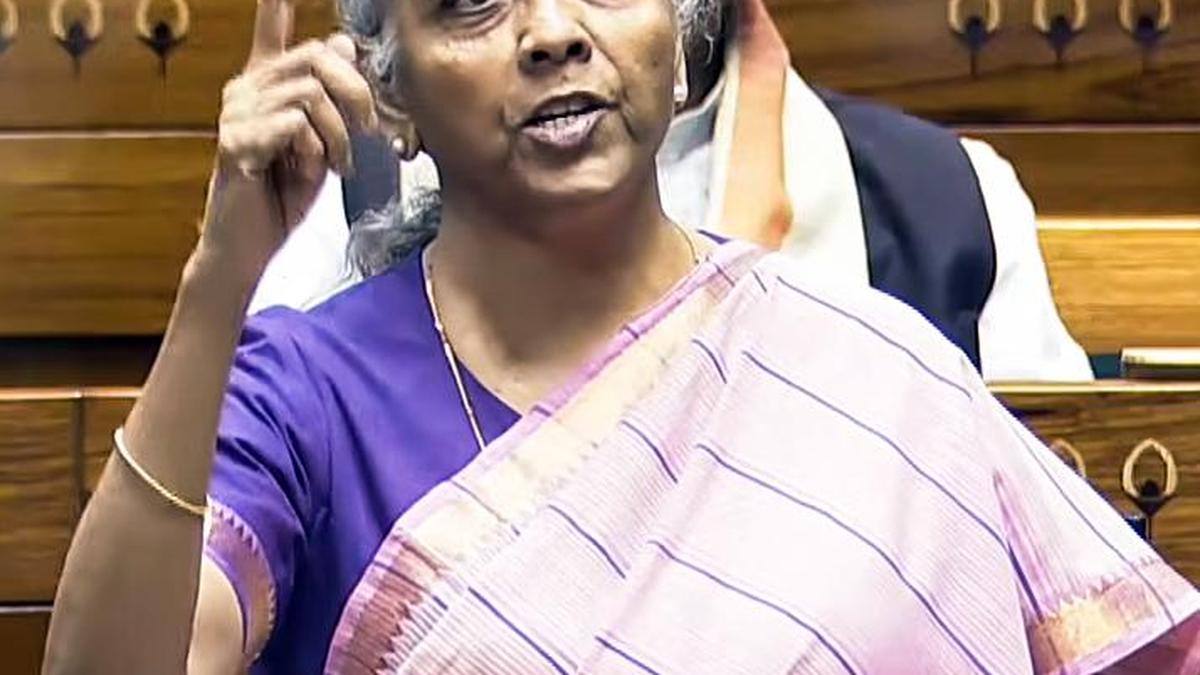
Finance Minister Nirmala Sitharaman defended the Insolvency and Bankruptcy Code (IBC) in Parliament on Monday, March 30, 2026, emphasizing its role in rescuing viable businesses and addressing financial stress rather than merely serving as a debt recovery tool. She highlighted the high level of realisations from distressed assets, recovery for creditors, and the turnaround of companies that have emerged from the resolution process. The Lok Sabha subsequently passed the Insolvency and Bankruptcy (Amendment) Bill 2026.
Key Points:
- The IBC is designed to rescue viable businesses and resolve financial stress, with debt recovery as a byproduct.
- The IBC realizes 94.95% of the fair value of companies at the time of admission and 171.54% of the liquidation value.
- As of December 2025, the IBC facilitated the resolution of 1,376 companies, enabling creditors to recover ₹4.11 lakh crore.
- Financial creditors have seen recovery exceeding 34% of their claims.
- The ratio of resolved companies to liquidated companies has improved significantly, nearing 1:1 in FY 2024-25.
- The “credible threat” of IBC has pushed debtors to settle 32,179 cases before formal proceedings, addressing defaults worth ₹14.62 lakh crore.
- The Lok Sabha passed a bill to amend the IBC, providing for strict timelines, out-of-court settlements, and cross-border insolvency processes. The IBC has been amended seven times since its inception in 2016.
Key Takeaways:
- The IBC is increasingly viewed as a successful mechanism for resolving financial distress and rescuing viable businesses in India.
- Amendments to the IBC aim to streamline the process, enhance efficiency, and broaden its scope.
- The threat of IBC proceedings is proving effective in encouraging pre-emptive settlements, reducing the burden on the formal resolution process.
Impact Analysis:
The amendments to the IBC and the Finance Minister’s strong defense of its effectiveness suggest a continued commitment to strengthening India’s insolvency framework. This will likely have several long-term impacts:
- Improved Credit Culture: The IBC’s success in resolving distressed assets and recovering value for creditors will likely foster a more disciplined credit culture in India, encouraging responsible borrowing and lending practices.
- Enhanced Investor Confidence: A robust insolvency framework provides greater certainty and security for investors, attracting both domestic and foreign investment.
- Reduced Non-Performing Assets (NPAs): By providing a mechanism for resolving financial distress, the IBC can help reduce the accumulation of NPAs in the banking sector, improving its overall health and stability.
- Economic Growth: A well-functioning insolvency framework can contribute to economic growth by freeing up capital that would otherwise be tied up in distressed assets, allowing it to be redeployed into more productive uses. The continued refinement of the IBC through amendments indicates an ongoing effort to optimize its effectiveness in supporting economic growth and financial stability.
 First Piper