
Mon Mar 30 04:35:00 UTC 2026: ### Headline: MGNREGS Workers Across India Denied Work Despite Assurances as New Scheme Framework Remains Unclear
The Story:
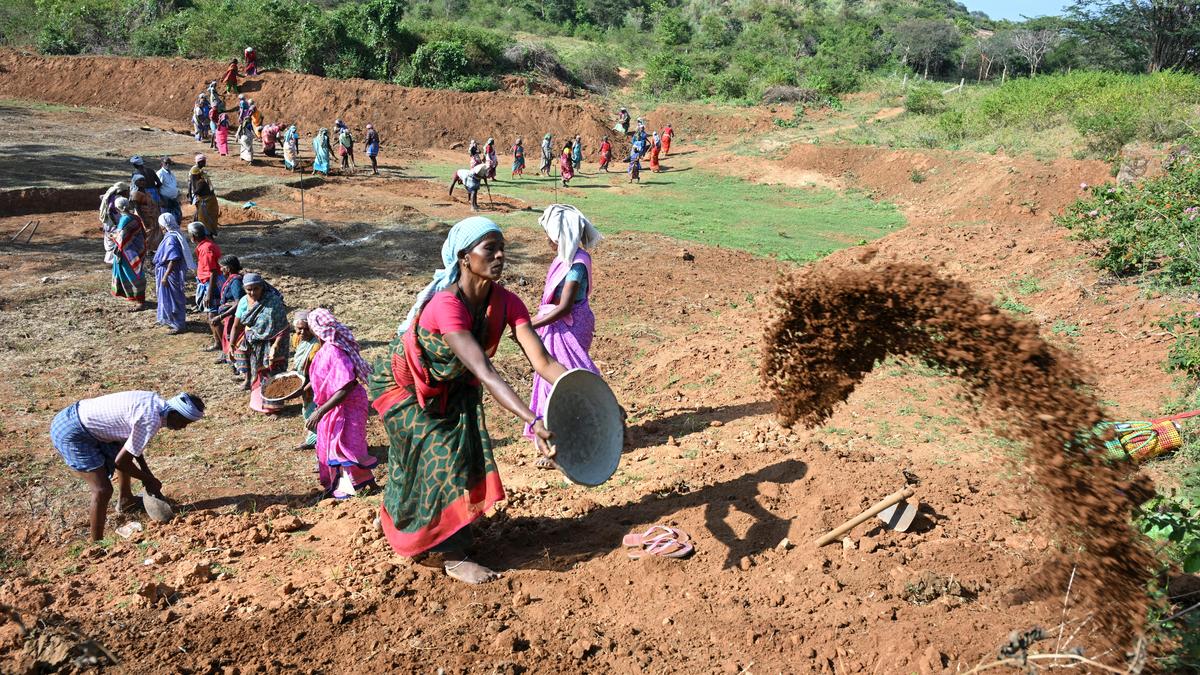
Across several Indian states, including Bihar and Rajasthan, Mahatma Gandhi National Rural Employment Guarantee Scheme (MGNREGS) workers are being denied work, despite assurances from the Union government that the scheme would continue unchanged until the Viksit Bharat—Guarantee for Rozgar and Ajeevika Mission (Gramin) (VB–G RAM G) Act, 2025, is implemented. Protests have erupted, particularly in Muzaffarpur, Bihar, where workers have been demonstrating for 87 days due to the denial of work. The lack of clarity surrounding the implementation of the new VB–G RAM G Act, coupled with conflicting information from district and ministry officials, is creating uncertainty and hardship for rural workers who rely on MGNREGS for their livelihoods.
Key Points:
- MGNREGS workers in Muzaffarpur, Bihar, have been protesting for 87 days due to lack of work.
- Approximately 12,000 workers in Muzaffarpur have not received work for three to four months.
- The Union government assured that MGNREGS would continue until the VB–G RAM G Act is rolled out.
- District officials claim instructions not to start new work, while Ministry officials deny such orders exist.
- Similar issues have emerged in Rajasthan’s Dungarpur and Beawar districts, with workers being turned away and denied Form 6.
- MGNREGS work provides around ₹25,000 to ₹28,000 annually per household.
Critical Analysis:
The simultaneous occurrence of wheat procurement starting in Uttar Pradesh, the allocation of PDS kerosene to States/UTs, and the denial of MGNREGS work reveals a potential strain on resources and a shift in priorities within the government. While efforts are being made to ensure food security (wheat procurement) and address LPG pressures (kerosene allocation), the rural employment sector seems to be facing challenges. The lack of clarity and conflicting directives regarding MGNREGS could indicate a deliberate slow-down as the government transitions to the new VB–G RAM G Act, potentially driven by budgetary constraints or strategic recalibration of rural development initiatives.
Key Takeaways:
- The transition from MGNREGS to VB–G RAM G Act is proving disruptive, causing immediate hardship for rural workers.
- Communication breakdown between central and district-level officials is exacerbating the problem.
- The economic vulnerability of women-led households reliant on MGNREGS is being exposed.
- The situation highlights the importance of a seamless transition in social welfare programs to avoid gaps in support.
Impact Analysis:
The disruption in MGNREGS work has the potential for significant long-term impacts:
* Increased Rural Poverty: The lack of income from MGNREGS could push vulnerable families further into poverty.
* Migration: Economic distress may force rural workers to migrate to urban areas in search of employment, exacerbating urban challenges.
* Social Unrest: Continued denial of work and unmet promises could fuel further protests and social unrest in rural areas.
* Erosion of Trust: The government’s credibility could be damaged if it fails to honor its commitment to continue MGNREGS until the new scheme is fully implemented.
* Food Security: With reduced income, the ability of rural families to afford food could be severely compromised, impacting local food security.
 First Piper