
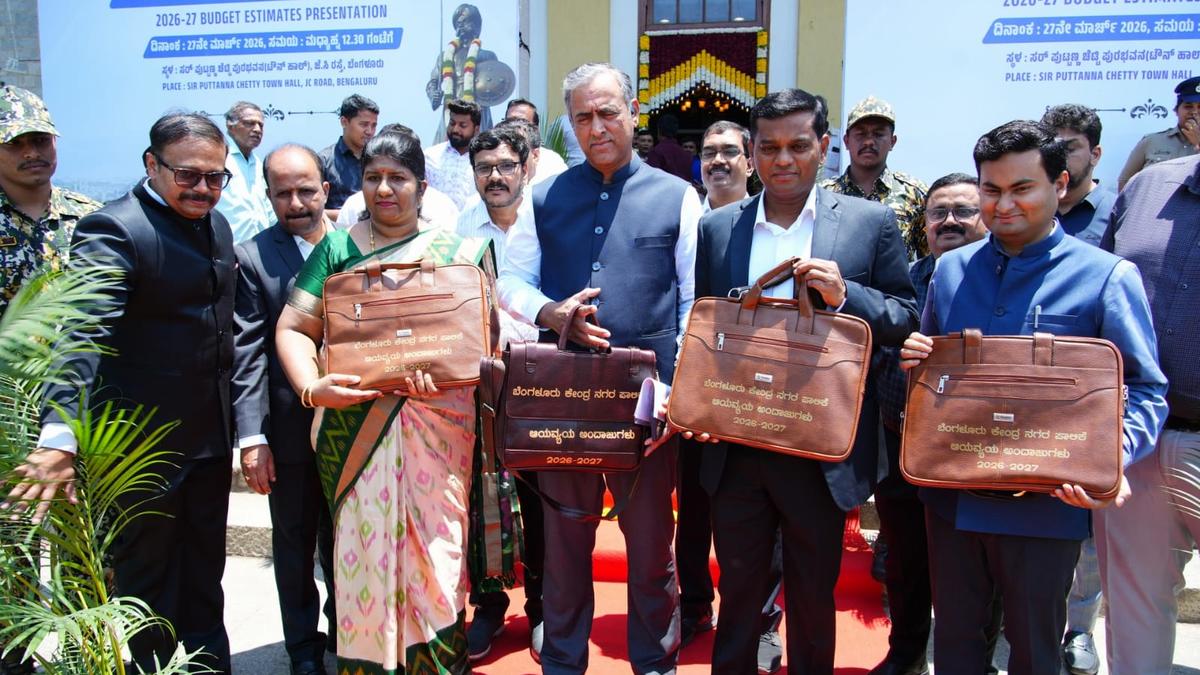
Mon Mar 30 09:15:06 UTC 2026: ### Central City Corporation Unveils Maiden Budget Focused on Infrastructure and Healthcare
The Story:
The Central City Corporation in Bengaluru presented its inaugural budget for 2026-27 on March 27, 2026, outlining a surplus budget with a strong emphasis on road infrastructure, healthcare expansion, and market redevelopment. The budget projects total receipts at ₹3,427.34 crore and expenditure at ₹3,426.60 crore, resulting in a marginal surplus of ₹78.65 lakh. Key initiatives include the introduction of bike ambulances, upgrades to maternity hospitals, establishment of day-care centers for specially-abled children, and market redevelopment projects.
The budget also proposes initiatives aimed at improving public health and safety, such as AI training in schools and cyber fraud awareness campaigns. However, concerns have been raised regarding the lack of attention to issues such as housing and livelihoods for the urban poor and street vendors.
Key Points:
- The Central City Corporation presented its first budget for 2026-27 on March 27, 2026, projecting a surplus of ₹78.65 lakh.
- Road infrastructure development receives over 60% of the budget allocation.
- ₹40 crore is allocated to upgrade maternity hospitals into Community Health Centres.
- Bike ambulances will be introduced to address emergency service delays.
- ₹90 crore is allocated for market redevelopment, with ₹70 crore specifically for Russell Market.
- An activist criticized the budget for lacking a systemic approach to housing and livelihoods for the urban poor.
- AI training in schools and cyber fraud awareness campaigns are proposed.
Critical Analysis:
The focus on road infrastructure likely stems from the persistent traffic congestion issues in Bengaluru, as highlighted by the news regarding the introduction of bike ambulances. The emphasis on healthcare expansion could be a response to growing public health concerns and the need to upgrade existing facilities to meet Indian Public Health Standards. The market redevelopment projects aim to improve infrastructure and generate rental income, but the activist’s concerns suggest a potential disconnect between the corporation’s plans and the needs of vulnerable populations. The announcement of AI training in schools and cyber fraud awareness campaigns indicates an attempt to cater to the growing tech-literacy of the city while also addressing the risks that come with increased online activity. The fact that initiatives are proposed to be taken up under PPP mode is likely due to limited flow of grants from the Central government to cities.
Key Takeaways:
- The budget prioritizes infrastructure and healthcare in central Bengaluru.
- Public-private partnerships (PPPs) are a key component of the corporation’s funding strategy.
- Concerns remain about addressing the needs of the urban poor and street vendors.
- The budget reflects an awareness of the need for technological literacy and online safety.
- The budget is trying to address the needs of the city, but the impact on the poor and marginalized is a concern.
Impact Analysis:
The budget’s emphasis on infrastructure and healthcare has the potential to improve the quality of life for residents in central Bengaluru. The introduction of bike ambulances could significantly reduce response times in emergencies, potentially saving lives. Upgrading healthcare facilities and providing mental health services could improve public health outcomes. However, the lack of attention to housing and livelihoods for the urban poor could exacerbate existing inequalities and lead to social unrest. The success of the budget will depend on effective implementation and addressing the concerns raised by activists and community stakeholders. The reliance on PPPs will also require careful management to ensure that public interests are protected.
 First Piper