
Mon Mar 30 07:24:04 UTC 2026: ### Telangana ASHA Workers Intensify Protests Demanding Fair Wages and Recognition
The Story:
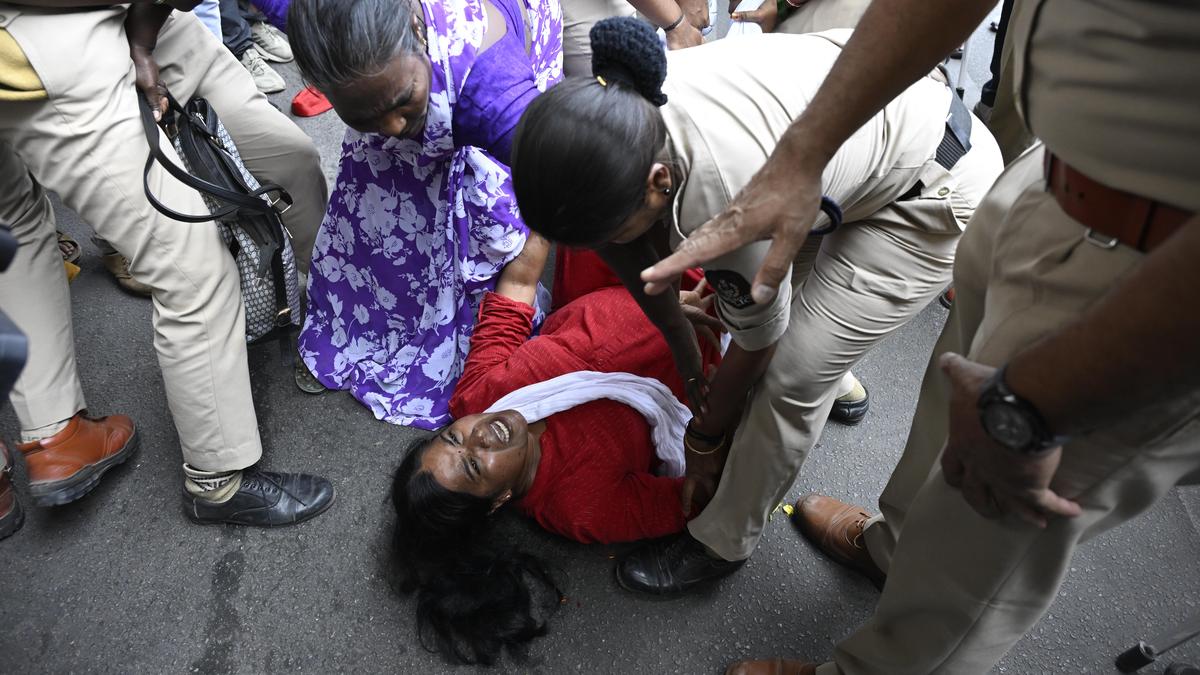
For over a month, Telangana has been gripped by escalating protests from Accredited Social Health Activists (ASHAs). The demonstrations, which include sit-ins, road blockades, and confrontations with police, reached a peak with the “Chalo Hyderabad” demonstration on Saturday, March 28, 2026, at Dharna Chowk, Indira Park. The ASHA workers are demanding a fixed monthly salary of ₹18,000, formal recognition as workers within the public health system, and improved working conditions. They argue that their current incentive-based pay, averaging around ₹9,900 per month, is insufficient and unreliable given their extensive responsibilities in community healthcare.
The ASHA workers, numbering over 28,000 in Telangana, are a crucial link between communities and government health services. Their duties encompass maternal and child health, immunization, disease surveillance, health awareness campaigns, and data collection. Protesters emphasize the mismatch between their heavy workload, often extending beyond standard working hours, and their compensation, which they deem inadequate and unstable.
Key Points:
- Telangana ASHA workers are protesting for a fixed monthly salary of ₹18,000 and formal recognition as workers.
- The protests intensified with the “Chalo Hyderabad” demonstration on March 28, 2026.
- Currently, ASHA workers receive incentive-based pay, averaging around ₹9,900 per month.
- The ASHA workers’ association demands a ₹1,500 monthly allowance for work-related expenses and clearance of pending dues.
- They are also seeking formal labor protections, inclusion in the National Health Mission (NHM) workforce, and improved benefits.
Critical Analysis:
The timing of these protests, amidst other demonstrations across Telangana (auto drivers protesting CNG shortages) and in other parts of the world (Los Angeles “No Kings” protest), suggests a broader climate of social unrest and a growing willingness to engage in direct action to address grievances. The fact that the ASHA workers have been making these demands under both the previous BRS government and the current Congress government highlights the systemic nature of their issues and the difficulty in achieving meaningful change.
Key Takeaways:
- The ASHA workers’ protests underscore the precarious working conditions and lack of recognition faced by frontline healthcare workers in India.
- The incentive-based payment system is a major point of contention, leading to financial instability for ASHA workers.
- The protests highlight the ongoing struggle for labor rights and fair wages in the informal sector.
- The government’s response to these protests will be a crucial indicator of its commitment to public health and social welfare.
- The protests come at a time where there is civil unrest in other sectors and other parts of the world, indicating a potential trend of public dissatisfaction.
Impact Analysis:
The ASHA workers’ protests could have significant long-term implications for India’s healthcare system. If their demands are met, it could lead to improved morale, retention, and performance among ASHA workers, ultimately strengthening community healthcare services. Conversely, failure to address their concerns could result in continued disruptions, reduced service quality, and further erosion of trust in the public health system. The outcome of these protests may also set a precedent for other informal sector workers seeking better wages and working conditions.
 First Piper