
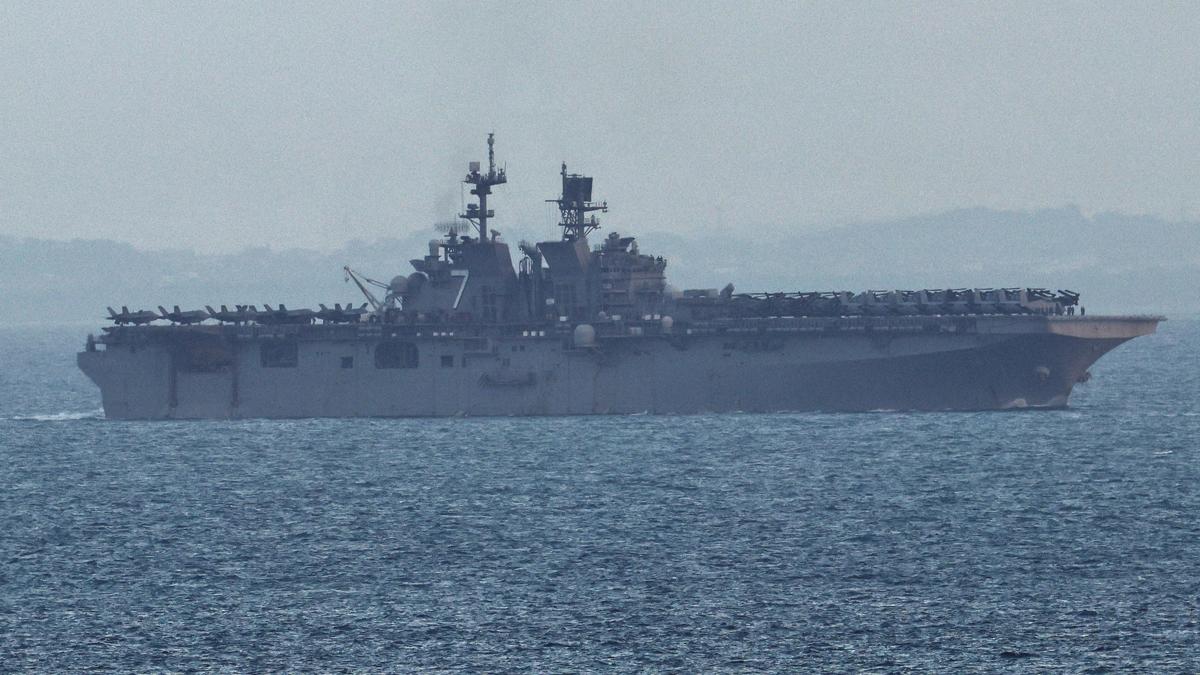
Sun Mar 29 01:13:57 UTC 2026: Headline: USS Tripoli Deploys to West Asia Amidst Rising Tensions with Iran
The Story:
The amphibious assault ship USS Tripoli (LHA-7) arrived in the West Asia region on Friday, March 28, 2026, as announced by U.S. Central Command (Centcom) on Saturday, March 29, 2026. This deployment occurs amidst heightened speculation regarding potential U.S. ground troop deployment in Iran. The ship, usually stationed in Japan, carries approximately 3,500 Marines and sailors, along with transport and strike fighter aircraft, amphibious assault, and tactical assets.
The arrival coincides with U.S. Secretary of State Marco Rubio’s statement on Friday, March 27, 2026, suggesting that Washington could achieve its objectives in Iran without deploying ground forces. However, President Donald Trump has remained ambiguous on the matter, and U.S. media outlets have reported potential plans to send at least 10,000 troops to the region.
Key Points:
- The USS Tripoli arrived in West Asia on March 28, 2026.
- The ship carries approximately 3,500 Marines and sailors.
- The deployment includes transport and strike fighter aircraft, amphibious assault, and tactical assets, including Seahawk helicopters, Osprey aircraft, and F-35 fighter jets.
- Secretary of State Marco Rubio stated that ground forces might not be necessary in Iran.
- President Trump’s stance remains unclear, with reports suggesting a potential deployment of 10,000 troops.
Critical Analysis:
The deployment of the USS Tripoli, a significant amphibious assault ship, to West Asia amidst an ongoing Iran-Israel conflict, strongly suggests a proactive stance by the U.S. government. The timing, closely following Secretary Rubio’s comments about achieving objectives without ground troops, could be interpreted as a show of force intended to deter further escalation while keeping options open. President Trump’s ambiguity adds another layer, potentially allowing flexibility based on how the situation develops. The historical context, including Iran turning back Chinese ships and Pakistan securing a deal to send ships through the Strait of Hormuz, points to a volatile situation where the U.S. is strategically positioning itself.
Key Takeaways:
- The U.S. is increasing its military presence in West Asia, specifically in response to the escalating tensions between Iran and Israel.
- The deployment of the USS Tripoli serves as a demonstration of U.S. military capabilities and commitment to the region.
- Conflicting statements from U.S. officials suggest a deliberate ambiguity in the U.S. strategy, potentially aimed at maintaining flexibility.
- The involvement of other nations, such as China and Pakistan, highlights the international implications of the Iran-Israel conflict.
- The Houthi involvement and threats to global shipping routes add to the complexity and potential for wider conflict.
Impact Analysis:
The deployment of the USS Tripoli has significant long-term implications for regional stability and U.S. foreign policy. Firstly, it solidifies the U.S. role as a key player in the West Asia security landscape. This action could deter further Iranian aggression, but it may also provoke a stronger response, escalating the conflict. Secondly, the deployment will likely impact U.S. relations with other nations in the region, either strengthening alliances or creating new points of friction. Finally, the U.S.’s approach to the conflict will set a precedent for how it handles future international crises, influencing its credibility and influence on the global stage. The ambiguity surrounding potential ground troop deployment means that the situation remains highly fluid, with the potential for
 First Piper