
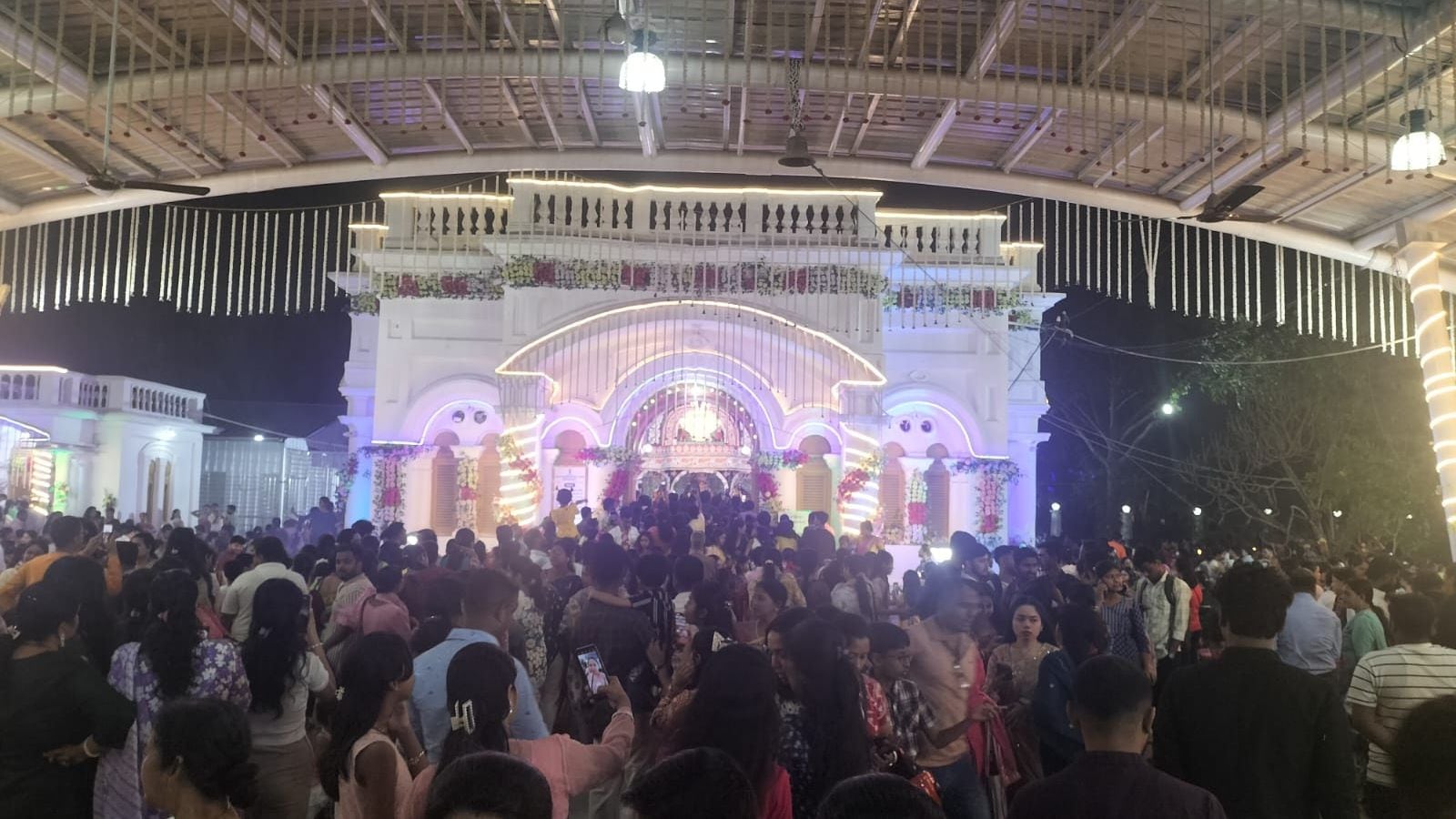
Sat Mar 28 11:59:21 UTC 2026: ### Tripura’s Durgabari Temple: A Royal Legacy Endures Through Divine Vision and State Support
The Story: A legend dating back to the late 1830s surrounds the Durgabari temple in Tripura, where Queen Sulokkhona Devi, wife of Maharaj Krishna Kishore Manikya, is said to have fainted upon seeing the traditional ten-armed idol of Goddess Durga. Following this, the queen purportedly received a divine command to have the goddess depicted with only two visible arms to allay her fears. Consequently, a unique idol was commissioned, representing the compassionate form of Durga. This tradition continues today, with the state government supporting the temple as per the 1949 Merger Agreement, which integrated Tripura into India.
Key Points:
- The legend of the two-armed Durga idol originates in the late 1830s with Queen Sulokkhona Devi.
- Maharaj Krishna Kishore Manikya commissioned the unique idol based on the queen’s vision.
- Durga Puja traditions in Tripura date back approximately 500 years.
- The Durgabari temple’s prasad uniquely includes non-vegetarian offerings like meat, fish, and eggs.
- The state government is obligated to support the temple financially under the 1949 Merger Agreement.
- The West Tripura district magistrate serves as the ex officio ‘sevayeta’ of the temple.
Critical Analysis: The story of the Durgabari temple and its unique idol reflects the syncretic nature of religious practices in Tripura, blending royal patronage with local beliefs and traditions. The state government’s continued support, mandated by the 1949 Merger Agreement, highlights the recognition of the temple’s historical and cultural significance. The related context of “Days of Royalty are Over” indicates a potential tension between traditional reverence for the royal family and contemporary political dynamics in Tripura.
Key Takeaways:
- The Durgabari temple showcases a unique adaptation of Durga worship rooted in a royal legend.
- The temple’s continued significance underscores the enduring influence of Tripura’s royal history.
- State government support solidifies the temple’s role as a cultural and religious landmark.
- The story highlights the blending of royal patronage, divine vision, and local traditions.
- The unique prasad offerings reflect a departure from typical Hindu temple practices.
Impact Analysis: The Durgabari temple’s story not only preserves a unique religious tradition but also reinforces the cultural identity of Tripura. The state government’s financial support ensures the temple’s continued operation and preservation as a historical landmark. The ongoing devotion of locals, as evidenced by the large crowds during festivals, suggests that the temple will continue to play a significant role in the religious and cultural landscape of Tripura for generations to come. The context of political dynamics may influence the level of state support or the way the temple is perceived in the future.
 First Piper