
Sun Mar 29 05:17:03 UTC 2026: # India Seeks Energy Independence with Indigenous DME Technology Amidst West Asia Crisis
The Story:
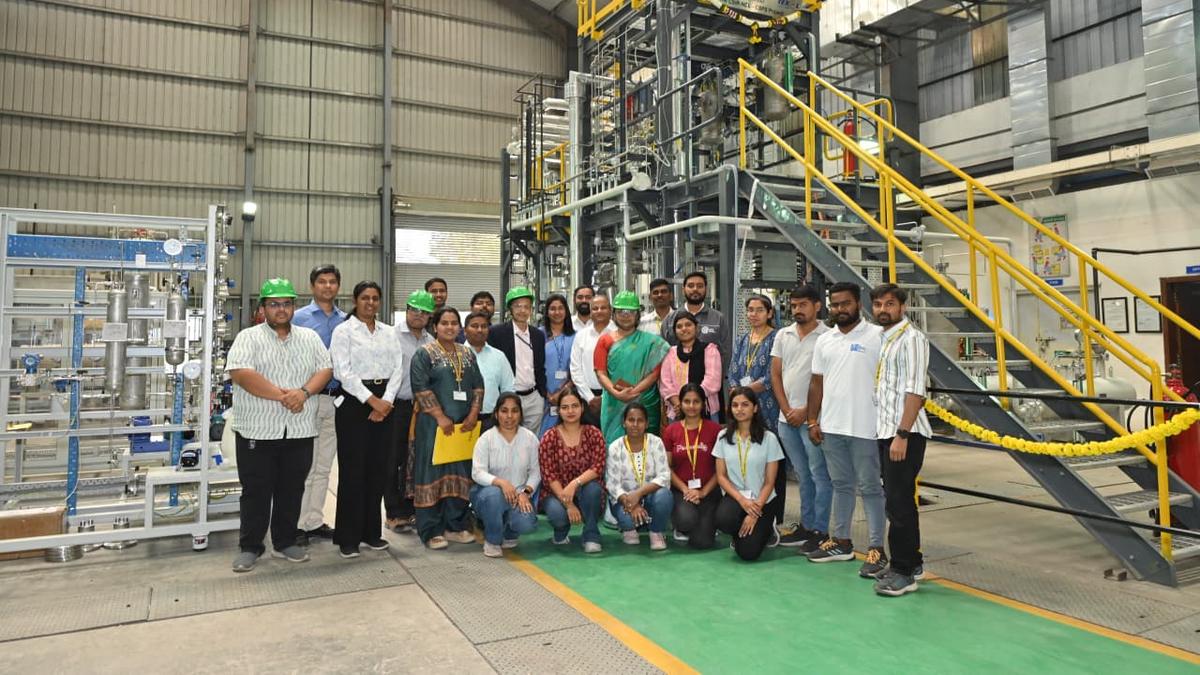
Amidst ongoing instability in West Asia, India is aggressively pursuing alternative fuel sources. Scientists at the CSIR – National Chemical Laboratory (NCL) in Pune, led by Raja Thirumalaiswamy, are preparing to transfer technology for a reactor and catalyst capable of producing Dimethyl Ether (DME), a potential substitute for Liquefied Petroleum Gas (LPG). The technology, developed since 2016, has already garnered interest from multiple companies and countries. ONGC has partnered with NCL to produce 2.5 tonnes/day of DME at its Hazira facility.
Key Points:
- The CSIR – NCL in Pune has developed technology for producing DME from methanol.
- Raja Thirumalaiswamy leads the team of scientists.
- Seven companies and four countries, including Finland and Ghana, have expressed interest in the technology.
- ONGC has partnered with NCL to produce 2.5 tonnes/day of DME.
- The NCL holds five patents for the indirect method of deriving DME from methanol.
- The developed catalyst is durable, operates at lower temperatures, and provides higher purity and lower operational costs.
- The DME-compatible cooking stoves have an efficiency of 74.5%, compared to the 64-68% efficiency of regular stoves.
- Ordinary stoves can use up to 20% DME blended with LPG without modifications.
- The catalyst has been tested for over 15,000 hours.
Critical Analysis:
The timing of this development is crucial, given the West Asia crisis. India’s reliance on imported LPG makes it vulnerable to geopolitical instability. The indigenous DME technology offers a pathway towards greater energy independence and security. The mention of “The Tamil connect” in a related article suggests a possible focus on leveraging Tamil Nadu’s scientific talent and resources for national energy solutions.
Key Takeaways:
- India is actively seeking alternatives to LPG due to the West Asia crisis.
- Indigenous DME technology developed by CSIR – NCL offers a promising solution.
- The technology has the potential to significantly reduce India’s dependence on imported fuel.
- The efficiency and cost-effectiveness of the new technology are key advantages.
- The partnership with ONGC signals strong governmental support for the development and deployment of DME technology.
Impact Analysis:
The successful deployment of this DME technology could have significant long-term implications for India’s energy sector:
- Reduced Import Dependence: Decreasing reliance on imported LPG would enhance energy security and insulate the country from global price fluctuations.
- Economic Growth: The development and production of DME could create new jobs and stimulate economic growth in related industries.
- Environmental Benefits: DME can be produced from various sources, including renewable feedstocks, potentially leading to lower greenhouse gas emissions compared to LPG.
- Rural Development: Wider availability of DME could improve access to clean cooking fuel in rural areas, reducing indoor air pollution and improving public health.
- Technological Advancement: The successful commercialization of this technology would further strengthen India’s position as a global leader in scientific research and innovation.
 First Piper