
Sun Mar 29 02:56:08 UTC 2026: ### Headline: Rediscovering Jeewanu: Indian Scientists Revisit Pioneering Work on the Origins of Life
The Story:
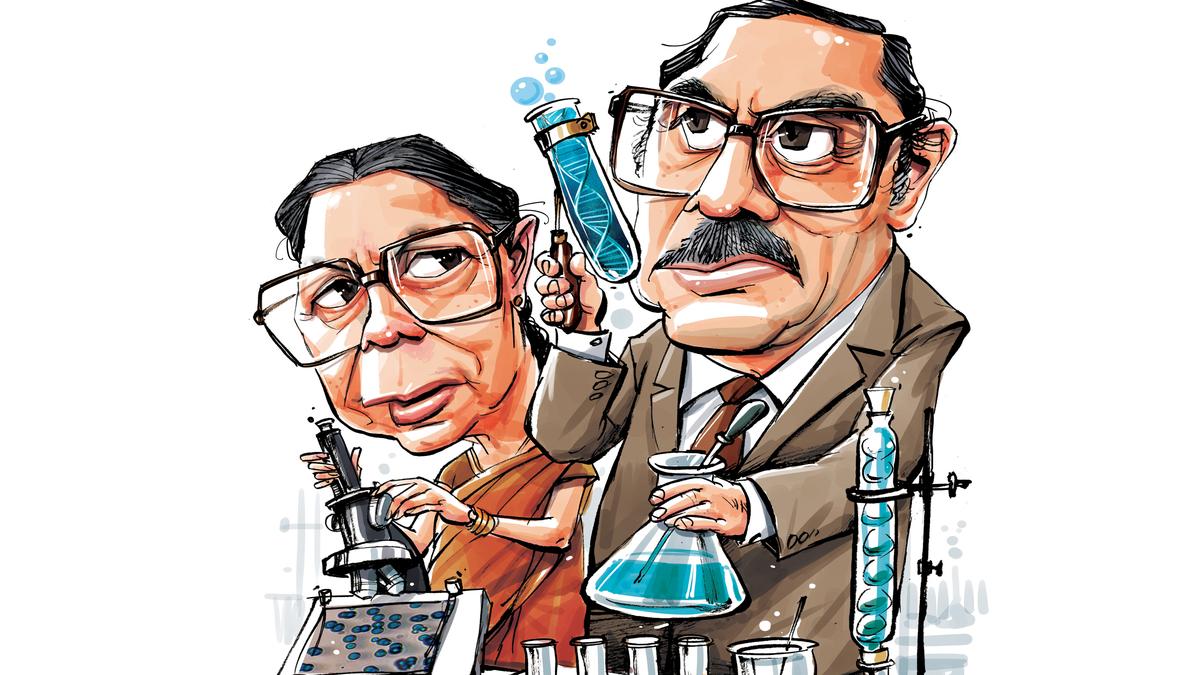
In early 2023, Ph.D. candidate Nayan Chakraborty and Associate Professor Shashi Thutupalli at the National Centre for Biological Sciences (NCBS) in Bengaluru successfully replicated and expanded upon the work of Indian chemists Krishna Bahadur and S. Ranganayaki, who, in the 1960s, claimed to have created “jeewanu” – particles of life – by exposing a chemical mixture to sunlight. Thutupalli and Chakraborty’s research, now available as a preprint, demonstrates that a simple mix of compounds can self-organize into cell-like compartments exhibiting growth, multiplication, and rudimentary metabolism. While they do not claim to have created life, their findings offer new insights into the transition from non-biological processes to the living state and the origins of life on Earth, sparking renewed interest in the previously dismissed work of Bahadur and Ranganayaki.
Key Points:
- Nayan Chakraborty and Shashi Thutupalli successfully replicated aspects of Krishna Bahadur and S. Ranganayaki’s “jeewanu” experiments from the 1960s.
- Their research demonstrates the self-organization of simple compounds into cell-like compartments with growth and metabolic activity.
- The findings do not claim to have created life but offer insights into the origins of life on Earth.
- Bahadur’s original work faced criticism and was largely dismissed due to concerns about sterility and reproducibility, as well as potential bias against research from less “advanced nations.”
- Newly available correspondence reveals that Bahadur had a falling out with prominent biochemist Sidney W. Fox, who actively discredited his work.
- Marine biologists discovered similar blue spheres within sponges in the ocean in July 2024, supporting the possibility of this type of chemistry occurring naturally.
Key Takeaways:
- The rediscovery of Bahadur and Ranganayaki’s work highlights the importance of revisiting dismissed scientific claims, especially those from underrepresented researchers.
- The new research provides a plausible explanation for the formation of cell-like entities from simple compounds, contributing to the understanding of the origins of life.
- The story underscores the impact of scientific politics and biases on the reception of research findings.
- The findings could potentially influence the search for life beyond Earth by broadening the definition of “life-like organization.”
- The collaboration between the researchers at NCBS and the family of the original researchers shows how important preserving scientific history is.
Impact Analysis:
- Scientific Community: The research is likely to stimulate further investigation into the origins of life and the conditions under which cell-like structures can form. It may also prompt a re-evaluation of the criteria used to define life, both on Earth and in the search for extraterrestrial life.
- Indian Science: The renewed interest in Bahadur and Ranganayaki’s work could inspire a greater appreciation for the contributions of Indian scientists and encourage more inclusive and equitable practices in the global scientific community.
- Historical Perspective: The story serves as a reminder of the importance of critically examining the historical context of scientific discoveries and the potential for bias to influence their reception. By archiving the records, books, and letters of Bahadur and Ranganayaki at NCBS, there is now a documented history of their work for researchers.
 First Piper