
Sat Mar 28 11:51:03 UTC 2026: ### Mumbai-Ahmedabad Bullet Train Project Faces Cost Overruns and Delays
The Story:
India’s ambitious Mumbai-Ahmedabad High Speed Rail (MAHSR), also known as the bullet train project, is facing significant cost escalations and potential delays. The 508-km project, supported by technical and financial assistance from the Government of Japan, aims to connect Mumbai and Ahmedabad with 12 stations along the route. A recent report by the Standing Committee on Railways highlighted that detailed engineering requirements, exchange rate fluctuations, land acquisition, resettlement & rehabilitation costs, normal inflation, and expenses not initially considered in the feasibility report have contributed to the increased costs.
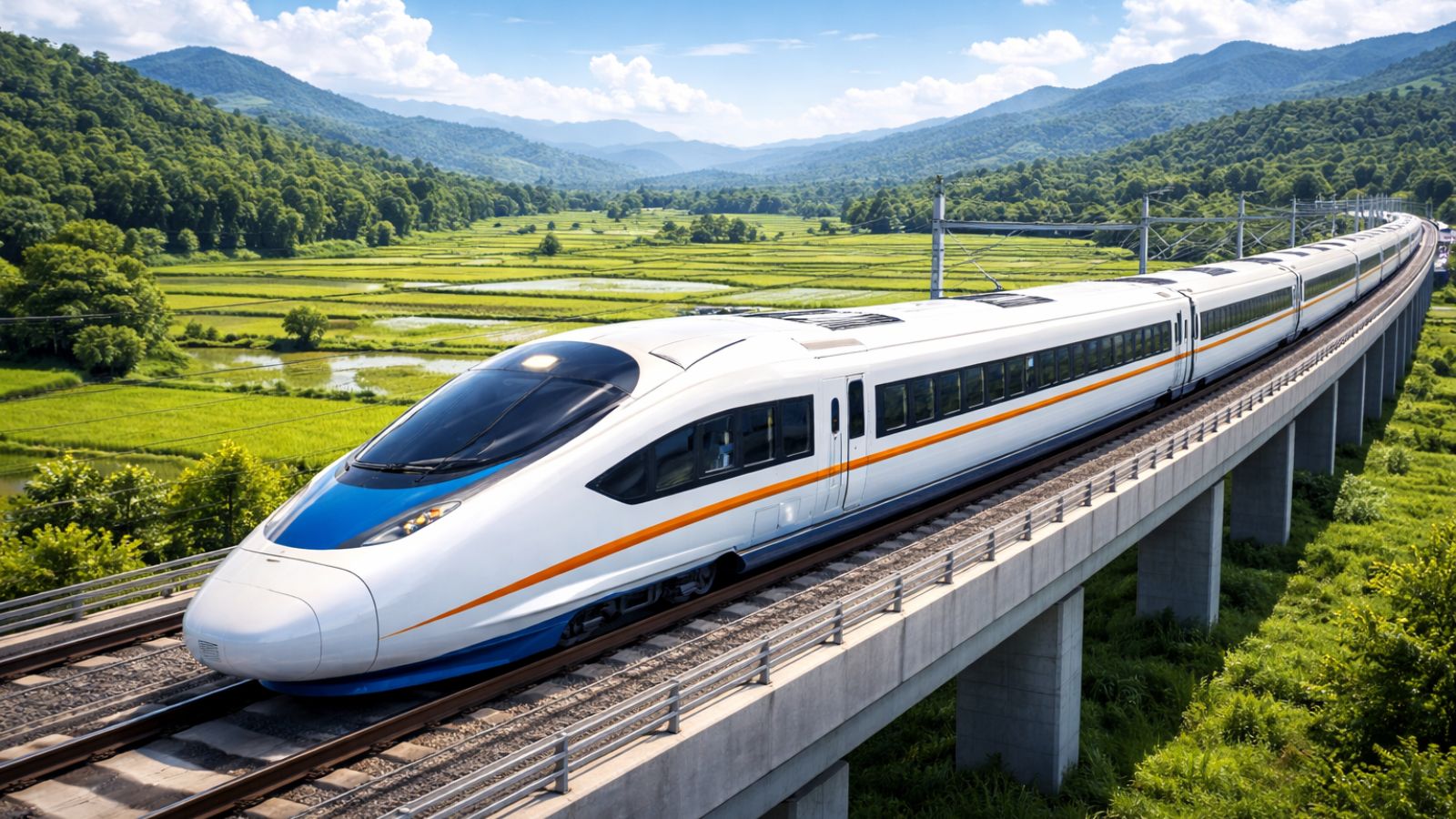
The decision to construct the entire rail line on viaducts, instead of a mix of viaducts and embankments as initially planned, also added to the cost. The Ministry of Railways stated the original cost of Rs 97,636 crore, approved in December 2015, was based on a preliminary feasibility report, and subsequent detailed engineering revealed unforeseen expenses. The Standing Committee has recommended a more robust execution framework to improve inter-agency coordination and resolve bottlenecks to prevent further delays and cost overruns.
Key Points:
- The Mumbai-Ahmedabad High Speed Rail (MAHSR) project is a 508-km bullet train project.
- The project is supported by technical and financial assistance from the Government of Japan.
- Cost escalation is attributed to detailed engineering, exchange rate fluctuations, land acquisition, resettlement & rehabilitation, and normal inflation.
- The decision to construct the entire line on viaducts increased costs.
- The original cost estimate of Rs 97,636 crore was approved in December 2015.
- The Standing Committee on Railways recommends a robust execution framework for better coordination and timely completion.
Key Takeaways:
- Large infrastructure projects in India are susceptible to cost overruns due to unforeseen engineering challenges and fluctuating economic conditions.
- Initial feasibility studies may not always capture the full scope of expenses, leading to later budget revisions.
- Effective inter-agency coordination and proactive problem-solving are crucial for the successful and timely completion of large-scale projects.
- Land acquisition and resettlement remain significant hurdles in infrastructure development in India.
- Currency exchange rate fluctuations can significantly impact projects with foreign financial assistance.
Impact Analysis:
The cost overruns and potential delays in the Mumbai-Ahmedabad bullet train project have several long-term implications:
- Economic Impact: Increased project costs may strain government resources and potentially delay other infrastructure projects. The economic benefits anticipated from the bullet train, such as increased connectivity and economic activity along the route, may also be delayed.
- Reputational Impact: Delays and cost overruns can damage the credibility of the government and implementing agencies, potentially affecting future investment in infrastructure projects.
- Social Impact: Delays in project completion can prolong the inconvenience and disruption experienced by communities along the rail line.
- Future Projects: The lessons learned from the MAHSR project can inform the planning and execution of future high-speed rail projects in India, leading to more realistic cost estimates, better risk management, and improved project management practices.
- Geopolitical Impact: The project is being financially and technically assisted by the Government of Japan. Any delay and/or failure of the project may impact the relationship between the two countries.
 First Piper