
Sun Mar 29 16:00:43 UTC 2026: # Massive “No Kings” Protests Erupt Across U.S. and Globally Against Trump Policies
The Story:
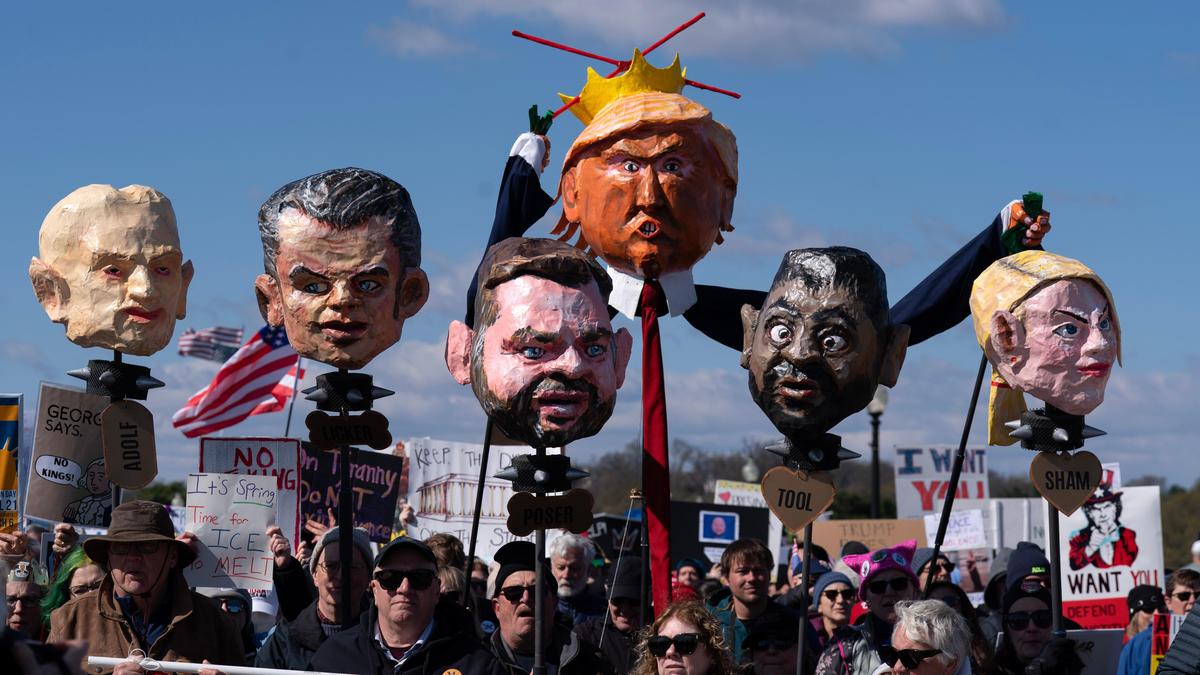
On Saturday, March 28, 2026, cities across the United States and in over a dozen countries worldwide witnessed the third wave of “No Kings” rallies, protesting against U.S. President Donald Trump’s policies. These demonstrations specifically targeted his aggressive deportation efforts, the ongoing war in Iran, and perceived authoritarian governance. Organizers reported over 3,200 events planned across all 50 U.S. states.
The protests, which began in 2025, have steadily grown in size. The initial rally on Trump’s birthday, June 14, 2025, drew an estimated 4 to 6 million participants. The second mobilization in October of the same year involved an estimated 7 million participants. The current demonstrations come as a direct response to the U.S. and Israeli bombardment of Iran, a conflict now in its fourth week.
Key Points:
- Nationwide “No Kings” protests took place on March 28, 2026, across the U.S. and internationally.
- Protests targeted President Trump’s immigration policies, the war in Iran, and his leadership style.
- The “No Kings” movement began in 2025 and has seen increasing participation.
- Organizers reported over 3,200 events planned in the U.S. alone.
- Demonstrations also occurred in Europe, Latin America, and Australia, with notable participation in Italy and France.
- The protests are occurring in the lead-up to the U.S. midterm elections, with increased anti-Trump organizing reported in Republican states.
Key Takeaways:
- Growing Dissatisfaction: The escalating size and global reach of the “No Kings” protests indicate a growing dissatisfaction with President Trump’s policies both domestically and internationally.
- War as a Catalyst: The war in Iran appears to be a significant catalyst for the renewed wave of protests, galvanizing opposition and drawing more people into the streets.
- Midterm Elections Impact: The protests may have a significant impact on the upcoming midterm elections, potentially influencing voter turnout and outcomes, particularly in traditionally Republican states and competitive suburban areas.
- Transnational Solidarity: The coordinated nature of the protests across multiple countries shows a level of transnational solidarity against the policies of the U.S. administration.
- Immigration Enforcement as Focal Point: The focus on immigration enforcement, particularly in states like Minnesota, highlights the divisive nature of the issue and its power to mobilize opposition.
 First Piper