
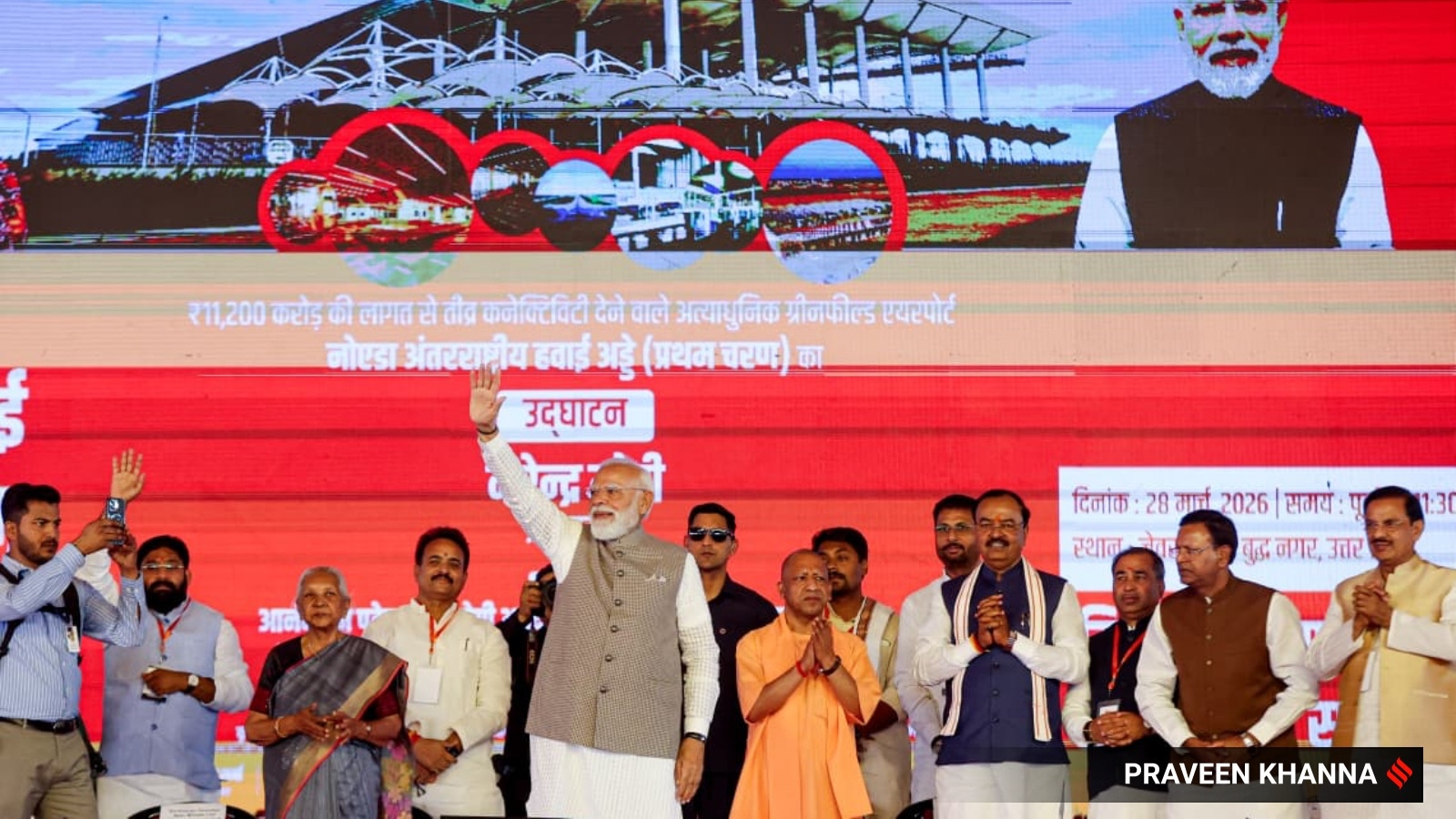
Sat Mar 28 09:00:33 UTC 2026: ### Modi Inaugurates Noida Airport, Highlights Ethanol Blending Amidst West Asia Conflict
The Story:
Prime Minister Narendra Modi inaugurated the Noida International Airport at Jewar, framing it as a symbol of national aspiration and infrastructure-led growth. Addressing a large gathering, Modi linked India’s ethanol blending program to energy security amidst the ongoing conflict in West Asia, which has disrupted global energy markets. He emphasized the role of farmers in boosting ethanol production, reducing India’s reliance on crude oil imports and saving approximately Rs 1.5 lakh crore in foreign exchange.
Modi cautioned against misinformation and political statements that could harm national interests, urging unity and resilience in the face of global challenges. He highlighted the airport’s significance for regional development and reiterated the government’s commitment to strengthening India’s economic resilience through infrastructure projects and policy measures.
Key Points:
- Prime Minister Narendra Modi inaugurated the Noida International Airport at Jewar.
- Modi linked India’s ethanol blending program to energy security amidst the conflict in West Asia.
- He stated that increased ethanol production has reduced India’s dependence on crude oil imports, saving approximately Rs 1.5 lakh crore.
- The Prime Minister emphasized the airport’s role in regional development and the “double-engine government’s efforts” in infrastructure projects.
- He cautioned against misinformation and called for unity in addressing economic crises.
Critical Analysis:
The events reveal a strategic alignment of domestic policy (ethanol blending) with geopolitical realities (West Asia conflict). Modi is using the airport inauguration as a platform to highlight the benefits of self-reliance in energy, directly linking it to the country’s ability to withstand external shocks. The timing of the speech, coinciding with the escalating conflict and shortly after Iranian drone strikes on Kuwait airport, suggests a proactive effort to reassure citizens and showcase the government’s preparedness.
Key Takeaways:
- India is actively promoting ethanol blending as a strategy to mitigate the impact of global energy crises.
- The government is leveraging infrastructure projects to symbolize economic resilience and regional development.
- The Prime Minister is framing the West Asia conflict as a reminder of India’s need for energy independence.
- There is an attempt to connect farmers’ efforts with national security and economic stability.
- The government emphasizes unity and caution against misinformation during crises.
Impact Analysis:
The emphasis on ethanol blending and infrastructure development suggests a long-term shift towards greater energy independence and regional economic integration. The success of the ethanol program could incentivize further investment in renewable energy sources and agricultural diversification. The Noida International Airport is likely to boost economic activity in the surrounding regions, attracting investment and creating jobs. However, the effectiveness of these measures will depend on the sustainability of ethanol production, the pace of infrastructure development, and the evolving geopolitical landscape. The linking of these initiatives to ongoing crises could shape public perception and support for government policies.
 First Piper