
Sun Mar 29 16:28:39 UTC 2026: ### DMK Announces “Superstar” Manifesto Ahead of Tamil Nadu Assembly Elections
The Story:
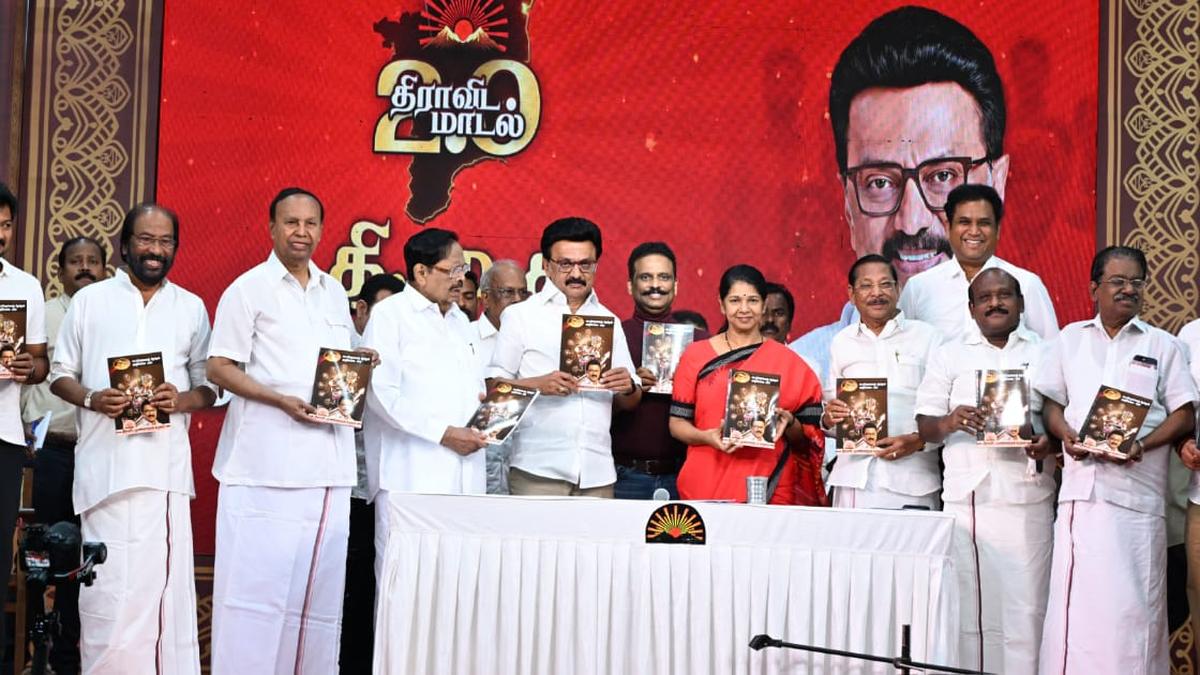
On March 29, 2026, DMK President and Chief Minister M.K. Stalin unveiled the party’s manifesto for the upcoming Tamil Nadu Assembly elections, highlighted by the “Illatharasi scheme.” This scheme promises a coupon valued at ₹8,000 for non-Income Tax assessee homemakers to purchase or replace household electronic appliances. Stalin also pledged to increase the Kalaignar Magalir Urimai Thoagai for women heads of families to ₹2,000 from ₹1,000. The manifesto also included an extension of the Chief Minister’s breakfast scheme to students up to the 8th standard.
The announcement comes amidst a flurry of political activity across multiple states, including Kerala, Assam, and West Bengal, as parties gear up for elections. Prime Minister Modi intensified his campaign in Kerala, while Union Minister Amit Shah focused on Assam, criticizing the Congress party’s policies on illegal immigration. Simultaneously, new political entrants like actor Vijay’s TVK party are making their electoral debut in Tamil Nadu, promising to address issues such as drug menace and unemployment.
Key Points:
- DMK’s manifesto includes the “Illatharasi scheme” offering ₹8,000 coupons for homemakers to buy electronic appliances.
- The Kalaignar Magalir Urimai Thoagai for women heads of families will be increased to ₹2,000.
- Chief Minister’s breakfast scheme will be extended to students till 8th standard.
- M.K. Stalin expressed confidence that the DMK would secure its 7th term in power.
- Actor Vijay’s TVK party announced its candidate list, promising to curb drug menace and provide unemployment allowance.
- AIADMK General Secretary Edappadi K. Palaniswami asserted alliance stability, contrasting it with the DMK-Congress alliance’s “war of words”.
- Prime Minister Narendra Modi attacked the LDF and UDF in Kerala, accusing them of corruption.
- Amit Shah emphasized deporting illegal immigrants from Assam and criticized Congress.
Critical Analysis:
The DMK’s strategy focuses on direct financial benefits to households, specifically targeting women, a key voting demographic. The timing of the manifesto release, alongside similar announcements and rallies by competing parties in Tamil Nadu and other states, underscores the intense political competition and the strategic importance of populist measures in securing votes. The AIADMK’s emphasis on alliance stability is a direct counter to perceived weaknesses in the DMK-led coalition.
Key Takeaways:
- The Tamil Nadu Assembly elections are shaping up to be a closely contested battle, with the DMK, AIADMK, and new entrants like TVK vying for power.
- Populist schemes and financial incentives are central to the DMK’s electoral strategy.
- Alliance dynamics and perceived stability are key talking points in the campaigns.
- National-level leaders are actively campaigning in multiple states, indicating the high stakes involved.
- New political entrants are focusing on specific issues to differentiate themselves from established parties.
Impact Analysis:
- The DMK’s “Illatharasi scheme,” if implemented, could have a significant impact on household finances and consumer spending in Tamil Nadu.
- The outcome of the Tamil Nadu Assembly elections will likely influence the state’s economic and social policies for the next five years.
- The success of new political parties like TVK could reshape the political landscape of Tamil Nadu.
- The results of the elections in Tamil Nadu, Kerala, Assam, and West Bengal will provide a crucial indicator of the national mood and the strength of various political alliances.
 First Piper