
Sun Mar 29 17:28:30 UTC 2026: # BJP Aims to Recapture Nemom in Kerala Assembly Elections Amidst Shifting Political Landscape
The Story:
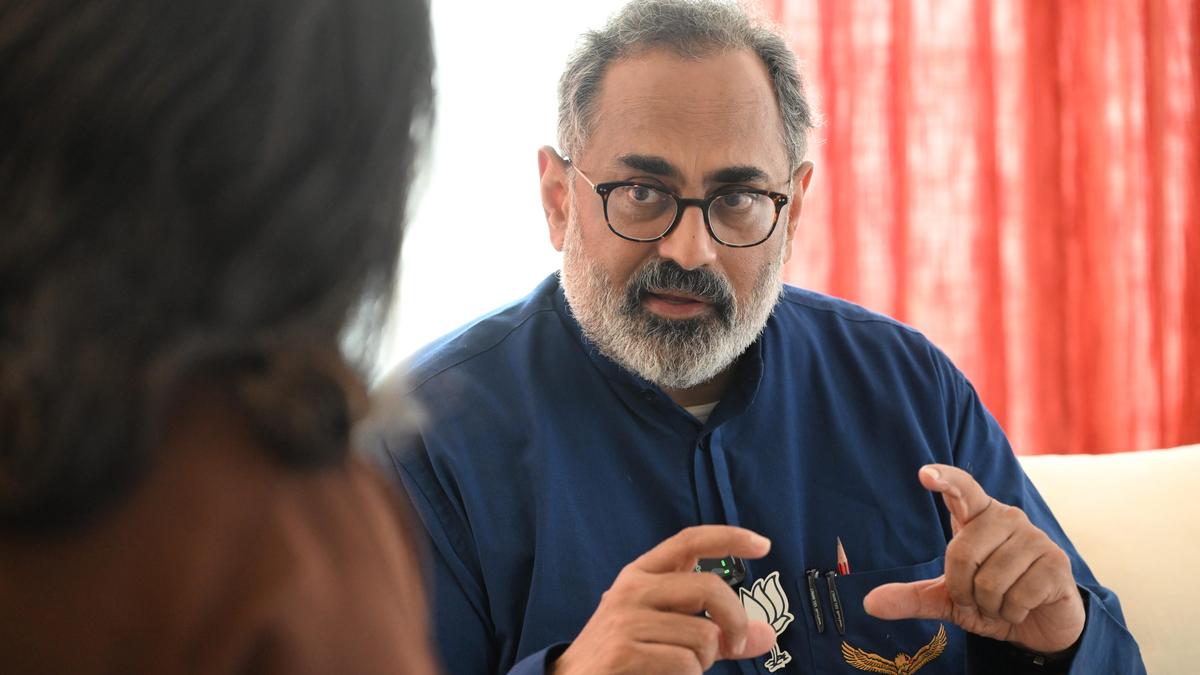
Rajeev Chandrasekhar, the Bharatiya Janata Party’s (BJP) State president in Kerala, is leading the party’s efforts to gain ground in the upcoming Assembly elections, challenging the traditional dominance of the Left Democratic Front (LDF) and the United Democratic Front (UDF). Chandrasekhar is contesting from the Nemom constituency, a seat the BJP briefly held in 2016 before losing it in 2021. In an interview with The Hindu, Chandrasekhar addressed concerns about the BJP’s vote share, outreach to minority communities, disaster relief funds, and the party’s vision for Kerala. He argues that the BJP offers a viable alternative to the LDF and UDF, emphasizing development and accountability.
Key Points:
- Rajeev Chandrasekhar is the BJP’s State president and candidate for the Nemom Assembly constituency.
- The BJP aims to regain the Nemom seat, which it previously won in 2016 but lost in 2021.
- Chandrasekhar acknowledges a lower vote share in the 2025 local body elections (14.76%) compared to the 2024 Lok Sabha election (~20%), attributing it to specific issues like candidate selection and campaign management in Thrissur.
- He emphasizes the BJP’s outreach to minority communities, addressing concerns about communal narratives and assuring protection for Malayalis.
- Chandrasekhar criticizes the LDF government’s handling of disaster relief funds and advocates for a “double-engine government” to ensure better coordination between the state and the center.
- He disputes the LDF’s claims of success in health and education based on NITI Aayog rankings, highlighting issues such as unemployment and the quality of education.
- Chandrasekhar dismisses allegations of a deal between the BJP and either the LDF or UDF, accusing both fronts of having alliances with the SDPI and Jamaat-e-Islami.
Critical Analysis:
The interview reveals the BJP’s strategic focus on addressing historical anxieties within minority communities, particularly concerning perceived communalism. Chandrasekhar’s emphasis on accountability and development aims to counter criticisms of the BJP’s national policies and present a more appealing image to Kerala’s electorate. The context provided by the other news snippets, particularly Amit Shah’s statements regarding the Uniform Civil Code (UCC) in Assam, highlights the BJP’s broader national agenda, which could potentially complicate Chandrasekhar’s efforts to reassure minority communities in Kerala, given the sensitivities around such issues.
Key Takeaways:
- The BJP is making a concerted effort to expand its presence in Kerala, focusing on development and addressing minority concerns.
- The party faces challenges in overcoming negative perceptions and competing with established political fronts.
- Disaster relief funds and the “double-engine government” concept are key themes in the BJP’s campaign, highlighting the importance of state-center relations.
- The BJP is attempting to position itself as a viable alternative to the traditional LDF-UDF duopoly.
- National-level policies and rhetoric, such as discussions around the UCC, may impact the BJP’s ability to gain support in Kerala.
Impact Analysis:
The outcome of the 2026 Kerala Assembly elections will be a crucial indicator of the BJP’s ability to expand its influence in South India. A successful campaign in Nemom and increased representation in the Assembly would signify a significant breakthrough for the party, potentially reshaping Kerala’s political landscape and influencing future electoral strategies. Conversely, failure to make substantial gains could reinforce existing perceptions of the BJP as a primarily North Indian party with limited
 First Piper