
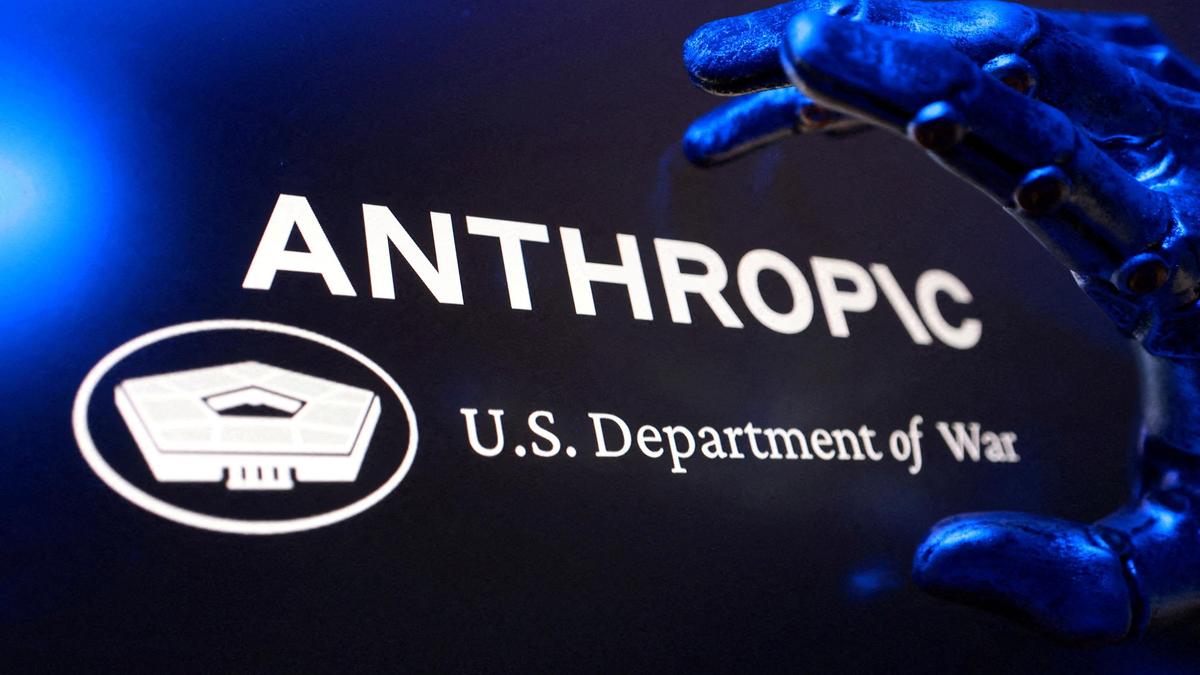
Sat Mar 28 10:41:59 UTC 2026: ### Headline: Judge Blocks Pentagon’s Blacklisting of AI Firm Anthropic in Free Speech Dispute
The Story:
A U.S. federal judge has temporarily blocked the Pentagon from blacklisting Anthropic, an AI company, after Anthropic filed a lawsuit alleging that the government violated its First Amendment rights. The lawsuit stems from Defense Secretary Pete Hegseth designating Anthropic as a national security supply-chain risk following the company’s refusal to allow the military to use its AI chatbot, Claude, for surveillance or autonomous weapons. Anthropic argued that the designation, which blocked it from certain military contracts, was retaliatory and violated its right to free speech and due process.
U.S. District Judge Rita Lin, an appointee of former President Joe Biden, sided with Anthropic, stating that the administration’s actions appeared to punish the company for criticizing the government’s contracting position. The ruling is temporarily stayed for seven days to allow the administration to appeal.
Key Points:
- On March 26, 2026, a U.S. judge temporarily blocked the Pentagon’s blacklisting of Anthropic.
- Anthropic’s lawsuit alleges a violation of its First Amendment right to free speech and Fifth Amendment right to due process.
- The blacklisting followed Anthropic’s refusal to allow the military to use its AI chatbot, Claude, for surveillance or autonomous weapons.
- Defense Secretary Pete Hegseth designated Anthropic a national security supply-chain risk.
- Judge Rita Lin stated the administration’s actions appeared punitive rather than directed at national security interests.
- The Justice Department countered that Anthropic’s refusal to lift restrictions could cause uncertainty and risk disabling military systems.
- Anthropic has a second lawsuit pending in Washington, D.C., over a separate Pentagon supply-chain risk designation related to civilian government contracts.
Critical Analysis:
The historical context includes a shift in responsibility for potential conflict with Iran, noted on March 24, 2026, as Trump Shifts Onus Of Iran War On Pentagon Chief Pete Hegseth. This suggests a broader pattern of friction and potential power struggles within the Pentagon, and specifically involving Pete Hegseth. The lawsuit against Anthropic, and the judge’s ruling against the Pentagon, can be viewed as a manifestation of these underlying tensions. It highlights a potential conflict between the executive branch’s defense policies and the judiciary’s role in upholding constitutional rights, particularly in the rapidly evolving landscape of AI and national security.
Key Takeaways:
- The ruling underscores the growing tension between national security concerns and First Amendment rights in the context of AI development and deployment.
- It highlights the potential for conflicts between the government and private companies regarding the ethical and responsible use of AI in military applications.
- The case signals a willingness of the judiciary to scrutinize government actions that appear to punish companies for expressing dissenting views on AI safety.
- The outcome of this case could set a precedent for future disputes between the government and tech companies over AI policy and regulation.
Impact Analysis:
This case has significant long-term implications for the relationship between the government and the AI industry. If the ruling is upheld, it could empower AI companies to challenge government restrictions based on free speech arguments, potentially limiting the Pentagon’s ability to control the development and deployment of AI technologies in military contexts. Conversely, if the government prevails on appeal, it could establish a precedent for broader government control over AI companies deemed to pose a national security risk. The outcome will likely influence future government procurement policies and the development of AI regulations, shaping the future of AI innovation and its role in national defense.
 First Piper