
Sat Mar 28 16:14:46 UTC 2026: # Solar Power Initiative Launched for SC/ST Communities in Andhra Pradesh
The Story:
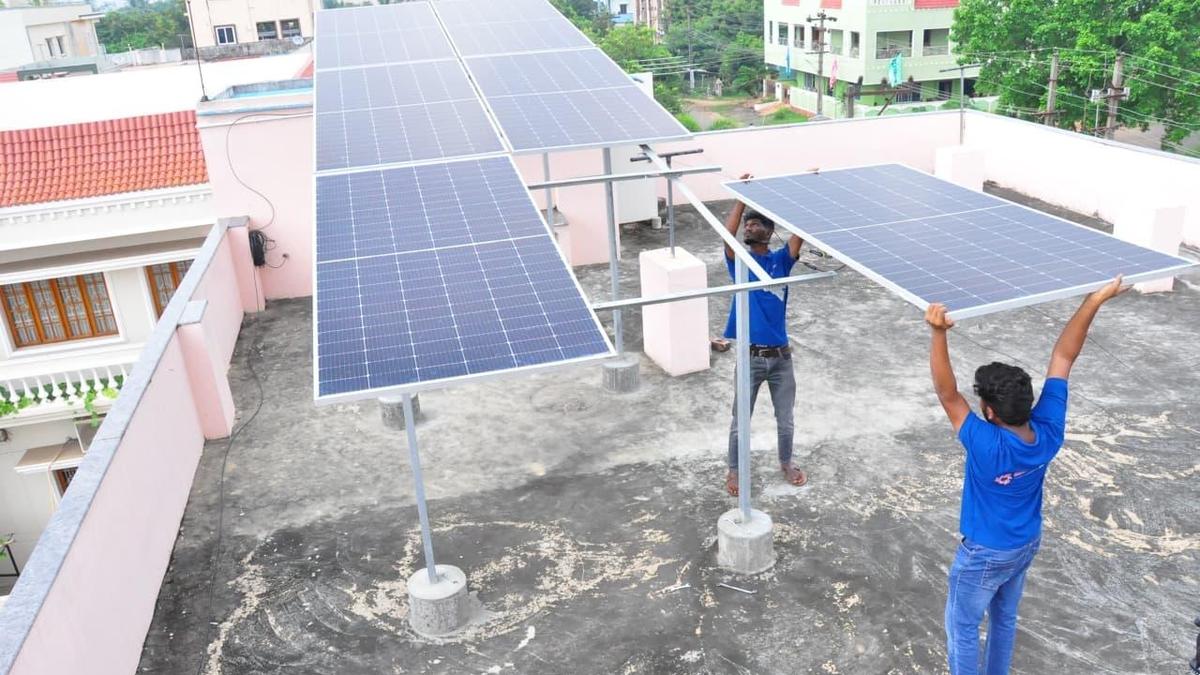
The Andhra Pradesh Southern Power Distribution Company Limited (APSPDCL) has successfully installed rooftop solar systems (RTS) at the home of a Scheduled Caste/Scheduled Tribe (SC/ST) consumer in Ramachandrapuram village, Nellore district, marking the first such installation in the region. This initiative is part of a government scheme aimed at providing free solar power to 20 lakh SC/ST consumers, aligning with the Centre’s PM Surya Ghar: Muft Bijli Yojana and the state’s Jagjeevan Jyothi Yojana Scheme. The project’s cost is shared between the central and state governments through subsidies.
The implementation follows administrative sanction from the State government in February 2025 and subsequent tendering processes. APSPDCL officials are under instruction to expedite the installation, and district officials are monitoring the progress, emphasizing the importance of quality equipment and public awareness.
Key Points:
- First rooftop solar system (RTS) installed for an SC/ST consumer in SPSR Nellore district on March 27, 2026.
- Installation is part of the government’s free solar power scheme for SC/ST communities.
- The scheme aims to provide free solar power to 20 lakh SC/ST consumers under the PM Surya Ghar: Muft Bijli Yojana and Jagjeevan Jyothi Yojana Scheme.
- Costs are shared between the Centre and the State via subsidies.
- Approximately 40,000 SC/ST households in Nellore district consuming up to 200 units a month are eligible for the scheme.
- Third-party vendors have been finalized for five regions to install RTS systems of up to 2 kWp.
Critical Analysis:
The initiative reflects a broader government strategy to promote renewable energy adoption, particularly among marginalized communities. By aligning central and state schemes, the program aims to address energy poverty while simultaneously supporting environmental sustainability. The urgency conveyed by APSPDCL officials and district collectors suggests a strong political will to achieve the set targets before future elections.
Key Takeaways:
- Government commitment to expanding renewable energy access to disadvantaged communities.
- Collaboration between central and state governments is crucial for successful implementation of large-scale projects.
- Monitoring and quality control are essential to ensure the effectiveness and longevity of the installed systems.
- Public awareness campaigns are vital to drive adoption and participation in the scheme.
Impact Analysis:
This initiative has the potential to significantly improve the quality of life for SC/ST communities by providing access to reliable and affordable electricity. The reduction in electricity bills can lead to increased disposable income, improved access to education (through better lighting), and enhanced overall well-being. Furthermore, the project contributes to India’s broader goals of increasing renewable energy capacity and reducing carbon emissions. The success of this scheme could serve as a model for similar initiatives in other states, accelerating the transition to a more sustainable and equitable energy future.
 First Piper