
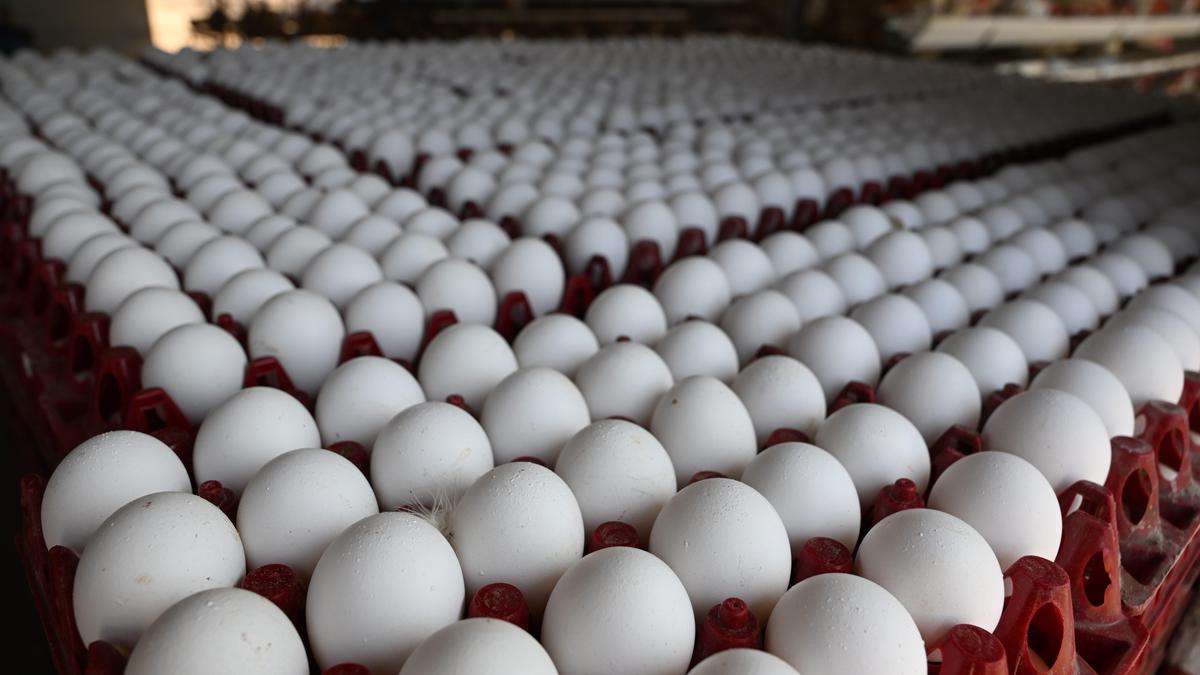
Sat Mar 28 14:43:51 UTC 2026: ### Egg Prices Plummet in Namakkal Amidst Regional Conflict and Reduced Consumption
The Story:
The poultry industry in Namakkal, Tamil Nadu, is facing challenges as egg prices have decreased to ₹3.85 following a reduction in consumption and disruptions to exports due to the ongoing U.S.-Israel war on Iran. Namakkal, a major poultry hub in India, produces a significant number of eggs daily, which are supplied domestically and exported to countries in West Asia. The conflict has affected egg exports, while rising temperatures have led to decreased consumption in Tamil Nadu and neighboring states.
Key Points:
- The National Egg Coordination Committee (NECC) has set the final egg price at ₹3.85, indicating no further reductions are expected.
- Namakkal houses over 1,600 poultry farms with 6-7 crore birds, producing 5-6 crore eggs daily.
- Eggs are transported to Kerala, Puducherry, Karnataka, and various parts of Tamil Nadu, as well as supplied to the state’s noon meal scheme.
- Exports to Muscat, Dubai, Qatar, and the UAE have been affected by the war in West Asia.
- The procurement price dropped from ₹4.45 on March 17, 2026, to ₹3.85 on March 27, 2026.
Critical Analysis:
The confluence of events—the U.S.-Israel war on Iran and rising temperatures—highlights the vulnerability of the agricultural sector to geopolitical instability and climate change. The war’s impact on exports, coupled with decreased local consumption due to the heat, has created a surplus of eggs, driving down prices. The NECC’s decision to fix the price at ₹3.85 suggests an attempt to stabilize the market and protect poultry farmers from further losses. The related historical context suggests that the war is also impacting fuel prices which will further impact transportation costs in this industry.
Key Takeaways:
- Geopolitical events can significantly impact local agricultural markets, even in seemingly unrelated regions.
- Climate change, specifically rising temperatures, can affect consumer behavior and demand for certain food products.
- Price stabilization measures may be necessary to protect vulnerable agricultural sectors during times of crisis.
- The Indian poultry industry relies on both domestic and international markets, making it susceptible to global disruptions.
- The price drop will likely impact the income of poultry farmers in Namakkal, potentially leading to economic hardship.
Impact Analysis:
The reduced egg prices may have several long-term implications:
- Economic Impact on Poultry Farmers: Lower prices could lead to reduced profits or even losses for poultry farmers, potentially forcing some to scale down or exit the industry.
- Supply Chain Adjustments: The industry may need to diversify its export markets and find new ways to stimulate domestic demand.
- Government Intervention: The government may need to provide support to poultry farmers through subsidies or other measures to mitigate the impact of the crisis.
- Food Security: The reduced prices may temporarily benefit consumers, but a sustained decline in poultry production could have long-term implications for food security.
- Regional Economic Ripple Effects: The economic distress in Namakkal’s poultry sector could have ripple effects on other related industries and the local economy.
 First Piper