
Sat Mar 28 16:24:46 UTC 2026: # Bengaluru Prioritizes Pedestrian Infrastructure in New Budgets
The Story:
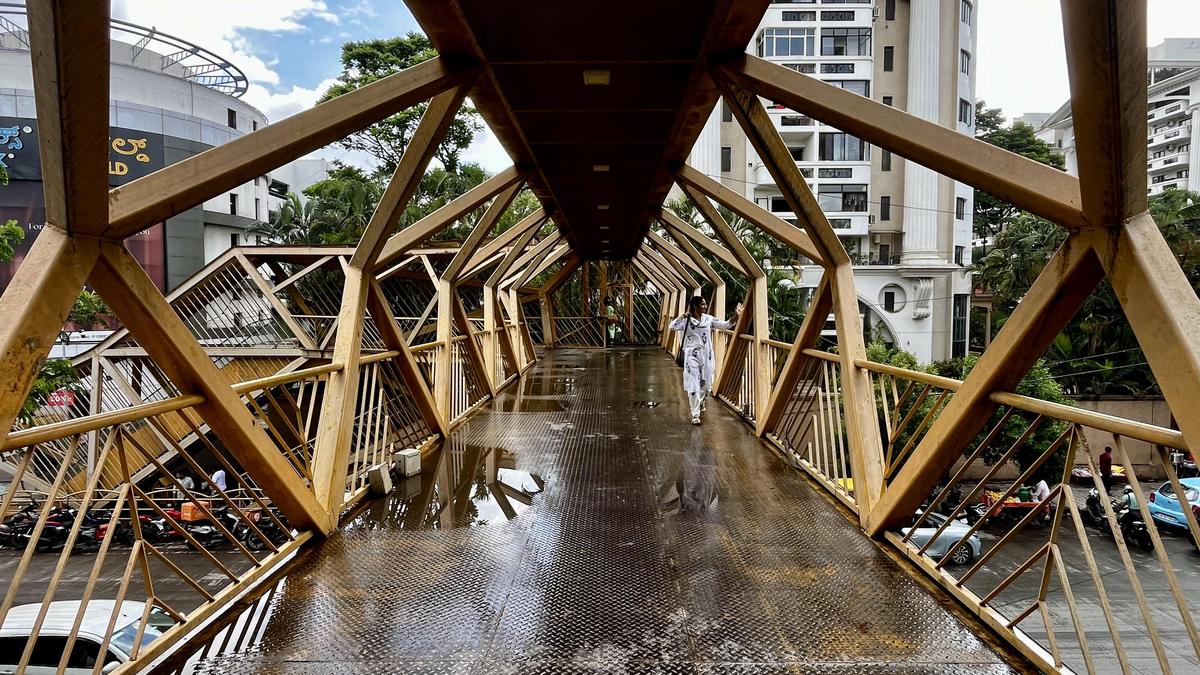
Bengaluru’s three civic corporations – South, West, and North – have unveiled their budgets for March 28, 2026, placing significant emphasis on improving pedestrian infrastructure and promoting non-motorized mobility. The South Corporation’s budget highlights a barrier-free elevated skywalk connecting Banashankari Temple, Metro Station, and a Traffic and Transit Management Centre, costing an estimated ₹32 crore. The West Corporation plans a vast network of skywalks at 50 locations, while the North Corporation focuses on repairing and reconstructing footpaths across its wards.
Key Points:
- The South Corporation proposes 18 skywalks under a public-private partnership (PPP) model.
- The South Corporation allocates ₹50 crore for skywalk construction, pedestrian pathway upgrades, and junction improvements.
- The West Corporation plans to construct skywalks at 50 locations, leveraging advertisement-based revenue models.
- The West Corporation also allocates ₹50 crore for skywalks, footpath upgrades, and junction development.
- The North Corporation allocates ₹18 crore for the repair and reconstruction of nearly 1,000 km of footpaths.
- The North Corporation sets aside ₹50 crore for skywalk construction and pedestrian junction improvements.
Critical Analysis:
The prioritization of pedestrian infrastructure across all three corporations suggests a coordinated effort to address long-standing concerns about pedestrian safety and accessibility in Bengaluru. The reliance on PPP models and advertisement-based revenue for skywalks indicates a strategy to leverage private sector investment and innovative funding mechanisms to achieve these goals.
Key Takeaways:
- Bengaluru is making a concerted effort to improve pedestrian infrastructure across the city.
- The city is exploring public-private partnerships and advertising revenue to fund these improvements.
- There is a focus on integrating footpaths, cycling lanes, and safe pedestrian crossings to promote non-motorized transport.
- The scope of the projects varies across the three corporations, reflecting potentially different needs and priorities in each zone.
- The budget allocations suggest a significant investment in improving walkability and reducing reliance on motorized vehicles.
Impact Analysis:
The investment in pedestrian infrastructure and non-motorized transport could have several long-term impacts on Bengaluru:
- Reduced Traffic Congestion: By providing viable alternatives to private vehicles, the city could see a decrease in traffic congestion, particularly in densely populated areas.
- Improved Air Quality: Increased use of cycling and walking could lead to a reduction in air pollution, contributing to a healthier environment.
- Enhanced Quality of Life: Better pedestrian infrastructure can make the city more livable and enjoyable for residents, promoting physical activity and social interaction.
- Economic Benefits: Improved accessibility can boost local businesses and attract investment, contributing to economic growth.
- Increased Property Values: Areas with good pedestrian infrastructure tend to have higher property values, benefiting homeowners and developers.
 First Piper