
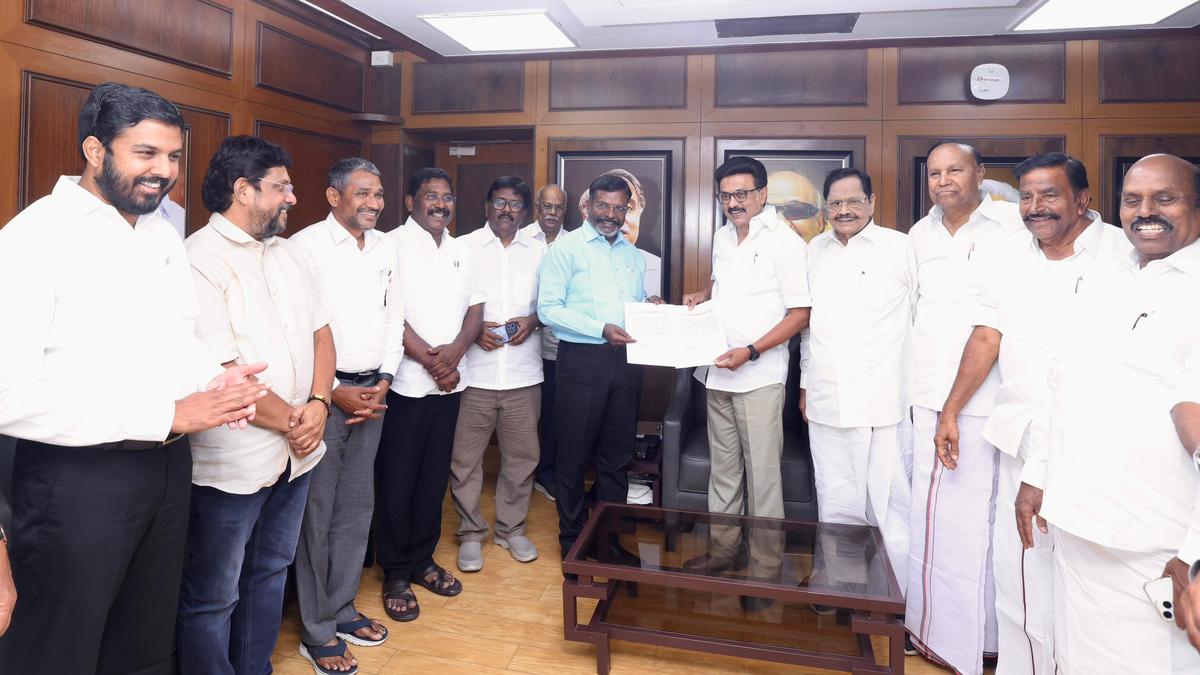
Tue Mar 24 07:59:36 UTC 2026: # DMK and VCK Formalize Alliance with Seat-Sharing Agreement for 2026 Tamil Nadu Assembly Elections
The Story:
The Dravida Munnetra Kazhagam (DMK) and Viduthalai Chiruthaigal Katchi (VCK) have finalized their seat-sharing agreement for the upcoming Tamil Nadu Assembly elections in 2026. The VCK, led by Thol. Thirumavalavan, will contest in eight Assembly segments as part of the DMK-led Secular Progressive Alliance (SPA). The agreement was officially signed on Tuesday, March 24, 2026, at the DMK headquarters in Chennai.
The VCK will contest six reserved and two general constituencies. Thirumavalavan also mentioned discussions with DMK president M.K. Stalin regarding the VCK’s request for double-digit seats and a Rajya Sabha seat in 2028, emphasizing the importance of defeating right-wing forces and those distorting Dravidian ideologies.
Key Points:
- The DMK and VCK signed a seat-sharing agreement on March 24, 2026, for the Tamil Nadu Assembly elections.
- The VCK will contest eight Assembly seats: six reserved and two general.
- In the 2021 elections, the VCK contested six seats and won four.
- Thirumavalavan raised the issue of a Rajya Sabha seat in 2028 with M.K. Stalin.
- The SPA aims to counter “right-wing religious forces” and those distorting Dravidian ideologies.
Key Takeaways:
- The DMK-VCK alliance solidifies the Secular Progressive Alliance (SPA) in Tamil Nadu.
- Seat allocation reflects a compromise, with the VCK accepting fewer seats than initially requested.
- The alliance frames the election as a battle against right-wing forces and ideological opponents of Dravidian politics.
- The VCK’s focus on reserved constituencies highlights its commitment to representing marginalized communities.
Impact Analysis:
The DMK-VCK alliance has significant implications for the Tamil Nadu political landscape. This partnership reinforces the SPA’s strength and aims to consolidate anti-right-wing votes. The VCK’s participation, particularly in reserved constituencies, could be crucial for mobilizing Dalit voters. The long-term impact will depend on the alliance’s performance in the 2026 elections and its ability to maintain cohesion in the face of potential disagreements over policy and power-sharing, particularly regarding the Rajya Sabha seat in 2028.
 First Piper