
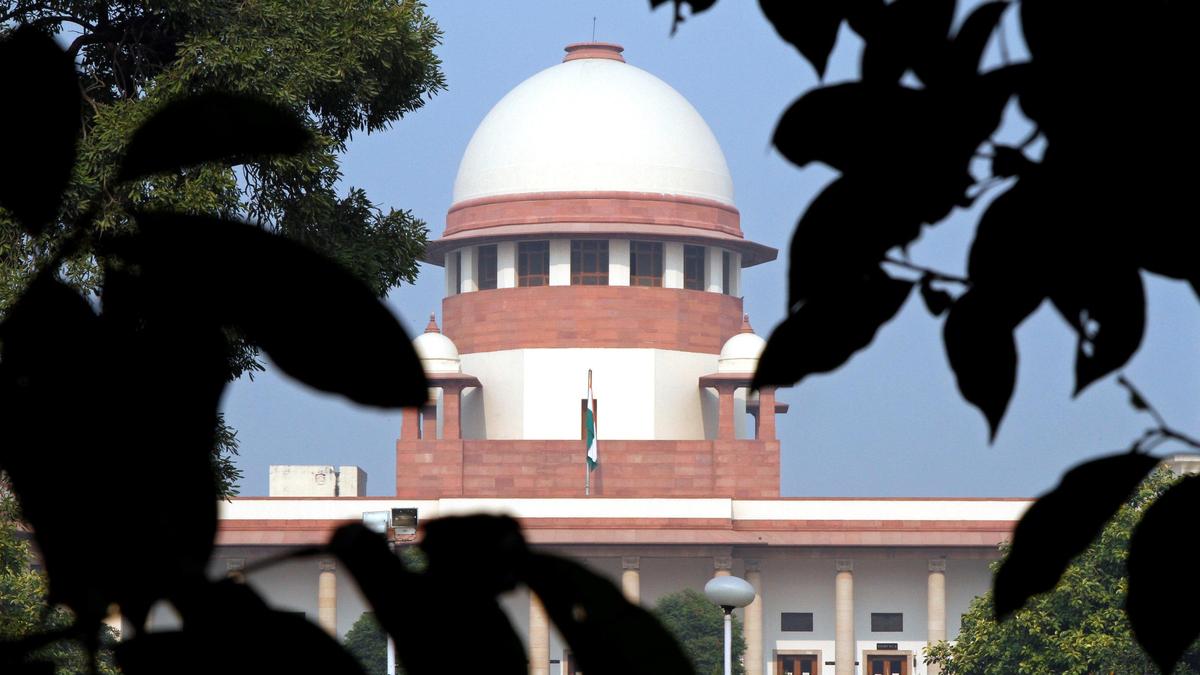
Tue Mar 24 07:49:33 UTC 2026: # Supreme Court Dismisses Plea for Separate DNT Census, Cites Risk of Societal Division
The Story:
On Tuesday, March 24, 2026, the Supreme Court dismissed a petition seeking a distinct enumeration of Denotified, Nomadic, and Semi-Nomadic Tribe (DNTs/NTs/SNTs) communities in the upcoming 2027 Census. Chief Justice of India Surya Kant, presiding over the hearing, expressed concerns that such an enumeration could lead to societal division and undermine efforts to achieve a casteless society. The Court granted petitioners the liberty to approach relevant government authorities with their representation.
Key Points:
* The Supreme Court dismissed a petition for separate enumeration of DNTs/NTs/SNTs in the 2027 Census.
* Chief Justice Surya Kant voiced concerns about the potential for societal division.
* Petitioners argued that the lack of census data for these communities hinders their access to government benefits and affirmative action.
* The Court allowed petitioners to appeal to government authorities.
* The petition sought a specific question in the Census forms to identify members of these communities.
Critical Analysis:
The Supreme Court’s decision needs to be viewed in the context of its other rulings on March 24, 2026, particularly the one limiting Scheduled Caste status to Hindus, Sikhs, and Buddhists. While seemingly unrelated, both decisions reflect a judicial concern about further fragmentation of Indian society along caste and religious lines. The Court appears to be prioritizing a unified national identity and equitable access to resources over specific group-based enumeration, even if the latter is intended to address historical disadvantages. This suggests a strategic judicial approach towards managing social and political complexities related to caste and community classifications.
Key Takeaways:
- The Supreme Court is wary of initiatives that could be perceived as reinforcing caste-based divisions.
- The decision highlights the ongoing tension between the need to address historical injustices faced by specific communities and the broader goal of a casteless society.
- Government authorities will now be the focal point for DNTs/NTs/SNTs seeking recognition and targeted support.
- The judgment underscores the judiciary’s role in shaping the discourse around caste and community identity in India.
- This decision may influence future petitions seeking separate enumeration or classification based on caste or community lines.
Impact Analysis:
The Supreme Court’s decision has significant long-term implications. First, it sets a precedent for future cases seeking separate enumeration of specific groups in the census. Second, it places the onus on the government to address the grievances of DNTs/NTs/SNTs without relying on census data. This could lead to the development of alternative mechanisms for identifying and supporting these communities. Finally, the decision could fuel further debate on the role of caste and community in Indian society and the appropriate means of achieving social justice. The long-term impact will depend on how the government responds to the petitioners’ representation and whether alternative data collection methods are implemented.
 First Piper