
Mon Mar 23 18:24:55 UTC 2026: # India and Russia Strengthen Ties Amidst Gulf War Crisis
The Story:
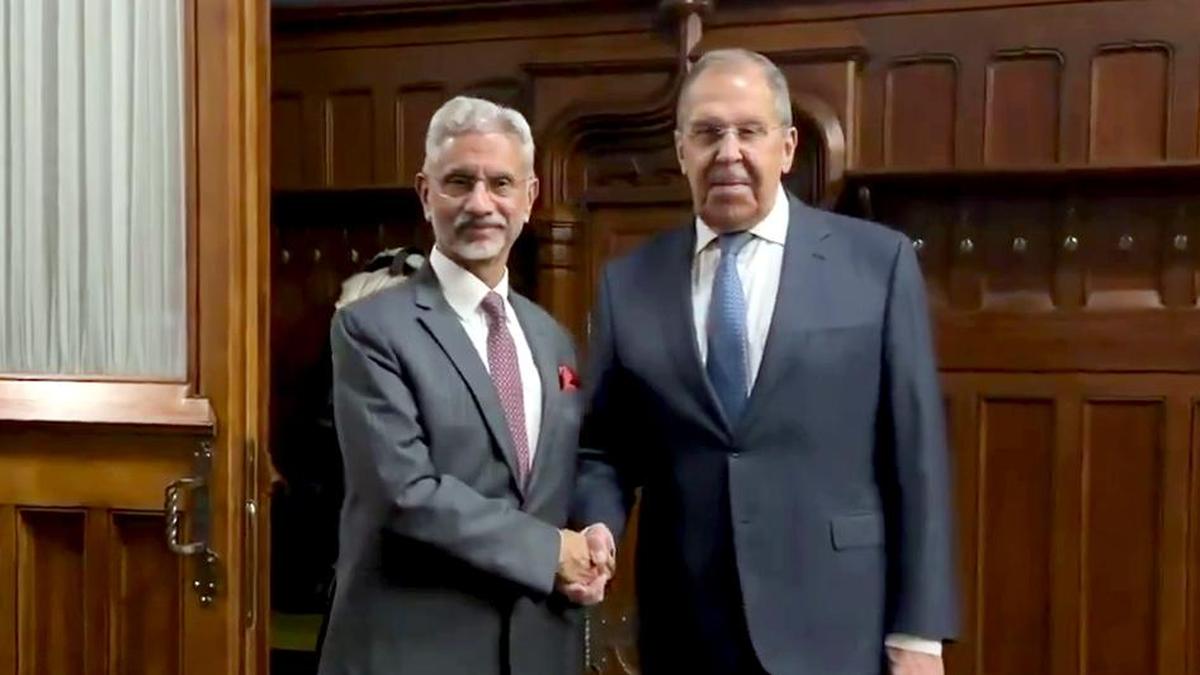
Against the backdrop of the ongoing U.S.-Israel war on Iran, Indian External Affairs Minister S. Jaishankar and Russian Foreign Minister Sergey Lavrov affirmed the importance of strengthening bilateral and multilateral cooperation between India and Russia. Speaking at a conference on India-Russia relations via video link on Monday, March 23, 2026, both ministers emphasized the evolving multipolar world order and the necessity for greater collaboration through platforms like BRICS, SCO, G20, and the UN. Russia expressed its anticipation to host Prime Minister Narendra Modi for the annual India-Russia summit in 2026.
Key Points:
- Jaishankar highlighted that India-Russia relations have contributed to regional and global peace and stability.
- Lavrov underscored the “major significance” of India-Russia ties in the context of the U.S.-Israel conflict with Iran.
- 96% of India-Russia trade is now conducted in national currencies.
- India will hold the BRICS presidency in 2026 with a focus on “strengthening resilience, innovation, cooperation and stability”.
- Russia reaffirmed its support for India’s BRICS chairship.
- Jaishankar praised Russia as India’s “foremost partner” in civil nuclear energy, citing the Kudankulam Nuclear Project.
- Iran has urged that under India’s presidency, BRICS should play an “independent role” as the U.S.-Israel campaign continues against Iran.
Critical Analysis:
The timing of this reaffirmation of ties, coupled with Russia’s strong critique of the U.S.-Israel actions in Iran, suggests a coordinated effort to present a counter-narrative and potentially a strategic alliance against what both nations perceive as destabilizing Western influence in the region. India’s emphasis on “strategic autonomy” aligns with Russia’s vision of a multipolar world, indicating a shared geopolitical objective. The increased use of national currencies in trade further underscores a desire to reduce reliance on the U.S. dollar and Western financial systems.
Key Takeaways:
- The U.S.-Israel war on Iran is accelerating the formation of new alliances and partnerships.
- India and Russia are strategically aligning themselves to promote a multipolar world order.
- Economic cooperation between India and Russia is deepening, with a focus on de-dollarization.
- BRICS is emerging as a potential platform for challenging Western dominance and promoting alternative perspectives on global issues.
- India’s BRICS presidency in 2026 will be crucial in shaping the group’s role in the evolving geopolitical landscape.
Impact Analysis:
The strengthening of India-Russia ties could have significant long-term implications for global geopolitics and economics. A more robust BRICS, supported by India’s leadership, could offer alternative financial and political frameworks, potentially diminishing the influence of Western-dominated institutions. The focus on national currencies in trade could challenge the dominance of the U.S. dollar and contribute to a more fragmented global financial system. Furthermore, this alliance could embolden other nations to pursue independent foreign policies and resist pressure from Western powers. The impact on the Gulf region will depend on how BRICS, under India’s leadership, attempts to mediate or influence the conflict.
 First Piper