
Tue Mar 24 01:30:07 UTC 2026: Headline: Australia and EU Forge Landmark Trade and Defense Partnership Amidst Geopolitical Shifts
The Story:
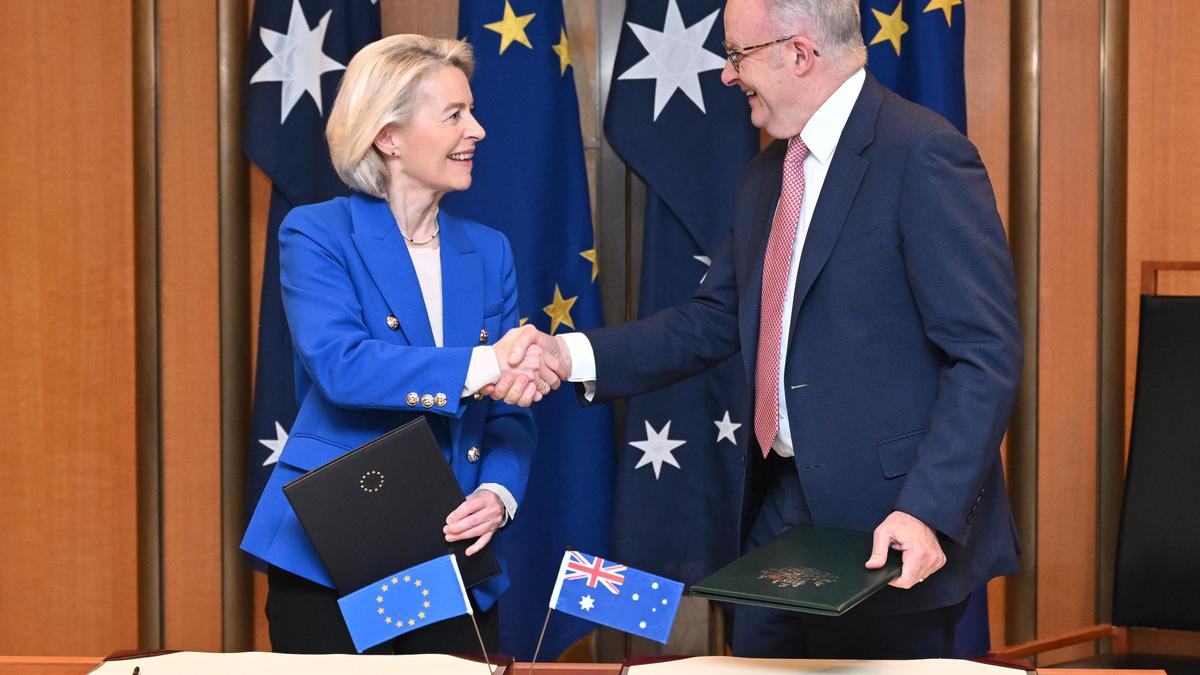
On March 24, 2026, Australia and the European Union finalized a free trade agreement, ending eight years of protracted negotiations. The agreement, signed by European Commission President Ursula von der Leyen and Australian Prime Minister Anthony Albanese in Canberra, aims to diversify trade networks and reduce economic reliance on China and exposure to uncertain U.S. tariffs. The deal addresses previous sticking points, including Australian demands for greater red meat market access and EU concerns over the use of European geographical indications, such as “prosecco,” on Australian products. In addition to the trade agreement, the leaders announced a new defense partnership and the initiation of talks for Australia to become an associate of the Horizon Europe research program.
Key Points:
- The EU and Australia signed a free trade agreement on March 24, 2026, after eight years of negotiations.
- The agreement aims to diversify trade and reduce reliance on China and exposure to U.S. tariffs.
- Australian producers will be banned from using the term “prosecco” on exports 10 years after the agreement takes effect.
- The EU will open tariff rate quotas for 30,600 metric tons of Australian red meat, with 55% duty-free.
- A new defense partnership was announced, along with negotiations for Australia to join Horizon Europe.
- The pact will secure the EU’s supply of critical raw materials.
Critical Analysis:
The timing of this agreement is noteworthy. The news that Iran has agreed it “Will Not Have A Nuclear Weapon” suggests a potential shift in global security dynamics, possibly influencing the EU and Australia’s desire for closer defense cooperation. The agreement also reflects a broader trend of nations seeking to mitigate risks associated with over-reliance on specific economic partners, particularly China, and the uncertainties surrounding U.S. trade policies.
Key Takeaways:
- The agreement signifies a strengthening of ties between Australia and the EU, driven by shared strategic interests.
- Diversification of trade and economic partnerships is a key priority for both parties.
- Geopolitical concerns, including the situation with Iran and broader concerns about China, are influencing trade and defense strategies.
- Protection of geographical indications remains a significant issue in international trade negotiations.
- The deal reflects a growing emphasis on securing access to critical raw materials.
Impact Analysis:
- The free trade agreement is likely to boost trade between Australia and the EU, benefiting producers and consumers on both sides.
- The defense partnership could lead to increased joint military exercises and intelligence sharing, enhancing regional security.
- Australia’s potential association with Horizon Europe could foster greater collaboration in research and innovation, driving technological advancements.
- The agreement sets a precedent for other nations seeking to diversify their trade relationships and reduce dependence on specific markets.
- The compromise on geographical indications, while contentious, demonstrates a willingness to find common ground in complex trade negotiations.
 First Piper