
Mon Mar 23 19:22:38 UTC 2026: ### Karnataka Minister Defends Subsidies as Economic Booster Amidst Fiscal Concerns
The Story:
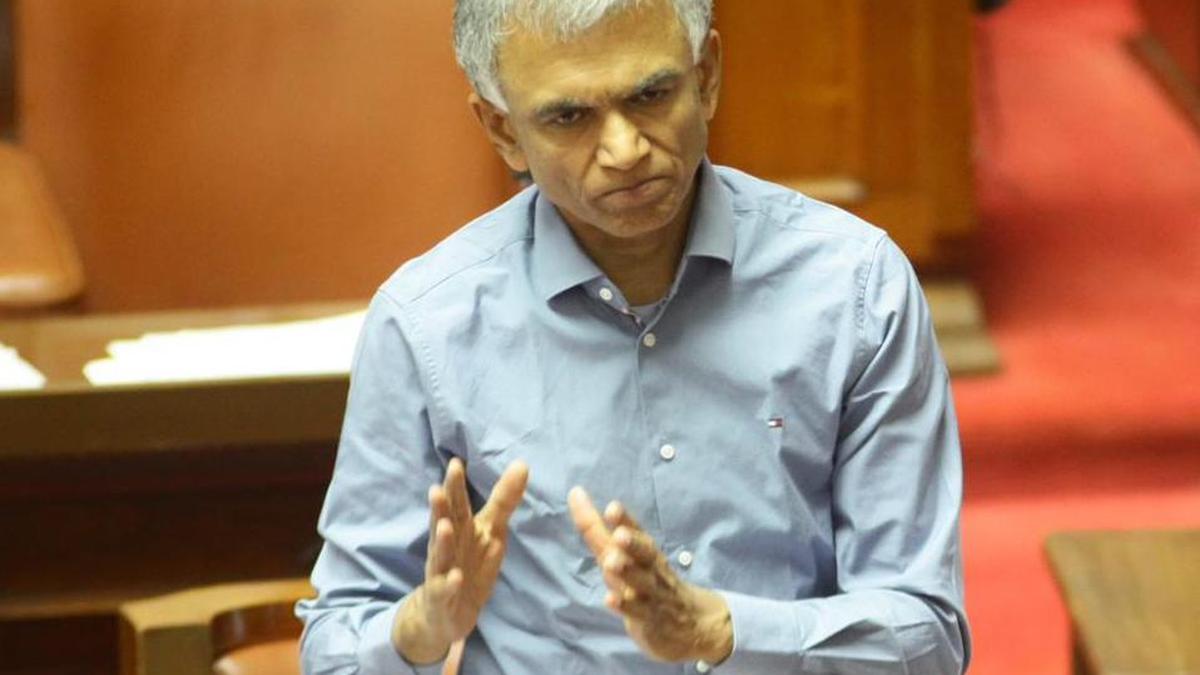
Karnataka’s Revenue Minister Krishna Byre Gowda defended the state government’s subsidy programs on Monday, March 23, 2026, asserting that they stimulate economic growth by boosting consumer demand. Speaking in the Legislative Assembly, Gowda countered concerns from BJP members who feared that allocating 14% of the budget to subsidies could negatively impact the state’s economy. He cited Karnataka’s leading position in GST revenue growth and per capita income as evidence of the positive impact of these subsidies. Gowda also invoked Keynesian economics, arguing that government intervention through subsidies is crucial for economic stabilization during recessions.
The Leader of the Opposition, R. Ashok, clarified that the BJP is not inherently against subsidies but emphasized the importance of targeted distribution and fostering self-reliance among beneficiaries in the long term.
Key Points:
- Revenue Minister Krishna Byre Gowda defended Karnataka’s subsidy programs as beneficial for the state’s economy.
- The Minister argued that subsidies boost consumer demand and stimulate economic growth, particularly during recessions.
- He pointed to Karnataka’s leading GST revenue growth and per capita income as evidence of the subsidies’ positive impact.
- Gowda criticized the “villainising and criminalising” of subsidies in India and other countries.
- The BJP expressed concerns about the long-term impact of allocating 14% of the budget to subsidies.
- Leader of the Opposition R. Ashok stressed the need for targeted subsidies and promoting self-reliance among beneficiaries.
Critical Analysis:
The defense of subsidies by the Karnataka government comes amidst a broader national and international trend of governments utilizing subsidies for various purposes. As highlighted by the provided context, China is using subsidies to support AI development (March 10, 2026), and Indian states are considering subsidies for specific demographics (women buying two-wheelers on March 8, 2026) or sectors (onion farmers on February 26, 2026). Simultaneously, the US is imposing tariffs on solar firms citing lack of cooperation with subsidy probes (February 26, 2026), while the Indian central government is exploring e-rupee for subsidy distribution (February 25, 2026). This indicates a global debate and experimentation with subsidies as a tool for economic management and social welfare, with concerns about their effectiveness, targeting, and potential for abuse.
Key Takeaways:
- Subsidies are increasingly being used as a tool for economic management and social welfare in India and globally.
- The debate surrounding subsidies centers on their effectiveness, targeting, and potential for unintended consequences.
- The Karnataka government is actively defending its subsidy programs as a key driver of economic growth.
- Opposition parties are raising concerns about the fiscal sustainability and targeting of subsidies.
- Technology, such as the e-rupee, is being explored to improve the efficiency and transparency of subsidy distribution.
Impact Analysis:
The ongoing debate about subsidies in Karnataka, and India more broadly, will likely shape future economic policy. If the Karnataka model proves successful in stimulating economic growth without creating unsustainable fiscal burdens, it could influence other states and the central government. Conversely, if concerns about targeting and long-term sustainability persist, there may be a shift towards alternative economic policies. The development and implementation of technologies like the e-rupee could also play a significant role in improving the efficacy and accountability of subsidy programs in the future. The outcome of these debates and experiments will have long-term implications for India’s economic development and social welfare programs.
 First Piper