
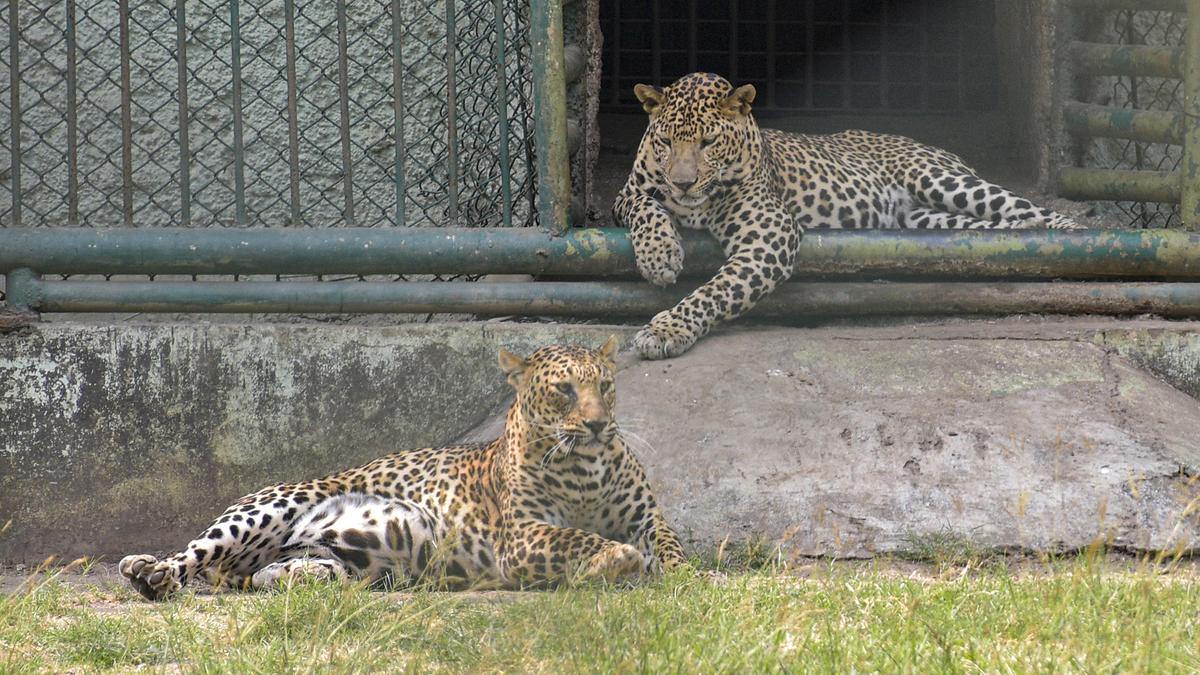
Tue Mar 24 03:19:23 UTC 2026: ### Maharashtra Relocates Leopards to Reliance’s Vantara Amidst Rising Population and Conflict
The Story:
Maharashtra’s Forest Minister Ganesh Naik announced on March 24, 2026, that the state government has relocated 25 leopards to Reliance Foundation’s Vantara facility in Jamnagar, Gujarat. This action follows a significant increase in the state’s leopard population and rising human-leopard conflict. The state government has an agreement to translocate a total of 50 leopards to Vantara. To streamline wildlife management, the Maharashtra Legislative Council passed an amendment to the Wildlife Protection Act, granting the chief wildlife warden more autonomy in managing leopard populations, including translocation, with state government approval.
Key Points:
- 25 leopards have been relocated to Reliance Foundation’s Vantara facility in Jamnagar, Gujarat.
- Maharashtra’s leopard population has quadrupled in the last 10 years.
- Tiger population has increased from 101 to 444 in the last 7-8 years.
- The state government has signed an agreement to translocate a total of 50 leopards to Vantara.
- An amendment to the Wildlife Protection Act allows the chief wildlife warden to manage leopard populations, including translocation, with state government approval, without needing Union government permission.
- The Forest Department plans to establish leopard and tiger safaris in every district.
Critical Analysis:
The relocation of leopards to the Vantara facility and the amendment of the Wildlife Protection Act suggest a proactive approach by the Maharashtra government to address the increasing leopard population and the resulting human-wildlife conflict. The historical context highlights the complexity of the situation: sugarcane farmers pausing work to protect leopard cubs (March 9, 2026) demonstrates a degree of public empathy and awareness, while the incident of a youth being booked for killing a leopard in self-defense (March 13, 2026) shows the potential for conflict and legal repercussions. The amendment to the Act aims to expedite responses to these conflicts, recognizing the limitations of the previous bureaucratic process.
Key Takeaways:
- Maharashtra is experiencing significant growth in its leopard population, leading to increased human-wildlife interactions.
- The state government is actively managing the leopard population through translocation and legislative changes.
- Reliance Foundation’s Vantara facility is playing a role in accommodating relocated leopards.
- The amendment to the Wildlife Protection Act reflects a need for more efficient and localized wildlife management strategies.
- Balancing wildlife conservation with human safety remains a key challenge.
Impact Analysis:
The Maharashtra government’s actions could have several long-term implications. Firstly, successful translocation to Vantara could provide a model for managing overpopulated wildlife areas. Secondly, the amended Wildlife Protection Act could serve as a template for other states facing similar human-wildlife conflict scenarios. However, the initiative’s success depends on several factors: the suitability of Vantara as a long-term habitat for the relocated leopards, the effectiveness of the amended Act in reducing human-wildlife conflict, and the ability of the Forest Department to successfully establish and manage the planned leopard and tiger safaris. The public’s perception and acceptance of these measures will also be crucial. Furthermore, the concentration of leopards in a single facility like Vantara raises concerns about disease outbreaks and genetic diversity, which need careful monitoring and management.
 First Piper