
Mon Mar 23 11:30:00 UTC 2026: ### Headline: Indian Stock Markets Plunge Amid Middle East Tensions and Global Economic Concerns
The Story:
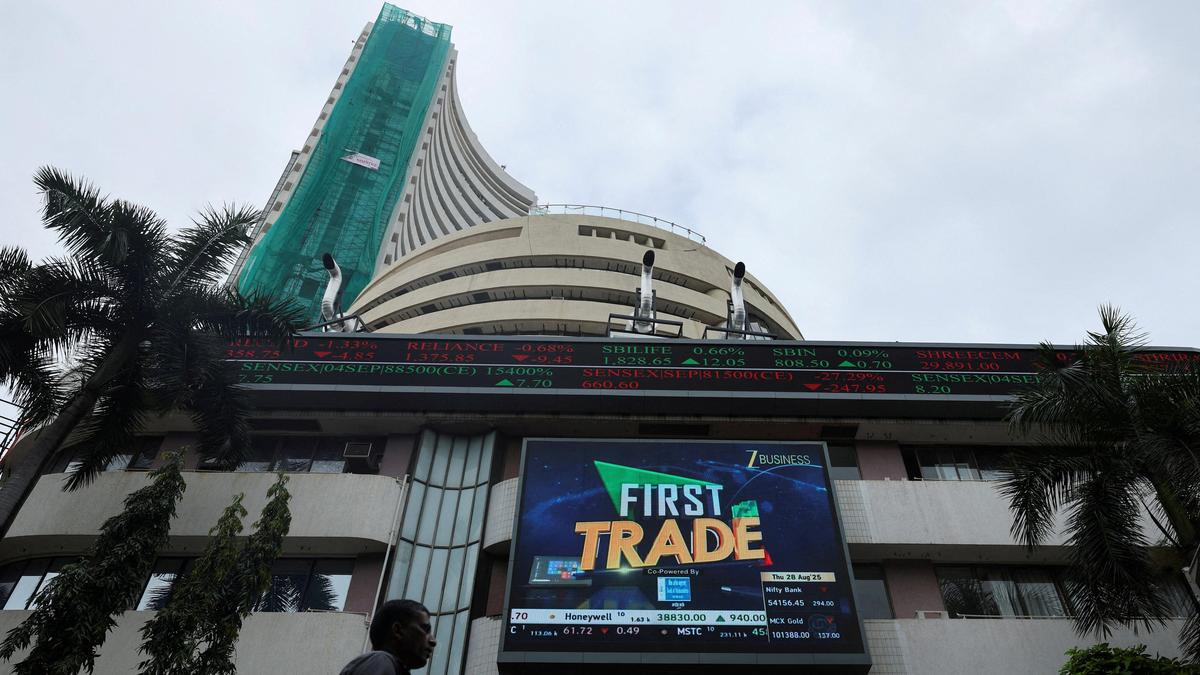
On Monday, March 23, 2026, Indian equity benchmark indices, Sensex and Nifty, experienced a significant downturn, mirroring a global market slump. The sharp decline was attributed to escalating tensions in the Middle East, particularly the ongoing war, rising crude oil prices, relentless foreign fund outflows, and a weakening rupee. Investor sentiment was further dampened by concerns over potential disruptions to global energy supplies and heightened inflation.
The 30-share BSE Sensex plummeted by 1,836.57 points (2.46%) to close at 72,696.39, while the 50-share NSE Nifty tanked by 601.85 points (2.60%) to end at 22,512.65. Several stocks, including Titan, Trent, and HDFC Bank, were major laggards.
Key Points:
* The Sensex dropped 1,836.57 points (2.46%) to close at 72,696.39.
* The Nifty fell 601.85 points (2.60%) to close at 22,512.65.
* Brent crude oil prices rose by 0.97% to $113.3 per barrel.
* Asian markets, including South Korea’s Kospi, Japan’s Nikkei, Shanghai’s SSE Composite, and Hong Kong’s Hang Seng, also closed sharply lower.
* Foreign Institutional Investors (FIIs) offloaded equities worth ₹5,518.39 crore on Friday, March 20, 2026.
* Foreign investors have pulled out ₹88,180 crore (about $9.6 billion) from Indian equities so far this month.
* “Investor sentiment turned cautious following Trump’s 48-hour ultimatum to Iran on the Strait of Hormuz,” according to Vinod Nair, Head of Research, Geojit Investments Ltd.
Critical Analysis:
The stock market downturn on March 23, 2026, appears to be a direct consequence of escalating geopolitical tensions in the Middle East, specifically the ongoing war and Trump’s ultimatum to Iran regarding the Strait of Hormuz. The market’s sensitivity to these events is amplified by existing economic vulnerabilities, including rising crude oil prices, foreign capital flight, and a weakening domestic currency. The link between Trump’s ultimatum and the market’s reaction is explicitly stated by Vinod Nair, indicating a clear cause-and-effect relationship. The historical context provided suggests that the market is particularly sensitive to events affecting oil supplies and geopolitical stability in the region.
Key Takeaways:
* Geopolitical instability in the Middle East has a significant and immediate impact on global and Indian stock markets.
* Rising crude oil prices, triggered by regional conflicts, contribute to investor risk aversion.
* Foreign fund outflows exacerbate market downturns, highlighting the importance of maintaining investor confidence.
* Trump’s foreign policy decisions continue to have a considerable impact on global markets.
* The Indian rupee’s weakness adds further pressure to the stock market.
Impact Analysis:
The confluence of geopolitical and economic factors suggests a period of heightened volatility for Indian and global markets. The market’s reaction to Trump ordering a pause in strikes on Iran’s power plants indicates that de-escalation of the conflict could offer some relief. However, the underlying economic concerns, such as inflation and fiscal pressures, will likely persist, requiring careful monitoring
 First Piper