
Mon Mar 23 14:47:34 UTC 2026: # Kerala Election Sparks Controversy: BJP Seal on ECI Letter Raises Concerns
The Story:
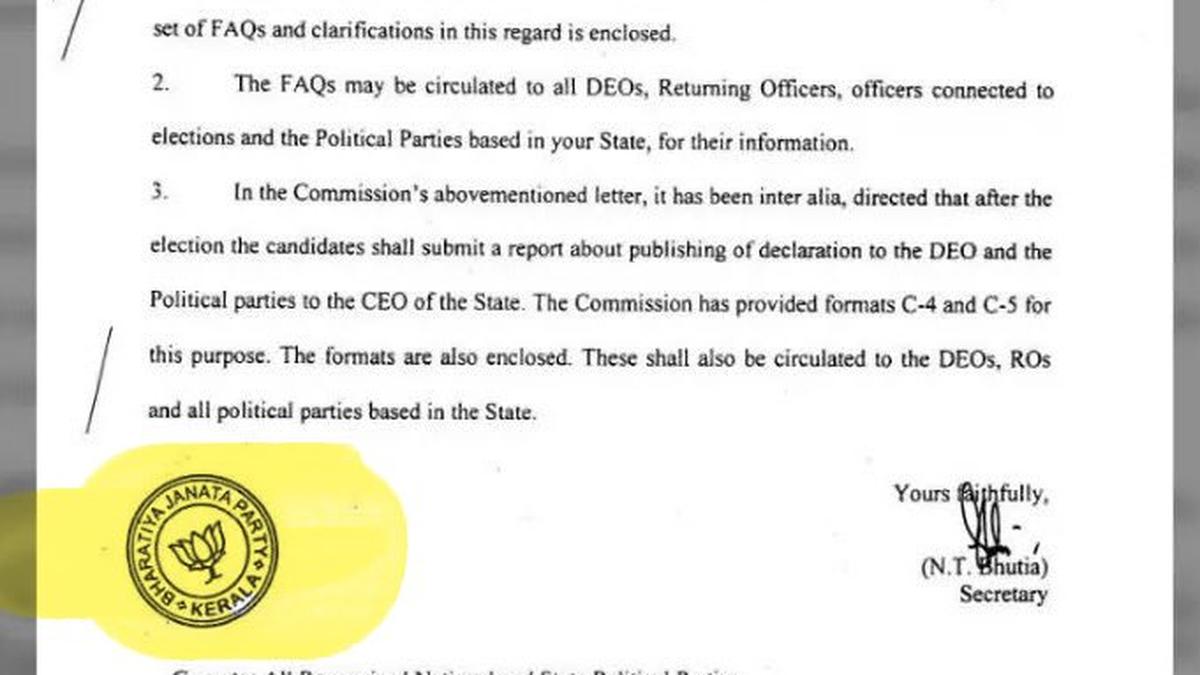
A controversy erupted in Kerala on March 23, 2026, the final day for submitting nominations for the upcoming April 9 Assembly polls, after the Kerala Congress shared a copy of a 2019 Election Commission of India (ECI) letter bearing the seal of the Bharatiya Janata Party (BJP) Kerala unit. The letter, which contained poll-related guidelines, was distributed to political parties recently. The CPI(M) alleged a casual swapping of seals and questioned the BJP’s impartiality. The Chief Electoral Officer (CEO) of Kerala, Rathan U. Kelkar, attributed the issue to a “clerical error” and stated that corrective measures were taken.
Key Points:
- A 2019 ECI letter with the BJP Kerala unit seal was distributed to political parties.
- The CPI(M) accused the BJP of compromising impartiality.
- The CEO (Kerala) attributed the incident to a “clerical error.”
- The letter concerned ECI guidelines on the publicity of criminal antecedents by political parties and candidates.
- The CEO’s office withdrew the letter and informed all relevant parties to disregard it.
Key Takeaways:
- Even seemingly minor errors can be politically explosive during election season.
- The incident highlights the importance of maintaining the Election Commission’s perceived neutrality.
- Opposition parties are quick to seize upon any perceived misstep by the ruling party.
- The event may fuel further distrust in the electoral process among certain segments of the population.
Impact Analysis:
While the CEO has attributed the incident to a clerical error, the controversy could have a lasting impact on the upcoming election. The opposition parties are likely to continue to use this incident to question the BJP’s integrity and impartiality. This could potentially influence voter perception and turnout, particularly among those who are already skeptical of the BJP. Furthermore, it may lead to increased scrutiny of the election process and greater vigilance from all parties involved. The incident also underscores the need for stricter protocols within the CEO’s office to prevent similar errors in the future.
 First Piper