
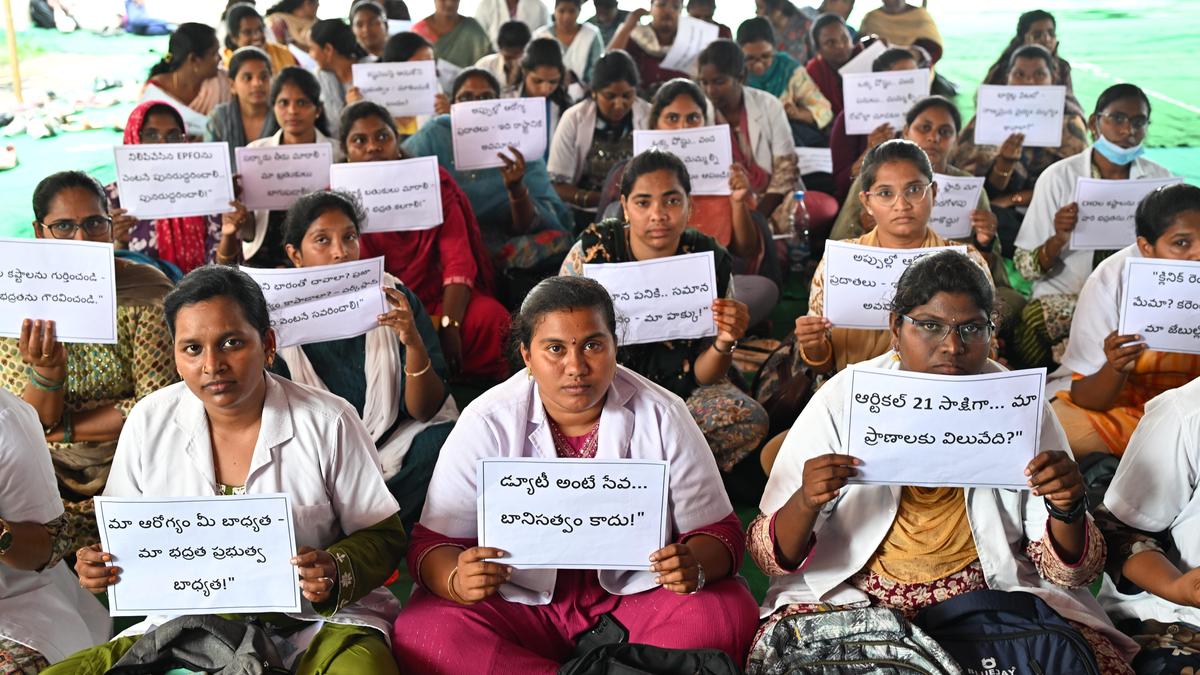
Mon Mar 23 17:43:55 UTC 2026: ### Headline: Andhra Pradesh Community Health Officers Protest Over Workload and Incentives
The Story:
Community Health Officers (CHOs) in Andhra Pradesh staged a demonstration at Dharna Chowk in Vijayawada on Monday, March 23, 2026, protesting against their increased workload and the reduction in incentives. The CHOs, who work in 10,038 Ayushman Aarogya Mandirs (Village Health Clinics) across the state, are demanding a reduction in their workload and the continuation of previously received incentives. They claim that the recent implementation of a Face Recognition System (FRS) and increased working hours without commensurate pay increases have led to financial strain and operational difficulties.
The CHOs allege that the government’s promises to resolve their issues following a previous protest in May 2025 remain unfulfilled. They also cite a lack of clear Standard Operating Procedures (SoPs) leading to an uneven distribution of work among CHOs, ASHAs, and ANMs, further exacerbating their workload. The added burden of making 20 digital patient entries per day, each taking approximately 30 minutes, has compounded their challenges.
Key Points:
- CHOs protested in Vijayawada on March 23, 2026, demanding reduced workload and continued incentives.
- They work in 10,038 Ayushman Aarogya Mandirs (Village Health Clinics) in Andhra Pradesh.
- CHOs receive a salary of ₹25,000 with potential incentives ranging from ₹7,500 to ₹15,000.
- The implementation of the Face Recognition System (FRS) requires attendance until 8 p.m., affecting incentive eligibility.
- Over 4,000 CHOs reportedly did not receive incentives in December and January.
- A previous protest in May 2025 yielded unfulfilled promises from the government.
- CHOs are required to make 20 digital patient entries per day, taking approximately 30 minutes per entry.
Key Takeaways:
- The Andhra Pradesh government faces challenges in managing its healthcare workforce, particularly at the village level.
- The implementation of new technologies like the FRS has unintended consequences on worker morale and compensation.
- Lack of clear communication and SOPs contributes to operational inefficiencies and worker dissatisfaction.
- Unfulfilled promises from the government erode trust and lead to further protests.
- The protest highlights the tension between the government’s desire for increased efficiency and the CHOs’ need for fair compensation and manageable workloads.
Impact Analysis:
The ongoing dispute between the Andhra Pradesh government and the CHOs has significant implications for the state’s healthcare system. The CHOs are the backbone of primary healthcare delivery in rural areas, and their dissatisfaction can lead to decreased morale, reduced service quality, and potential disruptions in healthcare access for vulnerable populations. If the government fails to address these concerns effectively, it risks undermining its efforts to improve public health outcomes and achieve universal health coverage. The situation could also trigger wider protests and labor unrest within the healthcare sector, further destabilizing the system. The government’s response will set a precedent for how it manages its healthcare workforce and implements technological changes in the future.
 First Piper