
Sun Mar 22 08:17:39 UTC 2026: # Jawadhu Hills Residents Boycott Elections Over Lack of Basic Amenities
The Story:
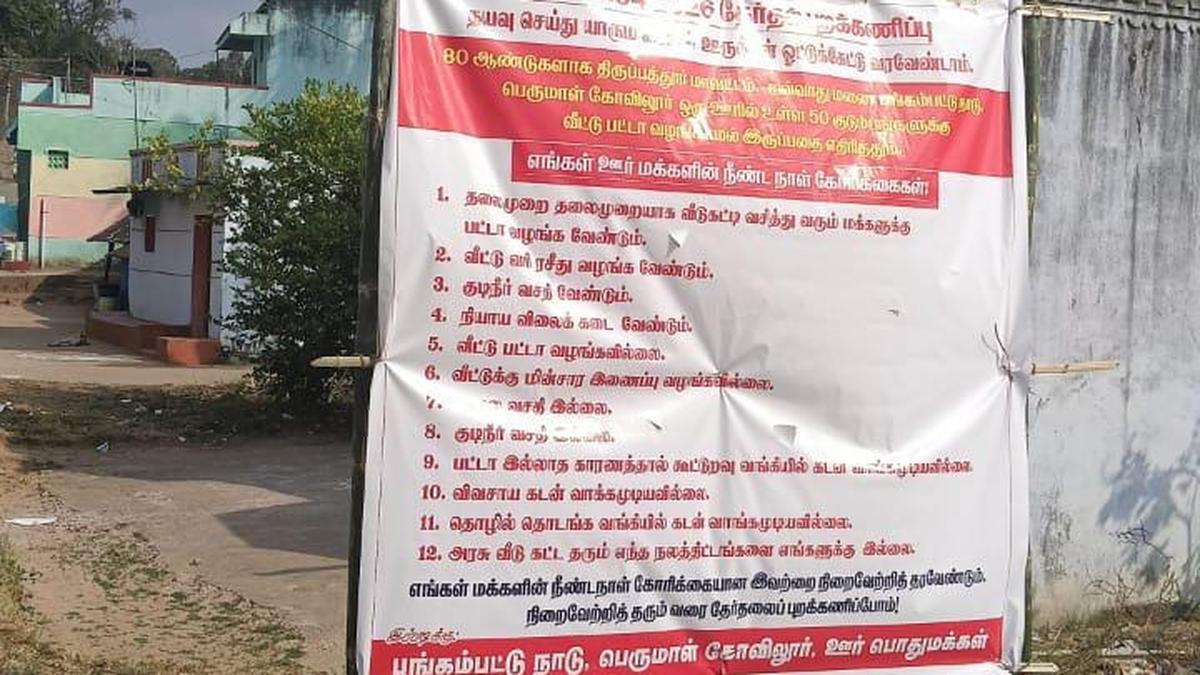
Residents of remote tribal hamlets in the Jawadhu Hills, near Tirupattur, Tamil Nadu, have erected banners declaring their intention to boycott the upcoming Tamil Nadu Assembly elections. The villagers, encompassing the Pungampattu Nadu and Nellivasal Nadu village panchayats, are protesting the long-standing failure of political parties and government authorities to provide essential civic amenities to their communities. The boycott is a desperate measure to draw attention to their plight.
Key Points:
- The protest is taking place in Pungampattu Nadu, Pudur Nadu, and Nellivasal Nadu, three major tribal villages on the Tirupattur side of Jawadhu Hills.
- These panchayats consist of 32 tribal hamlets with approximately 19,000 voters.
- Lack of proper roads hinders access to healthcare, leading to fatalities, especially among pregnant women requiring transport to hospitals in Jolarpet or Tirupattur.
- Poor infrastructure also impedes the transport of agricultural produce, forcing tribals to migrate to cities like Chennai, Bengaluru, and Coimbatore for work.
- Basic amenities, including reliable access to fair price shops during the monsoon, are lacking.
- A DRDA official stated that the issues will be taken up with the district administration.
Key Takeaways:
- The protest highlights the persistent neglect of basic infrastructure and services in remote tribal areas despite their participation in the democratic process.
- The desperation of the residents, resorting to an election boycott, signals a breakdown in trust between the community and the political establishment.
- The incident underscores the urgent need for government intervention to address the specific challenges faced by tribal communities in accessing healthcare, education, and economic opportunities.
- The situation raises questions about the effectiveness of existing development programs in reaching marginalized populations.
- The story exemplifies a broader issue of rural-urban disparity and the struggle for equitable resource allocation.
 First Piper