
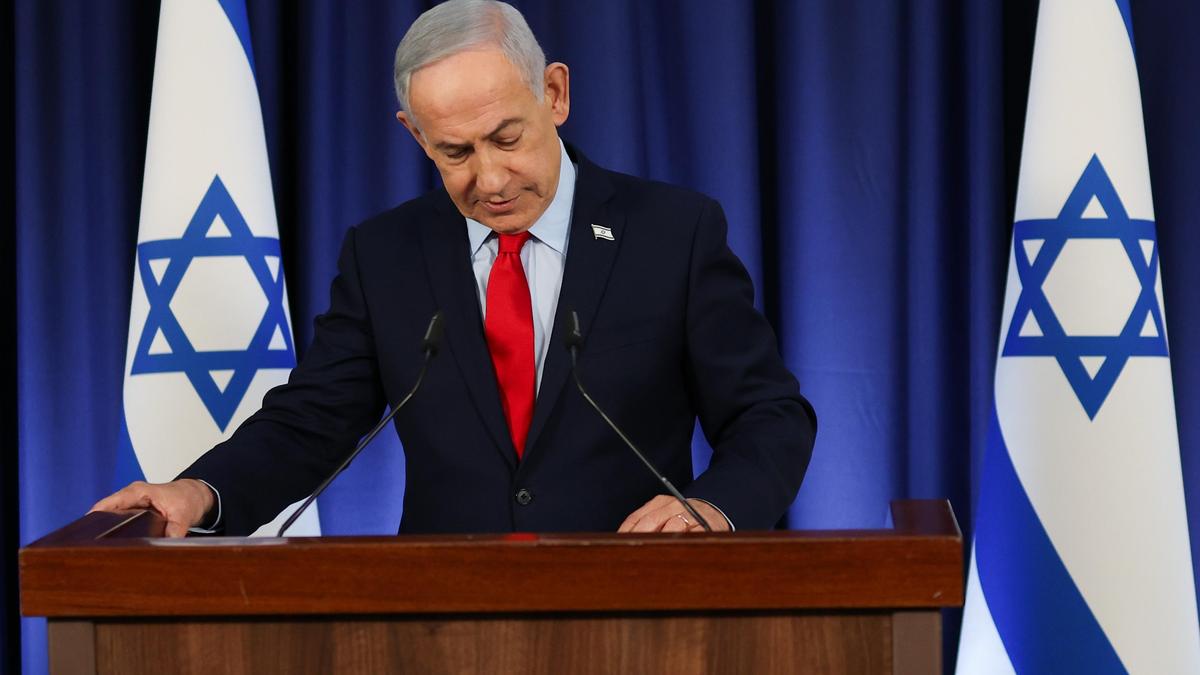
Fri Mar 20 19:47:57 UTC 2026: ### Netanyahu Defends Controversial Remarks Comparing Jesus to Genghis Khan Amidst Regional Tensions
The Story:
Israeli Prime Minister Benjamin Netanyahu is facing backlash after comparing Jesus Christ to Genghis Khan during a televised meeting on March 19, 2026. He defended his statement, claiming he was quoting historian Will Durant to illustrate the idea that moral superiority alone cannot guarantee survival against ruthless enemies. This defense comes in the wake of criticism sparked by his justification for the joint Israeli-U.S. strike on Iran on February 28, 2026, which triggered a regional war. Critics, particularly Christians, found the comparison deeply offensive, interpreting it as a denigration of Jesus and his teachings.
Key Points:
- Netanyahu compared Jesus Christ to Genghis Khan, stating that “Jesus Christ has no advantage over Genghis Khan because if you are strong enough, ruthless enough, powerful enough, evil will overcome good.”
- He defended his remarks by claiming he was quoting Will Durant and emphasizing the need for strength to defend against enemies.
- His statement followed and was used to justify the February 28, 2026 joint Israeli-U.S. strike on Iran.
- The remarks sparked widespread criticism, particularly from Christians.
- A Palestinian Lutheran pastor from Bethlehem, Munther Isaac, called the statement “offensive on multiple levels.”
Critical Analysis:
The historical context reveals a pattern of escalating tensions in the region, particularly concerning Iran. Netanyahu’s controversial statement, justifying military action by invoking historical figures and philosophies, suggests a deliberate attempt to frame the conflict in broader, almost existential terms. His mention of the February 28th strike on Iran indicates the comparison was made to support the use of force to protect Israel and the world from Iran’s nuclear program.
Key Takeaways:
- Netanyahu’s controversial comparison reflects a justification for aggressive foreign policy.
- The incident highlights the delicate intersection of religion, politics, and international relations in the Middle East.
- The controversy underscores the deep divisions and sensitivities surrounding the Israeli-Palestinian conflict, as evidenced by the reaction of Munther Isaac, a Palestinian pastor.
- The use of historical analogies can be a powerful tool for shaping public opinion and justifying political actions.
- The timing of this statement, following the February 28th strike on Iran, suggests a strategic attempt to garner support for Israel’s aggressive foreign policy.
Impact Analysis:
This event has the potential for several significant long-term impacts:
- Increased Religious Tensions: The comparison is likely to exacerbate tensions between Christians and the Israeli government, potentially impacting diplomatic relations and Christian support for Israel.
- Escalation of Regional Conflict: By framing the conflict with Iran in existential terms, Netanyahu risks further escalation of the ongoing regional war, making peaceful resolution more difficult.
- Damage to Israel’s Image: The controversy can damage Israel’s international reputation, particularly among Christian communities worldwide, leading to increased scrutiny of its policies.
- Polarization of Public Opinion: The remarks are likely to further polarize public opinion, both within Israel and internationally, making it more difficult to build consensus around foreign policy decisions.
- Fueling Extremism: Inflammatory rhetoric, especially when it touches on religious figures and conflicts, can be exploited by extremist groups to justify violence and incite further hatred.
 First Piper