
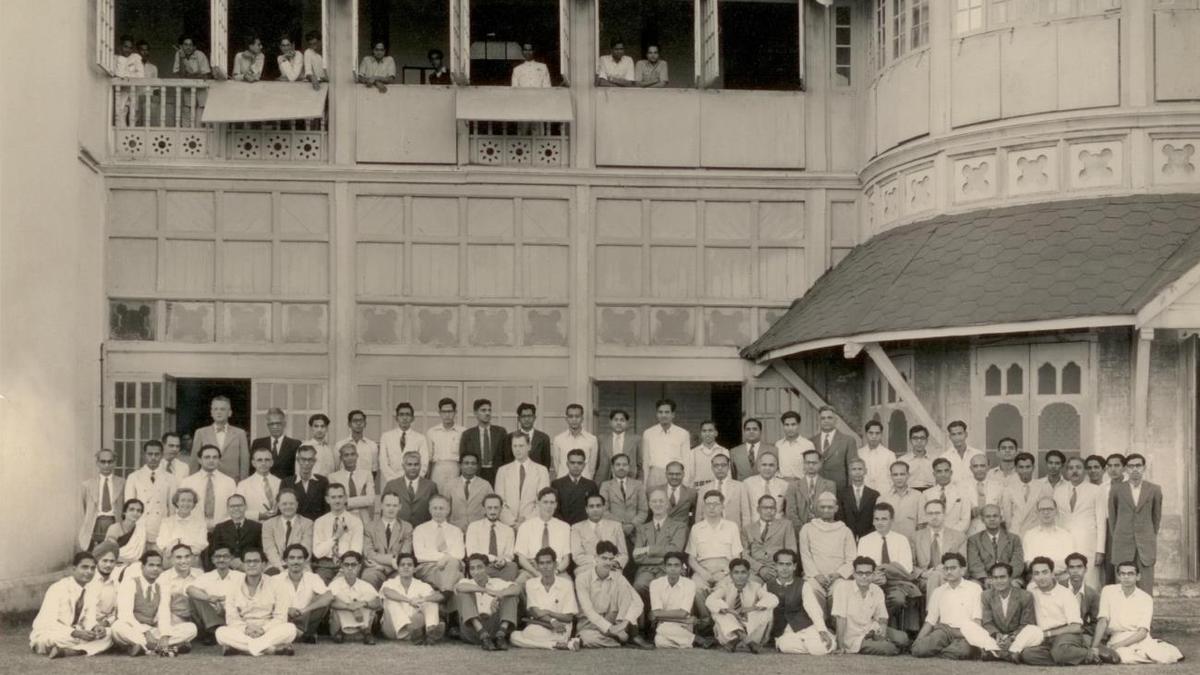
Tue Mar 17 11:41:24 UTC 2026: Headline: Bibha Chowdhuri: Remembering an Indian Physics Pioneer
The Story:
An article published in The Hindu on March 17, 2026, sheds light on the life and accomplishments of Bibha Chowdhuri, a pioneering Indian physicist born in 1913. Overcoming significant societal barriers and gender prejudices of the early 20th century, Chowdhuri became one of the first Indian women to obtain a postgraduate degree in physics, earning her MSc from Calcutta University in 1936. She furthered her research in cosmic rays, earning a PhD from the University of Manchester in 1945, making her the first Indian woman to achieve this feat. Despite her significant contributions to particle physics, her work remained largely unrecognized for decades until recent efforts to recover her legacy.
Key Points:
- Bibha Chowdhuri was born in 1913 in Kolkata and faced societal barriers to education for women.
- She obtained an MSc in physics from Calcutta University in 1936, being one of the first Indian women to achieve this.
- She worked with D.M. Bose on cosmic-ray research between 1938 and 1942, publishing significant papers.
- She earned a PhD from the University of Manchester in 1945 under Patrick M.S. Blackett.
- She joined the Tata Institute of Fundamental Research (TIFR) in Mumbai as the first woman researcher in the cosmic-ray group on Blackett’s recommendation.
- In 2018, her biography, “A Jewel Unearthed: Bibha Chowdhuri,” was published.
Key Takeaways:
- Bibha Chowdhuri’s story exemplifies perseverance against societal and gender-based obstacles in the pursuit of scientific knowledge.
- Her contributions to cosmic-ray and particle physics were significant, yet remained largely unrecognized for many years.
- Her legacy serves as an inspiration for women in STEM fields, encouraging them to overcome challenges and pursue their scientific aspirations.
- The belated recognition of Chowdhuri’s work highlights the importance of historical revision and acknowledging the contributions of underrepresented groups in science.
Impact Analysis:
The renewed interest in Bibha Chowdhuri’s life and work signifies a growing awareness of the need to recognize and celebrate the contributions of women in STEM, particularly those from marginalized communities. Her story has the potential to inspire a new generation of female scientists in India and beyond. By highlighting the barriers she overcame, her legacy serves as a catalyst for promoting gender equality and inclusivity within the scientific community, fostering a more diverse and equitable environment for future generations of researchers. This recognition also impacts the historical narrative of Indian science, ensuring a more complete and accurate representation of the individuals who shaped the field.
 First Piper