
Tue Mar 17 17:29:04 UTC 2026: # BRICS Forges Ahead in Science, Technology, and Innovation Amidst Geopolitical Shifts
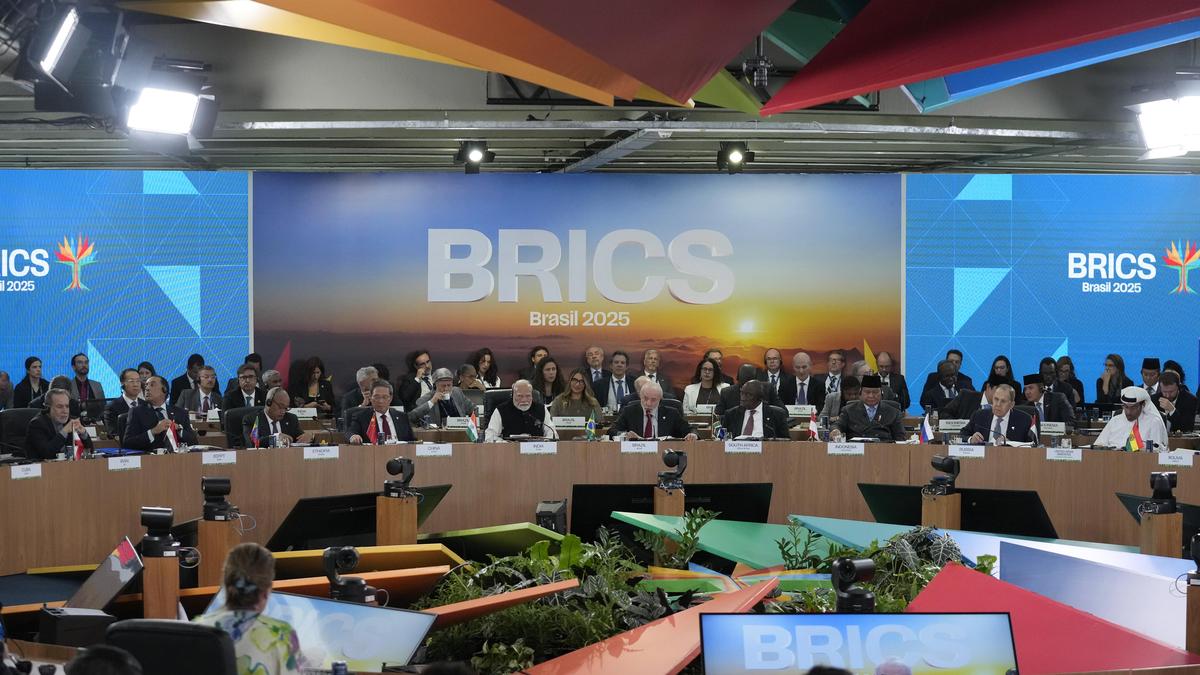
The Story: The BRICS grouping, consisting of Brazil, Russia, India, China, and South Africa, is intensifying its collaboration in science, technology, and innovation (STI) to challenge Western hegemony and establish a multipolar world. As of March 18, 2026, the grouping, now expanded to include Saudi Arabia, Egypt, the UAE, Ethiopia, Indonesia, and Iran (BRICS+), is focusing on building shared capacities through framework programs, prioritizing innovation and technology transfer, and addressing global challenges such as public health crises and climate resilience. India, as the chair of BRICS+ in 2026, aims to deepen these scientific partnerships under the theme ‘Building for Resilience, Innovation, Cooperation and Sustainability.’
The expanded BRICS+ aims to leverage its collective strengths to reduce technological dependencies and foster development across the Global South. While significant progress has been made in areas like ICT and space cooperation, challenges remain in infrastructure-heavy and exploratory fields. The grouping is also addressing the need for a more robust and permanent mechanism to manage STI cooperation, drawing potential inspiration from the European Union’s Horizon Program.
Key Points:
- BRICS+ now includes Saudi Arabia, Egypt, the UAE, Ethiopia, Indonesia, and Iran, expanding its reach and influence.
- STI cooperation is a core strategic pillar, with a focus on innovation, technology transfer, and addressing shared development challenges.
- The 2025 Declaration on AI elevated artificial intelligence to a central pillar of multilateral governance.
- India holds the BRICS+ presidency in 2026, emphasizing resilience, innovation, cooperation, and sustainability.
- The China-BRICS Research Centre on New Quality Productive Forces was inaugurated in Beijing to promote academic exchange and technological research.
- BRICS+ nations, excluding China, need significant improvements in innovation indicators to catch up with nations like South Korea.
- The group is considering establishing a permanent secretariat, modeled after the EU’s Horizon Program, to manage STI cooperation.
Critical Analysis:
The push for increased collaboration within BRICS+ in STI is a direct response to the growing geopolitical tensions and techno-nationalism that increasingly dictate global scientific collaborations. The mention of sanctions and export controls highlights the context of Western nations restricting access to technology and knowledge, prompting BRICS nations to seek self-reliance and alternative partnerships. The expansion into BRICS+ countries signals a strategic move to diversify resources and capabilities, reducing dependency on traditional Western powers.
Key Takeaways:
- BRICS+ is actively positioning itself as an alternative to Western dominance in science and technology.
- The focus on AI and other advanced technologies indicates a forward-looking strategy to compete in key sectors of the future economy.
- India’s leadership in 2026 provides an opportunity to shape the direction of BRICS+ towards greater scientific collaboration and innovation.
- Addressing the gaps in innovation systems among BRICS+ members is crucial for the long-term success and competitiveness of the group.
- The potential establishment of a permanent secretariat signals a commitment to sustained and structured STI cooperation.
Impact Analysis:
The intensified STI collaboration within BRICS+ has significant long-term implications for the global balance of power. If successful, it could lead to:
- Reduced dependence on Western technology: BRICS+ nations could become more self-sufficient in critical technologies, reducing their vulnerability to geopolitical pressures.
- Increased economic growth: Innovation and technology transfer can spur economic development within BRICS+ countries, leading to greater global influence.
- Shifting global leadership: A strong BRICS+ could challenge the existing dominance of Western nations in science, technology, and global governance.
- **
 First Piper