
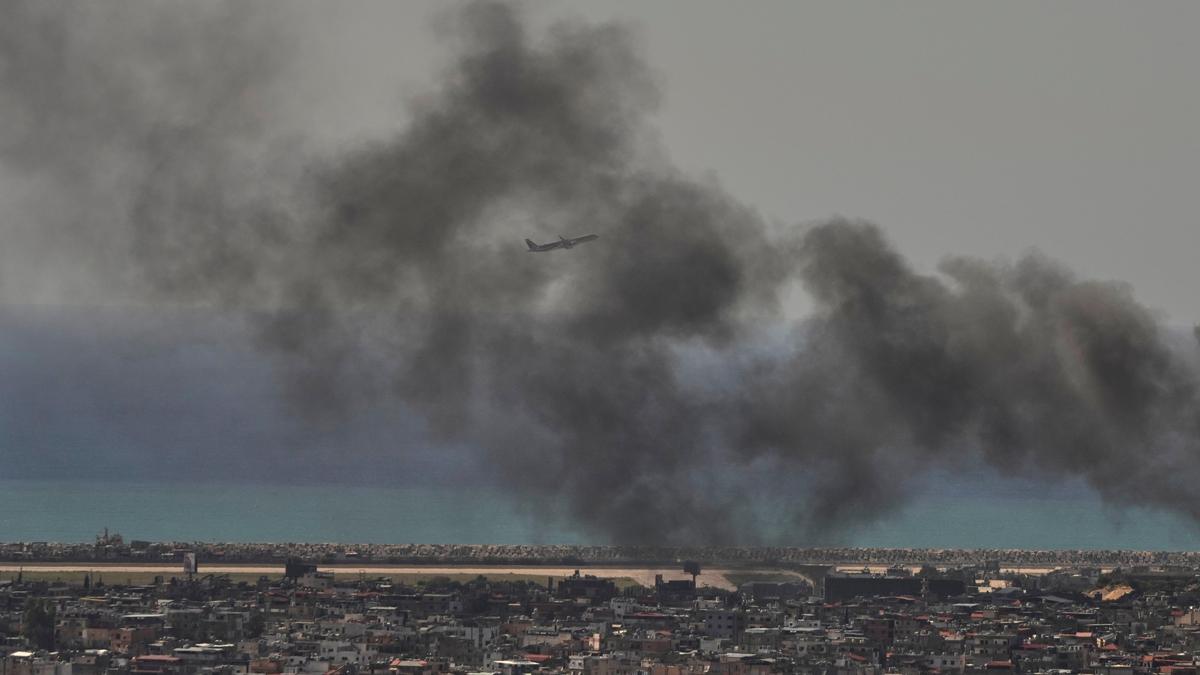
Sat Mar 21 07:29:22 UTC 2026: ### Escalation in West Asia: Israel Strikes Iran and Beirut as US Sends More Troops
The Story:
Tensions in West Asia have reached a critical point as Israel launched attacks on both Iran and Beirut on Saturday, March 21, 2026. These strikes come as the United States increases its military presence in the region, deploying thousands more Marines. The conflict, which began on February 28, 2026, with a US and Israeli attack on Iran, has already resulted in over 2,000 deaths and is raising concerns about a wider war. The Strait of Hormuz, a crucial passage for global oil and gas, remains effectively closed, causing a 50% surge in oil prices and threatening global economic instability.
Key Points:
- Israeli military struck targets in Iran (including Tehran) and Beirut, targeting Hezbollah.
- The US is sending thousands more Marines to West Asia.
- President Trump criticized NATO allies for their reluctance to help open the Strait of Hormuz.
- Over 2,000 people have been killed since the war began on February 28, 2026.
- Oil prices have increased by 50% since the start of the war.
- The Strait of Hormuz is effectively closed to most shipping.
- United Airlines is cutting flights by 5% in anticipation of prolonged high oil prices.
- The US is temporarily waiving sanctions on 140 million barrels of Iranian oil to increase supply.
- Over 1,000 people have been killed in Lebanon and over 1 million have been displaced due to Israeli attacks.
Critical Analysis:
The recent escalation appears to be a calculated move by Israel to weaken Iran and Hezbollah, potentially aiming to disrupt Iranian support for regional proxies and degrade its military capabilities. Trump’s criticism of NATO allies suggests a lack of international consensus and support for the US-led intervention, potentially isolating the US and Israel. The timing of the attacks and the US military buildup suggest a coordinated strategy to exert maximum pressure on Iran. The historical context provided indicates a multifaceted conflict, involving missile attacks, energy expansion disputes, and diplomatic efforts by Iran to garner international support.
Key Takeaways:
- The conflict between Israel and Iran is intensifying, with direct attacks on both countries.
- The Strait of Hormuz closure poses a significant threat to the global economy.
- International alliances are strained, with the US facing criticism from allies.
- The situation in Lebanon is deteriorating, with a high number of casualties and displaced persons.
- Efforts to de-escalate the conflict are complicated by conflicting strategic goals and a lack of international consensus.
Impact Analysis:
The ongoing conflict has significant long-term implications:
- Geopolitical Realignment: The war could lead to a reshaping of alliances in West Asia, potentially strengthening the positions of countries aligned against Iran and weakening Iranian influence.
- Economic Instability: The closure of the Strait of Hormuz and rising oil prices could trigger a global recession, impacting international trade and investment.
- Humanitarian Crisis: The displacement of millions of people in Lebanon and potential further escalation could create a severe humanitarian crisis, requiring international aid and intervention.
- Nuclear Proliferation: The conflict could push Iran to accelerate its nuclear program, further destabilizing the region and increasing the risk of nuclear proliferation.
- Increased Terrorism: The conflict could create a breeding ground for extremist groups, leading to increased terrorist activity in the
 First Piper