
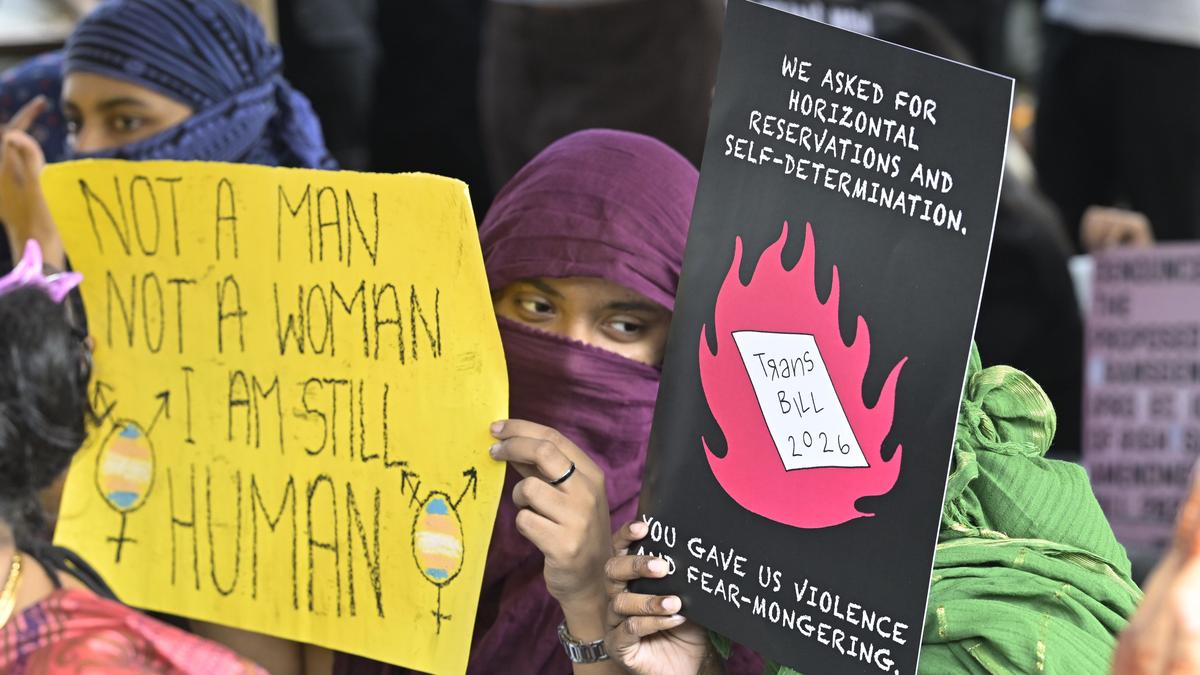
Sat Mar 21 16:43:12 UTC 2026: # Transgender Rights Amendment Bill Faces Opposition in India
The Story:
Over 100 members of feminist and lawyer groups have penned an open letter to Members of Parliament, urging them to reject the Transgender Persons (Protection of Rights) Amendment Bill, 2026. Published on March 21, 2026, the letter denounces the bill as “unconstitutional,” arguing that it imposes “arbitrary and inhumane requirements” that would impede transgender individuals’ access to fundamental rights and entitlements. The bill seeks to amend the Transgender Persons (Protection of Rights) Act, 2019, which critics claim takes away the transgender people’s “right to self-perceived gender identity”, and alters the definition of a “transgender person”.
Key Points:
- The open letter was issued by the All-India Feminist Alliance and the National Alliance for Justice, Accountability and Rights.
- Critics argue the bill narrows the definition of transgender people and removes their right to self-perceived gender identity.
- The bill is accused of introducing medical gatekeeping and criminalizing transgender people’s support systems.
- The groups are calling for the bill’s withdrawal and a comprehensive review by the Parliamentary Standing Committee on Social Justice and Empowerment, with consultations involving transgender, intersex, non-binary, and genderqueer communities.
- The letter emphasizes the importance of strengthening rights guaranteed under NALSA (National Legal Services Authority) 2014.
Critical Analysis:
The speed with which the Amendment Bill was introduced, coupled with the broad-based opposition from feminist, legal, and transgender rights groups, suggests a disconnect between the government’s understanding of transgender issues and the lived realities of the transgender community. The criticism that the bill undermines the 2019 Act indicates a potential reversal of progress in transgender rights, which is likely driving the urgency of the opposition’s response.
Key Takeaways:
- The Transgender Persons (Protection of Rights) Amendment Bill, 2026 is facing significant opposition from feminist and legal groups.
- The core concern revolves around the bill’s potential to restrict transgender rights and access to fundamental entitlements.
- The call for a comprehensive review involving transgender communities highlights the importance of inclusive and participatory legislative processes.
- The reference to NALSA 2014 suggests a desire to build upon existing legal frameworks rather than undermining them.
Impact Analysis:
The future of the Transgender Persons (Protection of Rights) Amendment Bill, 2026 hangs in the balance. If passed in its current form, it could significantly impact the rights and well-being of transgender individuals in India. The involvement of the Parliamentary Standing Committee on Social Justice and Empowerment will be crucial in determining the bill’s ultimate fate. The level of consultation with transgender communities during this review process will be a key indicator of whether the government is genuinely committed to protecting and promoting transgender rights. The outcome will also set a precedent for future legislative action on LGBTQIA+ rights in India.
 First Piper