
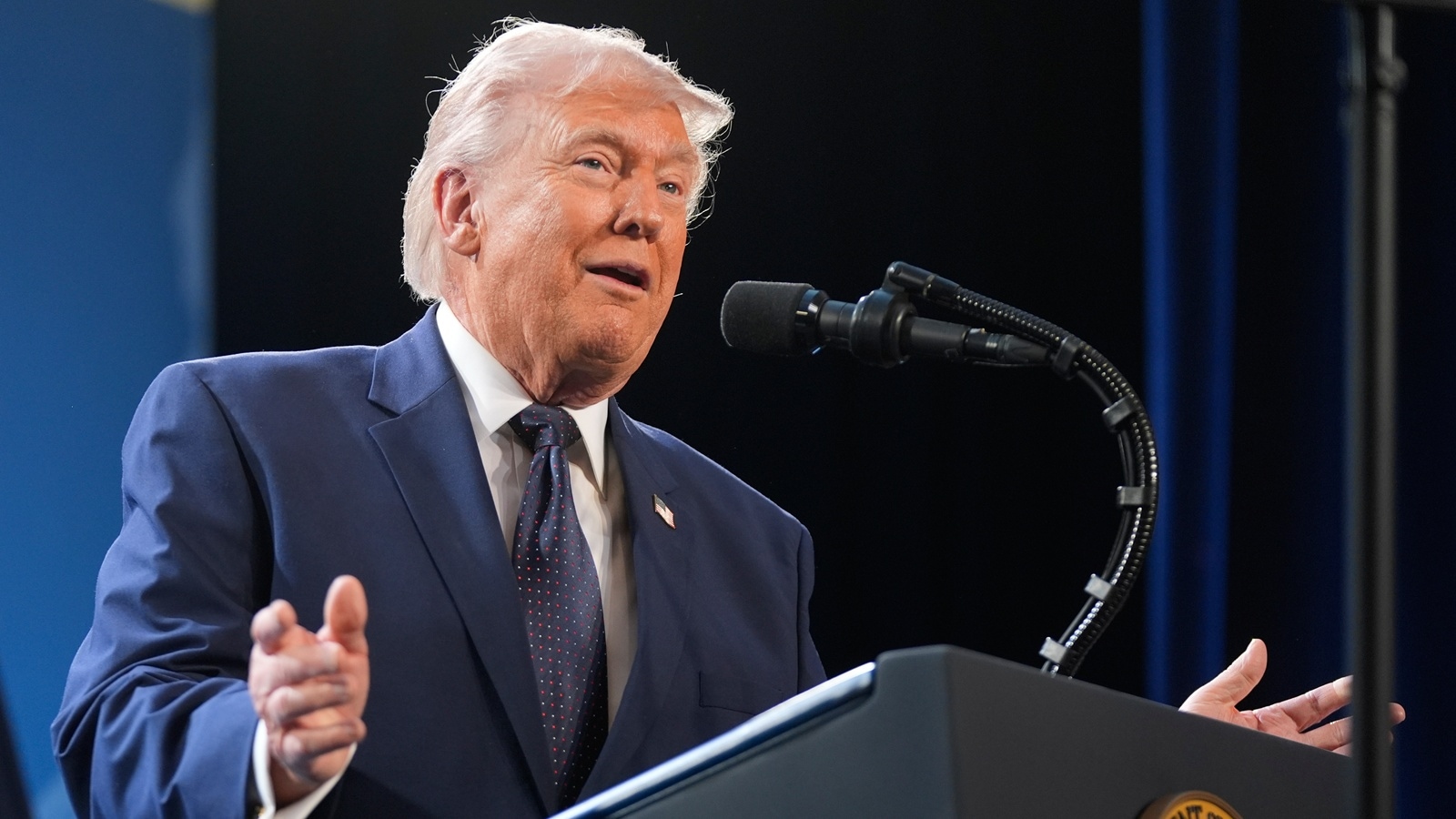
Fri Mar 13 02:30:19 UTC 2026: ### Headline: Trump’s Shifting Rhetoric on Oil Prices Sparks Market Volatility Amidst Iranian Conflict
The Story: US President Donald Trump has adopted a new stance on rising oil prices, now framing them as a benefit to the United States due to its large oil production capacity. This shift in messaging coincides with escalating tensions in the Strait of Hormuz and the administration’s apparent struggle to formulate a clear strategy for the region. This contrasts with his earlier emphasis on low gasoline prices during his State of the Union address. The change comes as global oil markets react to the conflict with Iran.
Key Points:
- Trump stated on Truth Social that the U.S. benefits from rising oil prices because it is the world’s largest oil producer.
- Gasoline prices have surged by more than 50%, reaching a national average of $3.60 per gallon, up from $2.30 during Trump’s State of the Union address.
- Trump argues that high oil prices are a “very small price to pay” for global safety and peace, linked to resolving the “Iran nuclear threat.”
- Goldman Sachs has revised its oil price projections, expecting Brent crude to average $71 per barrel and West Texas Intermediate (WTI) to average $67 per barrel in the final quarter of the year, which are significantly lower than current prices.
- Brent crude is currently trading at $100.36 per barrel, while WTI is priced at above $95.32 per barrel.
- The Strait of Hormuz, a key shipping route for one-fifth of the world’s oil, is experiencing disruption due to the conflict.
Critical Analysis:
The shift in Trump’s rhetoric appears strategically timed, likely intended to portray strength and control amidst a volatile geopolitical situation. By emphasizing the economic benefits of high oil prices for the U.S., he aims to deflect criticism of the price surge and potentially garner support for his administration’s handling of the conflict with Iran.
Key Takeaways:
- Trump’s changing narrative on oil prices highlights the complex interplay between domestic economic interests and foreign policy objectives.
- The conflict with Iran is directly impacting global oil markets, leading to increased volatility and price surges.
- Trump’s administration faces a challenge in balancing the need to maintain stable energy prices for consumers with the potential economic gains from increased oil production.
- Market analysts anticipate a decrease in oil prices, but current prices are significantly higher than forecasts, indicating uncertainty and risk.
- The disruption in the Strait of Hormuz poses a significant threat to global oil supply and could have far-reaching economic consequences.
Impact Analysis:
The current situation has several long-term implications:
- Geopolitical Instability: The ongoing conflict with Iran has the potential to escalate further, leading to more severe disruptions in the oil market and broader regional instability.
- Economic Impact: Sustained high oil prices could negatively impact economic growth, potentially leading to inflation and reduced consumer spending.
- Energy Policy: The crisis may prompt renewed discussions about energy independence and the development of alternative energy sources.
- Political Ramifications: The handling of the oil price surge and the conflict with Iran could significantly impact Trump’s public approval and influence the upcoming elections.
 First Piper