
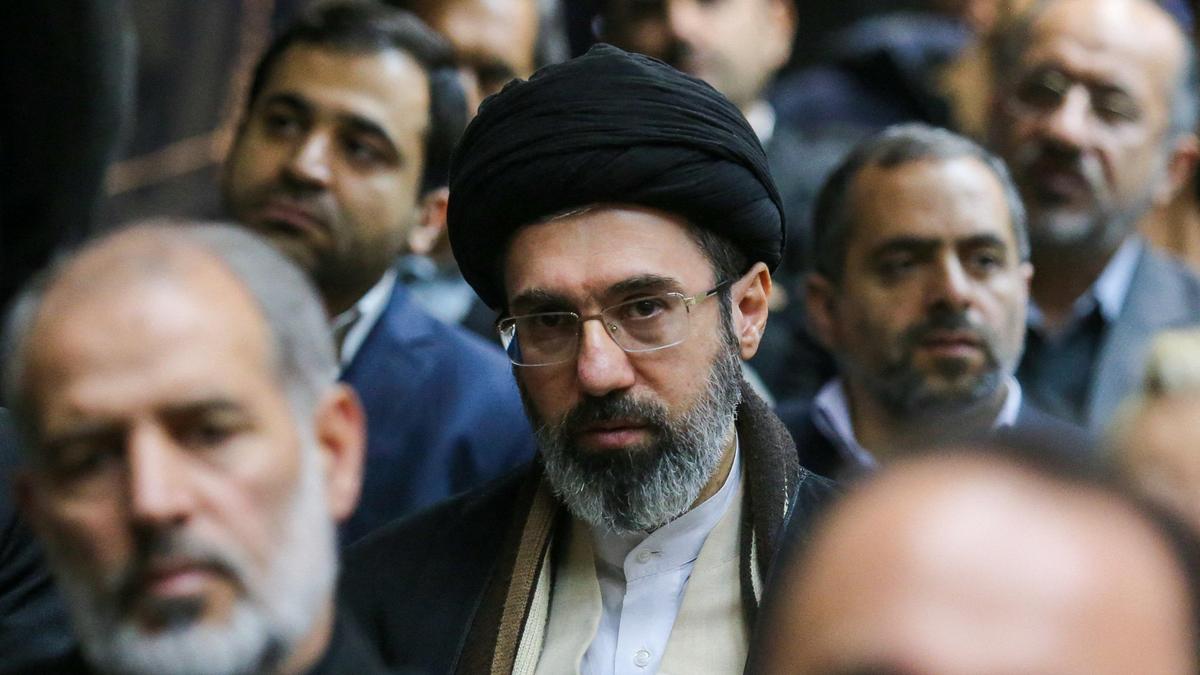
Thu Mar 12 16:43:48 UTC 2026: ### Iran’s New Supreme Leader Demands Reparations, Threatens Strait of Hormuz Closure
The Story:
In his first public address since assuming the role of Supreme Leader following the assassination of his father, Ayatollah Mojtaba Khamenei has issued a series of demands to neighboring Arab countries and the international community. These demands include the closure of U.S. bases in the region, reparations for war damages, and a continued blockade of the Strait of Hormuz. The statement comes amidst ongoing conflict sparked by the assassination of the former Supreme Leader on February 28, 2026, and escalating tensions in the Persian Gulf.
Key Points:
- Mojtaba Khamenei has become the new Supreme Leader of Iran following his father’s assassination on February 28, 2026.
- He demands Arab countries shut down U.S. bases and seeks reparations for war losses.
- He vowed to keep the Strait of Hormuz “closed,” a critical chokepoint for global oil supply.
- The Islamic Revolutionary Guard Corps (IRGC) has reportedly been targeting cargo vessels and mining the Strait of Hormuz, reducing ship traffic.
- President Masoud Pezeshkian has set three conditions for ending the war: recognition of Iran’s rights, reparations, and international guarantees against future aggression.
- Iranian officials maintain they will not negotiate with the U.S. or accept a ceasefire.
Critical Analysis:
The statements from the new Supreme Leader and President Pezeshkian indicate a hardening of Iran’s position in the ongoing conflict. The demand for reparations, coupled with the threat to close the Strait of Hormuz, suggests a strategy of leveraging Iran’s strategic importance to extract concessions. The internal political dynamics, as evidenced by the emergence of figures like Mohammad-Bagher Ghalibaf and Ali Larijani, show a unified front in defiance of the perceived aggressors. The UN envoy’s earlier claim that Iran will keep the Strait open is in conflict with the current statement, suggesting internal disagreement or a change of strategy.
Key Takeaways:
- The assassination of the former Supreme Leader has led to a more aggressive stance from Iran.
- The Strait of Hormuz remains a key point of contention and a significant threat to global oil supplies.
- Iran is seeking to leverage its position and strategic assets to gain concessions from its adversaries.
- The conflict has the potential to escalate further with the threat of new fronts being opened by Iranian allies.
- The internal politics of Iran seem to be unified in their defiant stance against the US and Israel.
Impact Analysis:
The new Supreme Leader’s demands and threats have significant long-term implications for regional stability and the global economy. The potential closure of the Strait of Hormuz could trigger a major energy crisis, impacting global trade and economic growth. The call for Arab nations to expel U.S. forces could destabilize the region further, potentially leading to increased conflict and power vacuums. The demand for reparations could set a precedent for future conflicts, potentially complicating international relations and conflict resolution efforts. The continued conflict will likely exacerbate humanitarian crises and displacement in the region.
 First Piper