
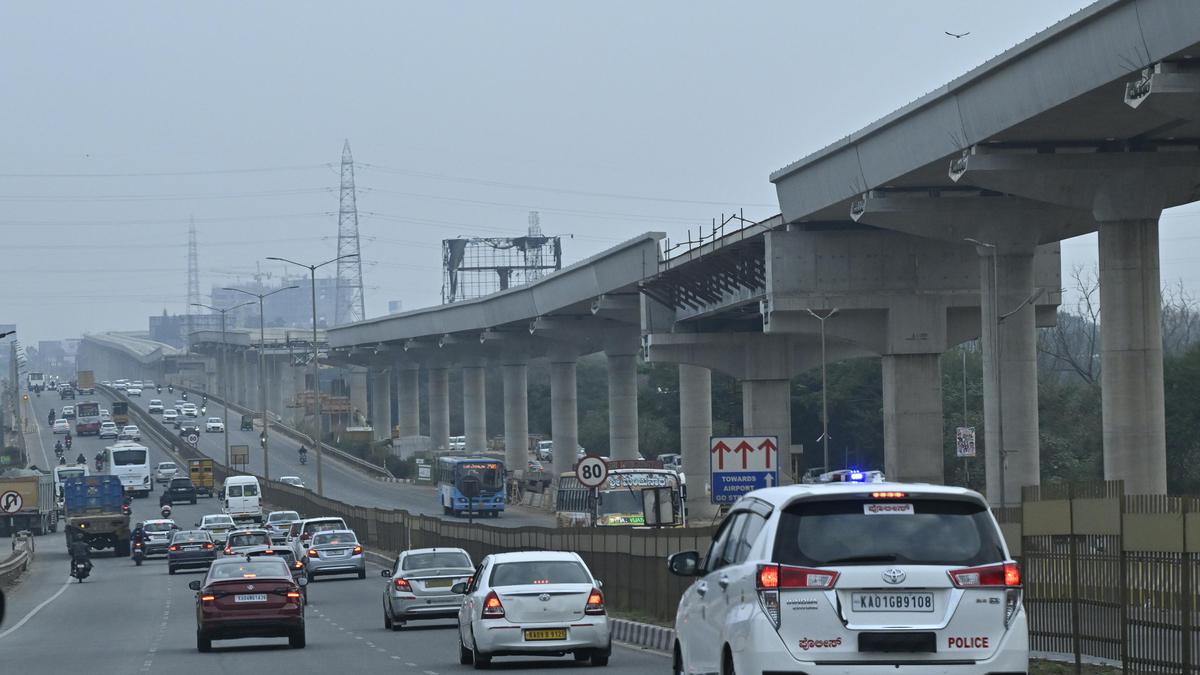
Fri Mar 13 03:35:58 UTC 2026: ### Bengaluru Metro: High Costs, Planning Gaps Plague India’s Second Largest Metro System
The Story:
Bengaluru’s Namma Metro, while being India’s second-largest metro network, is facing criticism for its high costs, planning gaps, and connectivity issues. Commuters like Hastha Shetty experience long and complex journeys, often finding it quicker to use private vehicles. Urban mobility experts argue that the metro system was not planned effectively, prioritizing routes with lower demand initially and neglecting major employment corridors. Escalating project costs, fare increases, and a lack of seamless first- and last-mile connectivity are further exacerbating the problem, leading to underutilization despite significant investment.
Key Points:
- Bengaluru has India’s second-largest metro network, with around 96 km of operational track and 83 stations.
- Around ₹67,460 crore has already been spent on the metro infrastructure.
- Phase 1 of Namma Metro, covering 42.3 km, saw costs rise from a sanctioned ₹6,395 crore in 2005 to approximately ₹14,405 crore by completion in 2017.
- Phase 2’s budget increased from ₹26,405 crore to ₹40,425 crore.
- A 2023 B-PAC study found that 95% of private vehicle users would switch to the metro if reliable last-mile connectivity was available.
- The Outer Ring Road (ORR) metro connectivity is expected only by 2027.
- The number of registered vehicles in Bengaluru increased from around one crore in 2020–21 to nearly 1.23 crore by April 2025.
Critical Analysis:
The provided context does not reveal any significant patterns or strategic depth to analyze the “WHY” behind these events. Therefore, this section is omitted.
Key Takeaways:
- Inefficient route planning, prioritizing politically influenced routes over high-demand employment corridors, has undermined the metro’s effectiveness.
- Lack of seamless first- and last-mile connectivity discourages commuters from using the metro, despite its expansion.
- Rapid cost escalation, driven by delays, technical challenges, and political interference, has made the metro system one of the most expensive in India.
- Fare increases, coupled with unresolved connectivity issues, risk deterring potential riders and exacerbating the underutilization problem.
- Empowering the Bengaluru Metropolitan Land Transport Authority (BMLTA) to make decisions based on technical and mobility considerations, rather than political pressures, is crucial for future planning.
Impact Analysis:
The issues plaguing Bengaluru’s Namma Metro have several long-term implications:
- Continued Traffic Congestion: Without addressing the planning and connectivity gaps, Bengaluru’s notorious traffic congestion will persist, negatively impacting the city’s economy and quality of life.
- Financial Strain: Escalating project costs and underutilization will place a significant financial burden on the state government and funding agencies, potentially hindering future infrastructure development.
- Environmental Impact: The continued reliance on private vehicles will contribute to increased air pollution and greenhouse gas emissions, undermining efforts to promote sustainable urban mobility.
- Economic Disparity: The lack of affordable and accessible public transport may disproportionately affect low-income residents who rely on public transport for their daily commute.
- Decreased Public Trust: Public trust in government infrastructure projects may erode if the metro system fails to deliver on its promise of efficient and affordable transportation. Future projects may face increased scrutiny and resistance.
 First Piper