
Tue Mar 03 09:31:20 UTC 2026: ### Headline: Astronomers Discover Most Distant Hydroxyl “Gigamaser,” Shedding Light on Early Universe
The Story:
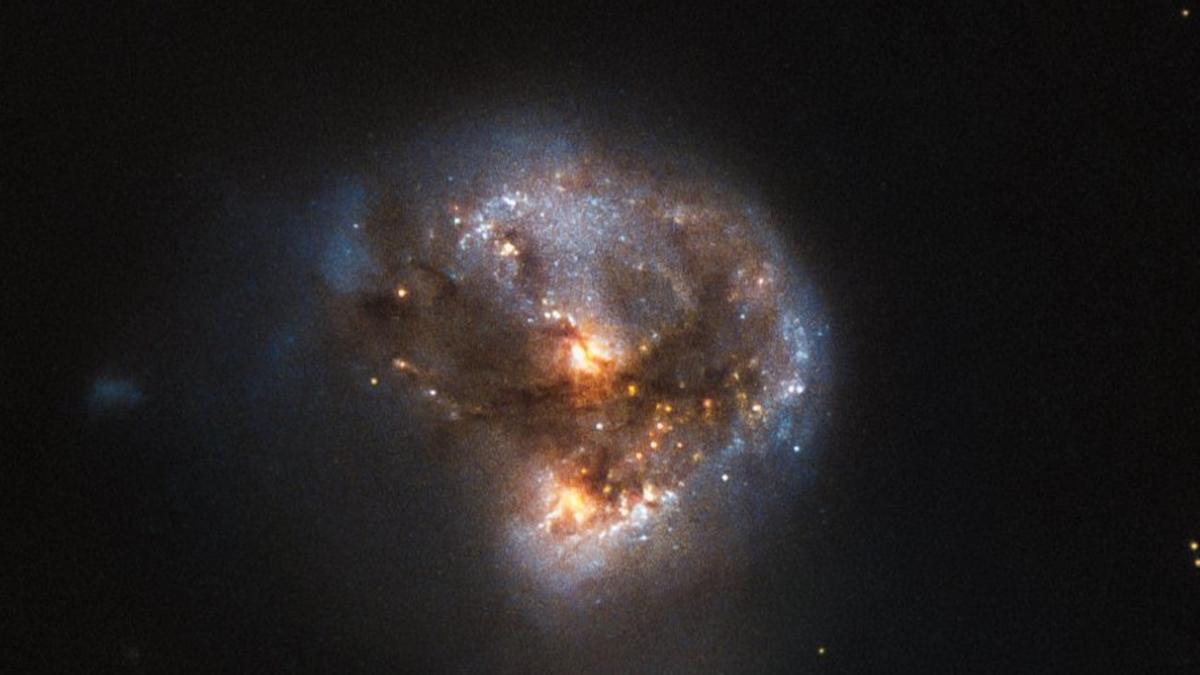
On March 3, 2026, astronomers announced the discovery of the most distant hydroxyl maser ever observed, using the MeerKAT telescope. This megamaser, located billions of lightyears away, is so bright that it has been dubbed a “gigamaser.” These naturally occurring lasers, found in deep space, amplify microwave or radio waves using hydroxyl molecules (OH–) found in large gas clouds within distant galaxies. The collision of galaxies triggers intense star formation and feeds giant black holes, releasing infrared energy. When this energy interacts with hydroxyl molecules, it produces a powerful, amplified beam of radio waves.
Astronomers utilize these megamasers as cosmic beacons. The ability of radio waves to penetrate thick dust allows scientists to study the origins and production mechanisms of these signals, even when the source is obscured. This, in turn, allows for the measurement of galaxy speeds and a better understanding of the universe’s evolution. The newfound gigamaser was magnified by a natural cosmic lens, making it the brightest of its kind ever seen.
Key Points:
- The discovery was announced on March 3, 2026.
- The hydroxyl maser was discovered using the MeerKAT telescope.
- The maser is located billions of lightyears away, making it the most distant hydroxyl maser ever observed.
- It is referred to as a “gigamaser” due to its extreme brightness, amplified by a cosmic lens.
- Hydroxyl masers are naturally occurring lasers that amplify radio waves using hydroxyl molecules (OH–).
- These masers can be used to study galaxy movement and the evolution of the universe.
Key Takeaways:
- The discovery highlights the power of radio astronomy in observing distant phenomena.
- Megamasers serve as valuable tools for understanding the early universe and galaxy evolution.
- The use of natural cosmic lenses can significantly enhance the brightness of distant objects, making them observable.
- The study of hydroxyl molecules in deep space provides insights into the processes occurring within distant galaxies.
 First Piper