
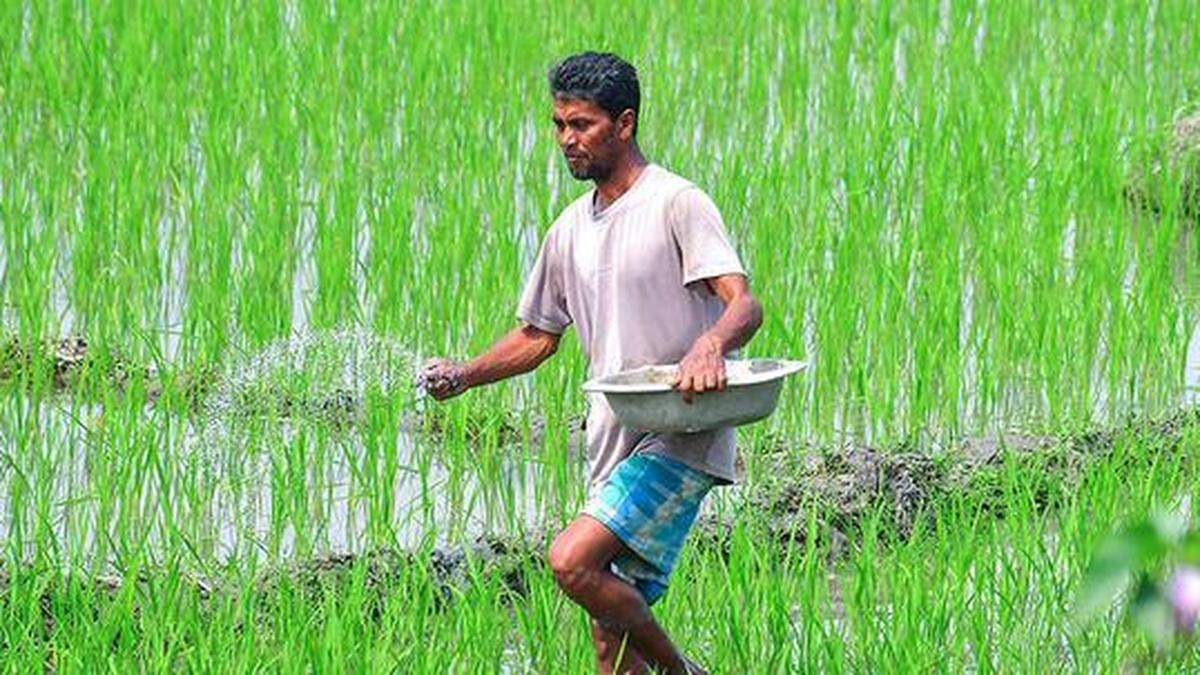
Tue Mar 10 09:53:16 UTC 2026: ### Headline: India Asserts Fertilizer Supply Adequacy Amidst West Asia Tensions Ahead of Kharif Season
The Story:
The Fertilizer Association of India (FAI) announced on March 10, 2026, that urea and phosphatic fertilizer supplies are expected to be sufficient for the upcoming Kharif season, which begins in June. This assurance comes amidst rising geopolitical tensions in West Asia, which have raised concerns about potential disruptions to fertilizer trade and logistics. The FAI is collaborating with the Central and State Governments to ensure smooth distribution across regions, emphasizing coordinated production planning, imports, and logistics. They highlight increased domestic production and imports compared to the previous year, with significant increases in DAP & NPK inventories.
Key Points:
- The FAI states that urea and phosphatic fertilizer supplies are “adequate” for the upcoming Kharif season.
- Geopolitical tensions in West Asia are causing concerns about fertilizer trade and logistics.
- India has reported higher fertilizer production and imports, moving from 57 million tons last year to 65 million tons in FY25-26.
- DAP & NPK inventories have increased by 70-80% compared to the previous year.
- The fertilizer sector relies on imported Regasified Liquefied Natural Gas (RLNG) for urea production, with significant supplies coming from West Asia.
- India is diversifying its sources for phosphatic fertilizers, including Morocco, Jordan, Saudi Arabia, Russia, and Belarus.
- Indian fertilizer companies have long-term supply arrangements for phosphoric acid, ammonia, and rock phosphate.
Critical Analysis:
The announcement comes shortly after reports of potential “fertilizer shock” due to the hypothetical Iran war. This indicates the FAI and the Indian government are proactively addressing concerns stemming from geopolitical instability by securing diverse supply chains and increasing domestic production. The focus on maintaining adequate supply and coordinating logistics showcases a pre-emptive strategy to mitigate potential disruptions and food price inflation. The reference to the industry working closely with the Government for ensuring that Nutrient based Subsidy rates for the kharif season adequately factors spurt in raw material prices and exchange rate shows the reliance on government support to buffer the impact of global events.
Key Takeaways:
- India is actively managing its fertilizer supply chain in response to global geopolitical risks.
- Increased domestic production and diversified import sources are key strategies to ensure fertilizer availability.
- Government coordination is crucial for smooth distribution and mitigating potential disruptions.
- The Indian fertilizer industry is closely monitoring and adapting to fluctuations in raw material prices and exchange rates.
- Geopolitical events in West Asia have a direct impact on India’s agricultural sector, highlighting the interconnectedness of global trade and security.
Impact Analysis:
The proactive measures taken by the FAI and the Indian government aim to stabilize the agricultural sector and prevent potential food price increases during the Kharif season. By ensuring adequate fertilizer supplies, India can maintain its agricultural output and potentially mitigate the broader economic impacts of geopolitical instability. The diversification of supply chains is a long-term strategy that could reduce India’s vulnerability to future disruptions. The focus on managing raw material prices and exchange rates through government subsidies will likely be a recurring theme, indicating a continued reliance on government intervention to buffer the agricultural sector from global economic shocks.
 First Piper