
Mon Mar 09 16:48:31 UTC 2026: # U.S. Service Member Dies in Saudi Arabia Following Iranian Attack, Bringing War’s U.S. Death Toll to Seven
The Story:
A U.S. service member has died in Saudi Arabia from injuries sustained during an Iranian attack on March 1, 2026, bringing the total number of U.S. combat deaths in the ongoing conflict to seven. The announcement was made by U.S. Central Command (CENTCOM) on March 9, 2026. This latest casualty follows the deaths of six other U.S. service members in Kuwait, all killed in the initial wave of Iranian retaliatory attacks. The conflict escalated after the United States and Israel launched a mass aerial campaign against Iran on February 28, 2026, prompting waves of Iranian drone and missile attacks targeting Israel and U.S. military locations in West Asia.
Key Points:
- A U.S. service member died in Saudi Arabia on March 8, 2026, from injuries sustained in an Iranian attack on March 1, 2026.
- The death raises the number of U.S. combat fatalities in the conflict to seven.
- The six other U.S. service members killed died in Kuwait during the initial Iranian attacks.
- The attacks are in response to a U.S.-Israeli aerial campaign against Iran that began on February 28, 2026.
- Iran is launching drone and missile attacks on Israel and U.S. military locations in West Asia.
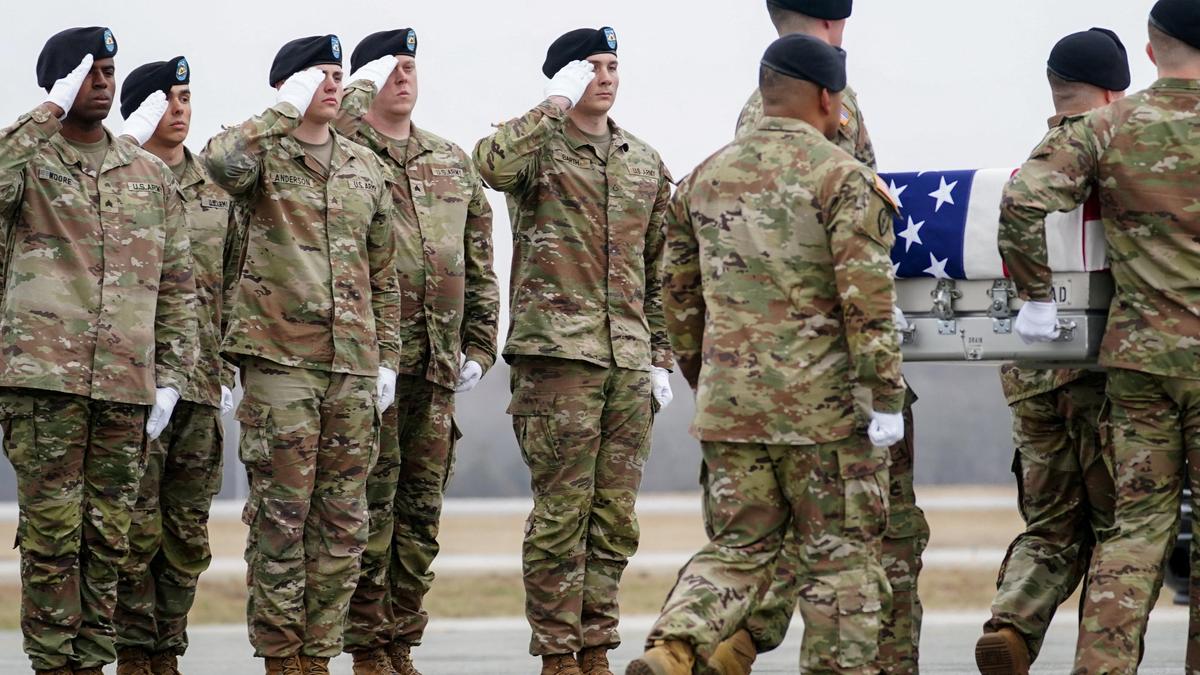
- President Donald Trump attended the repatriation of the bodies of the six soldiers killed in Kuwait.
Critical Analysis:
The news highlights a dangerous escalation in the Middle East, stemming from the U.S.-Israeli aerial campaign and Iran’s response. The fact that U.S. troops are being targeted in multiple locations (Kuwait and Saudi Arabia) suggests a widespread strategy by Iran to pressure the U.S. presence in the region. Trump’s warning of “death & fire” and Tehran’s threat to block oil exports if attacks continue, from the related news updates, indicate that both sides are prepared for a protracted and devastating conflict.
Key Takeaways:
- The conflict between the U.S./Israel and Iran is intensifying, resulting in U.S. military casualties.
- Iran is expanding its attacks beyond Israel, targeting U.S. forces across West Asia.
- The war is creating regional instability and could disrupt global oil supplies, as indicated by Tehran’s threat.
- The high number of U.S. casualties could increase domestic pressure on the U.S. government to de-escalate the conflict.
- The geographical spread of attacks indicates a broader regional conflict, involving multiple countries where U.S. troops are stationed.
Impact Analysis:
This event series signals a potentially long and drawn-out conflict with significant long-term implications:
- Increased Regional Instability: The war could destabilize the entire Middle East, potentially drawing in other nations and non-state actors.
- Economic Consequences: Disruption to oil exports could trigger a global economic crisis.
- Shifting Alliances: The conflict could lead to realignments of alliances in the region, with countries potentially choosing sides based on strategic interests.
- Domestic Political Ramifications in the U.S. The rising death toll and potential for a prolonged war could impact President Trump’s approval ratings and influence the upcoming elections.
- Increased Global Tensions: The conflict could further strain relations between major global powers, particularly if other countries become involved or take sides.
 First Piper